
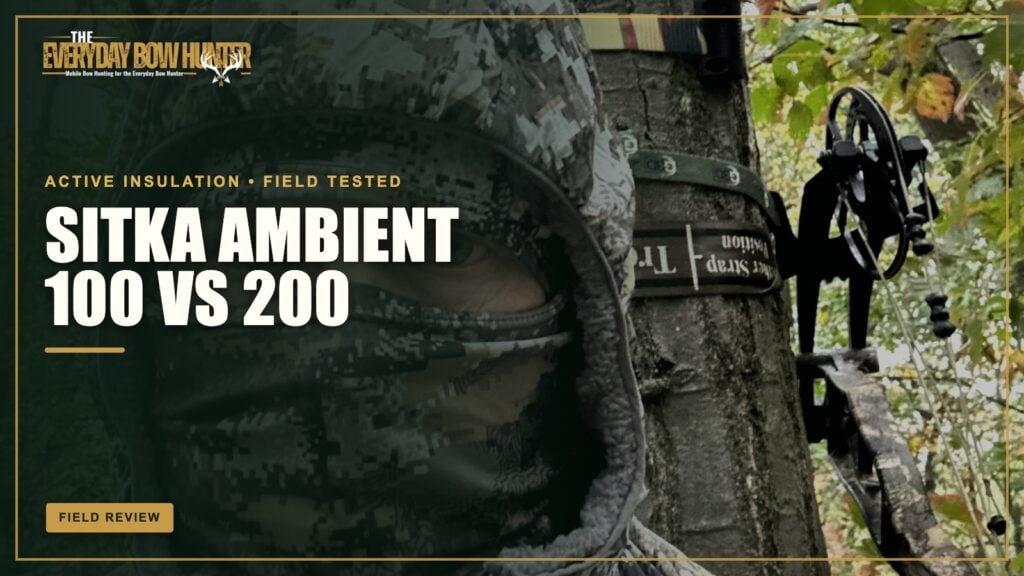
I learned what the original SITKA Ambient Hoody could do because I got caught in the rain without a rain jacket.
It was an early-October hunt in north-central Pennsylvania, and the temperature was around 50 degrees. The rain had stopped when I went into the woods, but the temperature started dropping and the rain moved back in while I was hunting. I had not carried rain gear with me. The original Ambient Hoody was the only insulating layer I had in my pack, so I pulled it out and put it on.
It warmed me up almost immediately. What surprised me even more was how well it handled the rain. I kept it on for the rest of the hunt and wore it during the walk back to my vehicle. I expected to start overheating once I was moving, especially that early in the season, but I never did.
When I reached the vehicle and took it off, the ripstop exterior was wet from the rain. The inside was bone dry, and I had stayed warm. That does not make the Ambient a replacement for a real rain jacket, but its DWR treatment and 100 grams of PrimaLoft Evolve performed much better than I expected.
The current Ambient 100 Hooded Jacket keeps the same active-insulation role that made the original Hoody so useful. It uses the same 100-gram PrimaLoft Evolve insulation and lightweight ripstop concept, but the full zipper and zippered hand pockets make it a much more complete jacket. I now own and have used both the original Hoody and the current Ambient 100.
I have also tested the Ambient 200, and it fills a different job. The 100 is the more versatile jacket for active hunting and changing early- to midseason conditions. The 200 is the warmer pack item I can add after the walk, under a Stratus or Fanatic jacket, when the temperature drops and I need more insulation without much bulk.
If I were buying only one, I would choose the Ambient 100. I can use it through almost the entire season. The 200 becomes more valuable when I already have my active layers handled and want a warmer piece to carry for colder sits.
The real decision is not simply whether you want 100 grams or 200 grams of insulation. It is whether the jacket needs to manage heat while you are moving, add warmth after you stop, or do some of both. That is the difference I am going to work through in this review.
My Bottom Line
Best choice for most bowhunters
Ambient 100 Hooded Jacket
This is the one I would buy first. It works during active early- and midseason hunts, handles changing conditions, packs easily, and can remain part of the layering system later in the season.
- Best for: Mobile hunting, changing temperatures, active insulation, and one Ambient that can cover most of the season.
- Skip it if: Your main need is maximum stationary warmth during colder sits.
- System role: MOVE and light BUILD.
Best colder-weather pack layer
Ambient 200 Jacket
This is the jacket I want waiting in my pack when the walk is over and the temperature starts working against me. It adds more insulation without the bulk of a traditional late-season jacket.
- Best for: Colder midseason hunts, evening temperature drops, longer sits, and adding warmth after hard movement.
- Skip it if: You need a jacket for sustained high-output movement or want an integrated hood.
- System role: BUILD.
Sitka Ambient 100 vs. Ambient 200
| Feature | Ambient 100 Hooded Jacket | Ambient 200 Jacket |
|---|---|---|
| Insulation | 100g PrimaLoft Evolve | 200g PrimaLoft Evolve |
| Hood | Yes, sculpted | No |
| Face fabric | Light 20D ripstop nylon with DWR | Light 20D ripstop nylon with DWR |
| Pockets | Zippered chest and hand pockets | Zippered chest and hand pockets |
| When I want it | During active and changing hunts | After the walk when the temperature drops |
| Best role | Active hunts, variable weather, and all-season layering | Colder hunts, slower movement, and longer stationary periods |
| System role | MOVE / light BUILD | BUILD |
Important: Neither jacket has one dependable temperature rating. Your base layers, wind protection, activity level, length of the sit, and tolerance for cold all matter. Choose the role first, then choose the insulation level.
Why the Original Ambient Field Test Mattered

The rain test showed me why this insulation belongs in a bowhunting system. Traditional insulation can feel good while I am sitting still and become miserable when I start walking. The original Ambient gave me warmth when the temperature dropped, but it also released enough heat that I could wear it on the walk back without soaking myself in sweat.
The DWR treatment shed more water than I expected, and the insulation kept working after the outside became wet. Still, I would not pack either Ambient as my only rain protection when steady rain is expected. DWR helps with light precipitation and unexpected weather. It does not turn a lightweight active-insulation jacket into a waterproof shell.
The 20D ripstop face also needs a reasonable amount of care. It gives the jackets a very good warmth-to-weight ratio, but I do not treat it like brush armor. I protect it with an outer shell when I am moving through thick cover or expect sustained wind and rain.
Sitka Ambient 100 Hooded Jacket Review
System role: MOVE and light BUILD. The Ambient 100 is an active layer first. It helps release heat and moisture while I hike, climb, scout, or change locations. When I slow down, the loft still gives me useful warmth.
The current Ambient 100 is the natural replacement for the old Ambient Hoody. The core idea is the same: 100 grams of PrimaLoft Evolve behind a light ripstop face. The current jacket is easier to use because it adds a full zipper, two zippered hand pockets, a zippered chest pocket, and a sculpted hood.
The full zipper matters during a climb because I can vent before I start sweating. The hand pockets matter once I reach the tree. Those changes take a very good pullover concept and turn it into a more complete hunting jacket.
I regularly keep the 100 in my pack from early season into midseason, and I can continue using it beneath another jacket when the weather gets colder. It is light, comfortable, and surprisingly quiet for ripstop. It is not silent, but I have no problem bowhunting in it. In my experience, the sound it makes during normal movement is lower than the current Stratus 2.0 jacket.
- Best for: Mobile bowhunters, changing temperatures, active hunts, and anyone who wants the most versatile Ambient.
- What stands out: Heat control, low packed size, useful warmth, hood, full zipper, and pockets.
- Watch for: Wind can move through it, the light face needs protection in brush, and DWR is not waterproofing.
- My recommendation: Buy the 100 first if you want one Ambient that can remain useful through most of the season.
Sitka Ambient 200 Jacket Review
System role: BUILD. The Ambient 200 is the jacket I want waiting in my pack when the walk is over and I need more insulation. It uses 200 grams of PrimaLoft Evolve, so it gives me much more warmth than the 100 without the bulk of a traditional late-season jacket.
My normal use is simple. I walk to the tree in lighter clothing so I do not arrive soaked in sweat. After I settle down and my body starts cooling, I pull out the 200 and add it beneath my outer jacket. I can reverse that process during an evening hunt when the temperature falls late in the sit.
The 200 works especially well beneath the SITKA Stratus 2.0. The Stratus blocks wind but does not provide enough insulation for colder conditions by itself. The Ambient 200 adds the warmth the Stratus needs without creating a lot of bulk. It can also add insulation beneath the SITKA Fanatic Jacket when I need to push that system deeper into cold weather.
The hoodless design makes sense in that role. I do not need another hood fighting with the Stratus or Fanatic hood around my neck. The 200 is also quiet enough for bowhunting. Like the 100, it is not silent, but it is quieter during movement than I expected from the light ripstop material.
- Best for: Colder midseason hunts, longer sits, evening temperature drops, and adding warmth beneath a protective outer layer.
- What stands out: High warmth for the weight, low bulk, comfortable fit, and useful quietness.
- Watch for: It is easier to overheat in during hard movement, it has no hood, and it still needs wind or rain protection when conditions demand it.
- My recommendation: Add the 200 when you already have your movement layers handled and need a warmer pack item for the sit.
Quietness, Wind, Rain, and Durability
Both Ambient jackets are quieter than their light ripstop exteriors might make you expect. I still hear some fabric movement, but neither has kept me from drawing or bowhunting effectively. Based on my use, the Ambient material is quieter during normal movement than the current Stratus 2.0. The Stratus still performs a different job because its WINDSTOPPER construction provides wind protection that the Ambient jackets do not.
That difference is why the Ambient and Stratus work so well together. The Ambient supplies breathable insulation. The Stratus supplies the wind barrier and a more protective outer face. Trying to make one layer perform both jobs usually creates more compromise.
The DWR treatment can handle brief rain and wet vegetation, as my original hunt showed. I would still carry a real rain shell when steady rain is possible. I also avoid grinding the 20D face through briars. These jackets earn their place through warmth, breathability, and packability, not heavy-brush durability.
Fit and Layering
I am 5 feet 8 inches tall and weigh about 185 pounds. A large gives me room for a base layer without feeling sloppy. If you plan to place thicker layers underneath either jacket, pay attention to chest and shoulder room instead of choosing only from height and weight.
The 100 works well over a moisture-managing base layer and can become a mid-layer under a shell later in the year. The 200 makes more sense after the high-output part of the hunt or beneath a windproof outer jacket. In either case, the layer closest to your skin still needs to move moisture. Active insulation cannot fix a soaked base layer.
What Changed From the Original Ambient Hoody?
The original Ambient Hoody proved the insulation concept, but its pullover design and limited pockets held it back. The Ambient 100 Hooded Jacket keeps the same 100-gram active-insulation role while making the piece easier to vent and easier to use through a complete hunt.
- Full zipper: Easier on and off, with much better ventilation control.
- Zippered hand pockets: A major practical improvement at the tree.
- Zippered chest pocket: Secure storage without adding much bulk.
- Sculpted hood: Useful coverage without blocking normal vision.
- Same primary job: Manage heat during movement and retain useful warmth when activity slows.
Video: My Original Ambient Hoody Review
This video covers the discontinued original Hoody. The field observations about PrimaLoft Evolve, breathability, packability, light precipitation, and fabric noise still provide useful background. Use the current comparison above when choosing between the Ambient 100 and 200.
Which Sitka Ambient Should You Choose?
Buy the Ambient 100 first. It is the more versatile jacket, and I can use it during active early-season hunts, changing midseason conditions, or as another layer when the weather gets colder. If I wanted one Ambient to cover the largest part of my season, this would be it.
Add the Ambient 200 when you need more packable warmth. It makes the most sense when I want to walk in wearing lighter clothing, then add insulation beneath the Stratus, Fanatic, or another outer jacket after I settle into the hunt.
Some hunters can justify both because the roles are different. The 100 controls heat better while I am moving and remains useful all season. The 200 gives me a larger warmth boost after the hardest movement is over. Pick the job first, and the choice becomes much easier.
Continue the Clothing System
Your Next Steps
1. Build Your Complete Bowhunting Clothing System
Use MOVE, BUILD, LOCK, and BOOST to give every piece a clear job.
2. See How the Ambient 200 Works With the Stratus 2.0
Use the Ambient for insulation and the Stratus for wind protection and the outer bowhunting layer.
3. Build the Rest of Your Cold-Weather Layering System
Control moisture, add insulation after movement, and protect the system from wind and precipitation.
Part of the Everyday Bow Hunter System
Want to see exactly what I’m carrying this season? Check out my Personal Bowhunting Gear List for 2026