
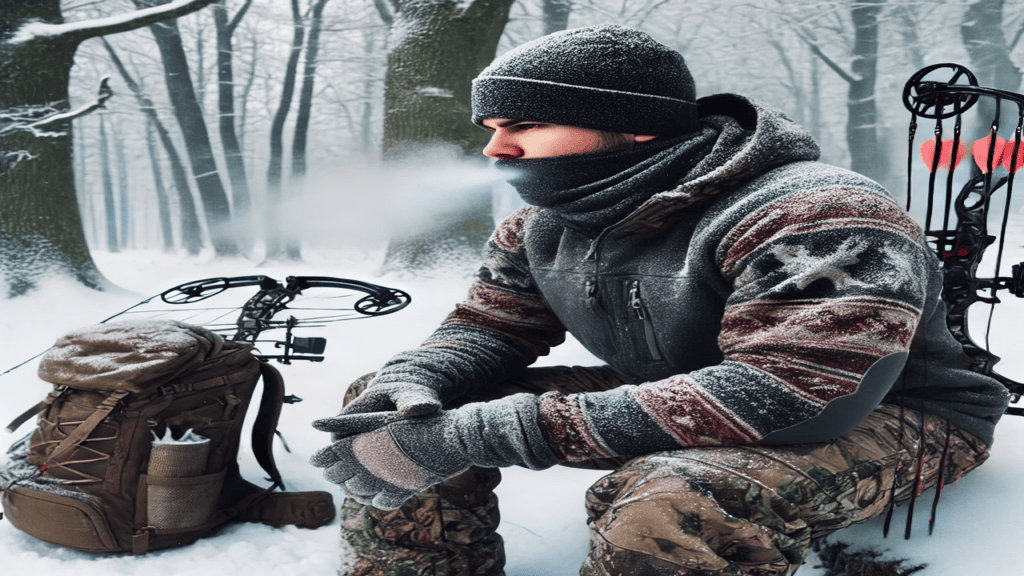
I still remember the day I was issued the Extended Cold Weather Clothing System (ECWCS) before deploying to Afghanistan. The supply sergeant handed me a bundle of gear—base layers, fleece, a Gore-Tex shell—and I figured I was all set for the cold. At the time, I didn’t fully understand layering, and I assumed that just throwing on the big parka would be enough.
That was a mistake. In the mountains of Afghanistan, temperatures can swing from -20°F to over 100°F, and I quickly learned that staying warm wasn’t about one big coat—it was about smart layering and managing moisture.
Years later, I found myself making the same mistakes in the mountains of Pennsylvania while bow hunting. I overdressed, sweated too much, and got cold fast. It took years of trial and error—along with testing a lot of cold-weather hunting gear—to figure out how to stay warm all day without overheating or freezing up.
Now, I want to share these lessons so you can avoid the mistakes I made and stay comfortable in the stand longer. Whether you’re a new bow hunter or an experienced one looking to fine-tune your system, avoiding these cold-weather mistakes will make a huge difference in your ability to stay out longer and hunt more effectively.
Common Cold-Weather Mistakes Hunters Make
Before we dive into what to do, let’s talk about what not to do. I’ve been that shivering newbie, so learn from my mistakes instead of repeating them:
- Wearing the Wrong Layers: Many hunters pile on heavy clothes or rely on one thick coat, thinking more insulation is better. The problem? Improper layering can leave you sweaty and then freezing or so stiff from bulk that you can barely move. Instead of throwing on a big jacket, build a layering system that lets you adjust to conditions as needed.
- Overdressing on the Hike In: One of the biggest mistakes I see is hunters dressing too warm from the start. This leads to overheating and sweating, which soaks your base layer and makes you cold later. Instead, start comfortably cold—you’ll warm up as you move.
- Not Venting Sweat: If you’re hiking hard to your stand and sweating up a storm, you’re setting yourself up for failure. Moisture buildup cools your body down fast once you stop moving. Use pit zips, open your jacket, or remove a hat to dump heat and stay dry.
- Wearing Cotton (“Cotton Kills”): Cotton absorbs moisture like a sponge and holds it against your skin, making you lose heat rapidly. Avoid cotton base layers, socks, and gloves at all costs. Stick to merino wool or synthetics that wick moisture and keep you warm even if damp.
- Ignoring the Wind Factor: Wind is one of the fastest ways to lose heat. If your outer layer isn’t windproof, the cold will cut through your insulation and rob your warmth. Always have a windproof shell to block heat loss.
- Skipping Hats and Gloves: Heat escapes quickly from your head, hands, and feet. If you don’t wear a proper hat or gloves, you’re losing valuable body heat and risking frostbite in extreme cold. A merino wool beanie and midweight gloves with hand warmers in your pockets make a huge difference.
- Forgetting Gaiters and Accessories: Ever had snow slip into your boot or felt icy wind shoot up your pant leg? If so, you’ll understand why gaiters, neck gaiters, and insulated boot inserts are game changers. These small items prevent heat loss from exposed areas and keep you dry.
- Tight Boots & Cold Feet: Tight boots cut off circulation, making your feet freeze faster. Always size your boots to allow room for thicker socks and airflow. Also, using antiperspirant spray on your feet can reduce sweating and help keep them warm.
- Neglecting Hydration and Nutrition: In cold weather, your body still needs water, but your thirst response is lower. Dehydration makes you feel sluggish and actually lowers your body’s ability to generate heat. Carry an insulated water bottle and sip regularly, even if you’re not thirsty. High-calorie snacks like nuts, jerky, and energy bars help fuel your internal heat.
- Sitting Directly on the Cold Ground: The ground steals body heat quickly through conduction. If you sit on a metal stand, cold rock, or damp ground, you’ll feel it fast. Always use an insulating pad or seat cushion to create a barrier between you and the cold surface.
- Not Adjusting Layers Once in the Stand: Once you stop hiking and settle in, put on your insulating layers immediately. If you wait too long, you lose the heat you built up on the hike in, and it’s harder to warm back up. Carry your outer layer strapped to your pack (not inside, where it compresses insulation) and put it on once you’ve cooled down slightly.
Now that we’ve covered the biggest mistakes, let’s talk about how to layer properly and stay warm all day.
The Thermal Layering System
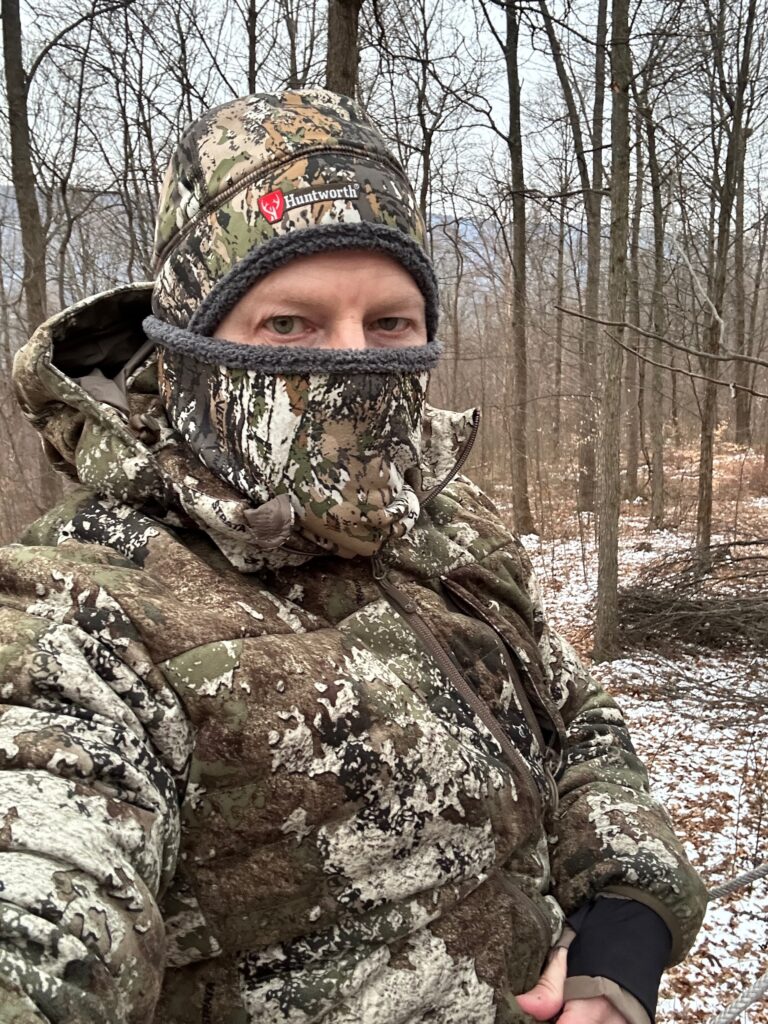
Layering is the foundation of staying warm in the cold, but not all layers are created equal. My Thermal Layering System is built around three key components: moisture-wicking base layers, insulating mid-layers, and a windproof, weather-resistant outer shell.
Trying to choose a cold-weather hunting jacket? I tested 12 jackets for warmth, quietness, mobility, weather protection, and value. See the full benchmark and find the jacket that fits the way you hunt.
1. Start with a Superior Base Layer
Your base layer’s job is to wick sweat away from your body so you don’t end up cold and damp. After years of testing different materials, I’ve found that a mesh base layer is the best option. Mesh base layers use capillary action to move moisture away from your skin, allowing sweat to evaporate faster than with solid fabric. This keeps you drier and warmer.
Avoid cotton at all costs—it soaks up sweat and stays wet, making you colder. Instead, go for merino wool or synthetic blends. I prefer merino wool in extreme cold because it retains warmth even when slightly damp, while synthetic base layers dry faster and work well in high-output situations.
2. Build Your Insulating Layers for Maximum Heat Retention
Once your base layer wicks moisture away, your mid-layer’s job is to trap heat while allowing airflow. I like using merino wool or fleece layers, stacking them depending on how cold it is. Airflow is crucial because trapped air between layers maximizes warmth. The more efficiently your system holds heat without trapping moisture, the longer you’ll stay warm.
I’ve tested countless insulation materials, and synthetic fleece and merino wool offer the best balance between warmth, breathability, and moisture control. If it’s brutally cold, I’ll layer a puffy jacket with synthetic insulation like PrimaLoft under my outer shell.
3. Seal in the Heat with a Windproof and Weatherproof Outer Layer
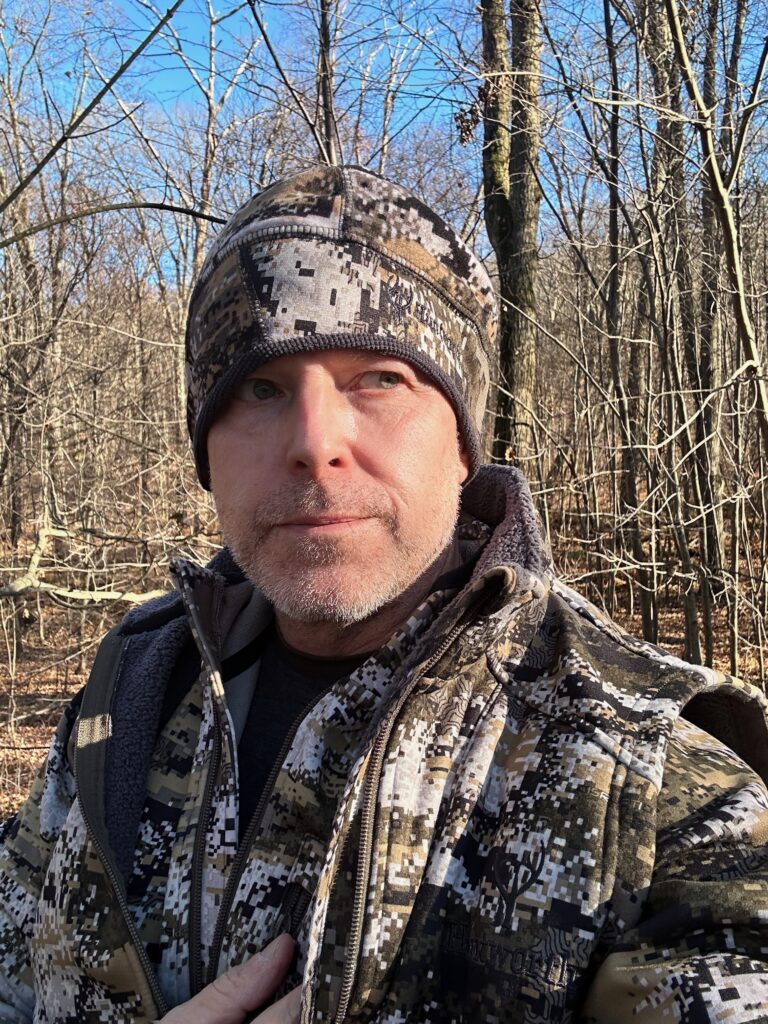
Wind is one of the biggest threats to staying warm in the cold. If the wind cuts through your layers, it robs you of heat fast. That’s why your outer shell must be windproof. It should also be either waterproof or have durable water repellent (DWR) treatment to shed rain and snow.
One mistake I see hunters make is choosing an unlined shell that doesn’t allow airflow. If you’re hiking in bad weather, look for outer layers with pit zips to vent excess heat without exposing yourself to the elements.
*See my full How to Layer for Cold Weather Hunting post here.
Moisture Management: Stay Dry, Stay Warm
If there’s one thing that will make or break your ability to stay warm, it’s moisture management. Sweat is your enemy in the cold. You need to start cold and regulate your heat output so you don’t overheat.
1. Be “Comfortably Cold” on the Walk In
When hiking to your stand, start off slightly cold—I call this being “comfortably cold.” You’ll warm up as you move, and if you dress too warmly from the start, you’ll sweat, making you colder later.
- Ventilate as You Move: Open pit zips or take off your hat and gloves.
- Slow Down Before Reaching Your Stand: At about 200-300 yards from your stand, slow down to regulate your breathing and reduce heat build-up.
- Stop and Cool Down if Needed: Before putting on your final layers, take a moment to let your body temperature stabilize.
2. Carry Your Jacket, Don’t Wear It
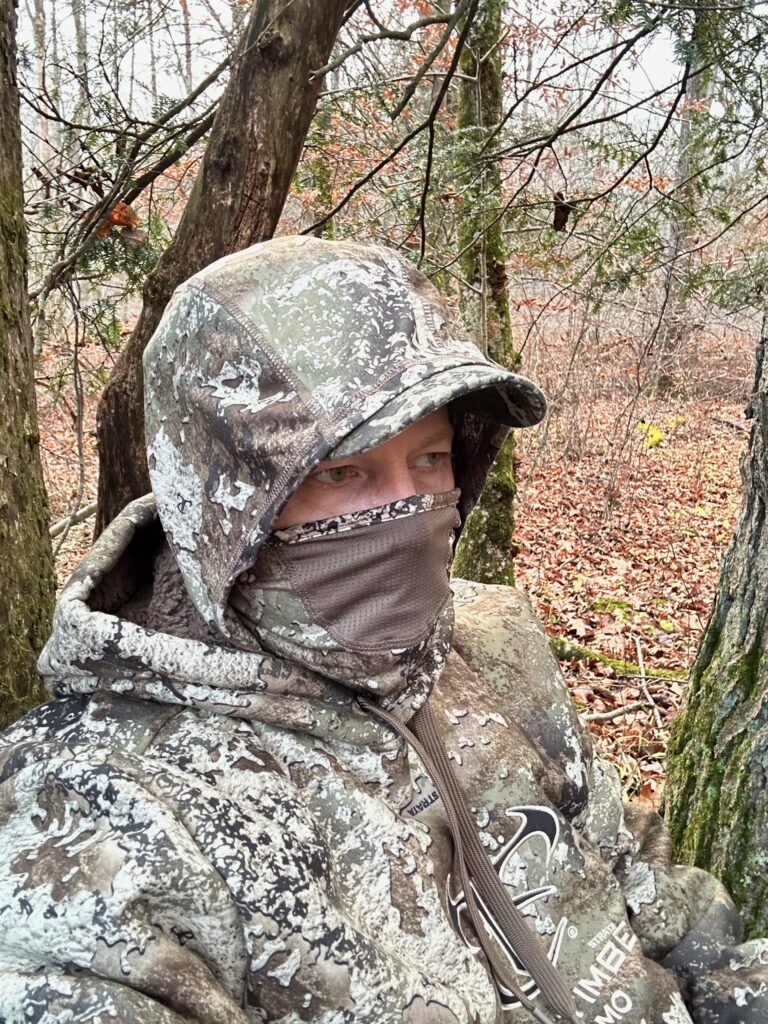
Always carry your outer layer to your stand instead of wearing it. Strap it to your pack rather than stuffing it inside—compressing insulation reduces its effectiveness. Once at the stand, put it on to trap the heat you’ve built up on the way in.
If you are doing this and still getting cold, do not assume you need a bigger jacket. Use my guide on why your hunting jacket is not keeping you warm to check sweat, wind, cold contact, and missing insulation first.
Keeping Your Feet Warm and Dry
Your feet are one of the first places to get cold. Here’s how I keep mine warm all day:
- Use Antiperspirant on Your Feet – A light spray of antiperspirant on your feet before putting on socks reduces sweating, keeping your socks drier.
- Wear Wool Socks with Room to Breathe – Your boots must be big enough to allow some airflow inside. Cramped toes get cold faster.
- Avoid Over-Tightening Your Boots – Loosening your boots slightly when you sit helps maintain circulation and prevents cold toes.
- Use Boot Blankets or Toe Warmers – If sitting in extreme cold, add an extra insulating layer over your boots or use chemical toe warmers.
Smart Hand Protection
Your hands need a balance of warmth and dexterity. I prefer a midweight glove that allows me to shoot my bow easily while using hand warmers in my pockets for extra warmth. If it’s extremely cold, merino wool glove liners with mittens are a great option.
Other Cold-Weather Strategies
- Keep the Wind at Your Back – This will keep you warmer, but is extremely tough to do when deer hunting.
- Use an Insulating Sit Pad – The ground saps heat faster than air. Always use a thin foam pad or insulated cushion to sit on.
- Regulate Your Body Heat – Staying warm is about maintaining a steady temperature. Avoid extreme temperature swings by adjusting layers proactively.
Final Thoughts: Learn from These Mistakes and Stay Warm
Cold-weather hunting isn’t just about enduring the elements—it’s about understanding how to work with them. The hunters who stay in the stand longer, remain comfortable and ultimately have more success are the ones who have learned from their mistakes.
I’ve made plenty of errors over the years—overdressing, sweating through my base layer, choosing the wrong materials, and not preparing my body for the cold. But each mistake taught me a valuable lesson. Now, with the right layering system, smart moisture management, and attention to detail like windproofing and hydration, I can stay warm and focused no matter how brutal the conditions get.
The best part? You don’t have to learn the hard way. By avoiding the mistakes we’ve covered here, you can skip the trial and error and head into your next cold-weather hunt with a serious advantage.
Want to see exactly what I’m carrying this season? Check out my Personal Bowhunting Gear List for 2026