
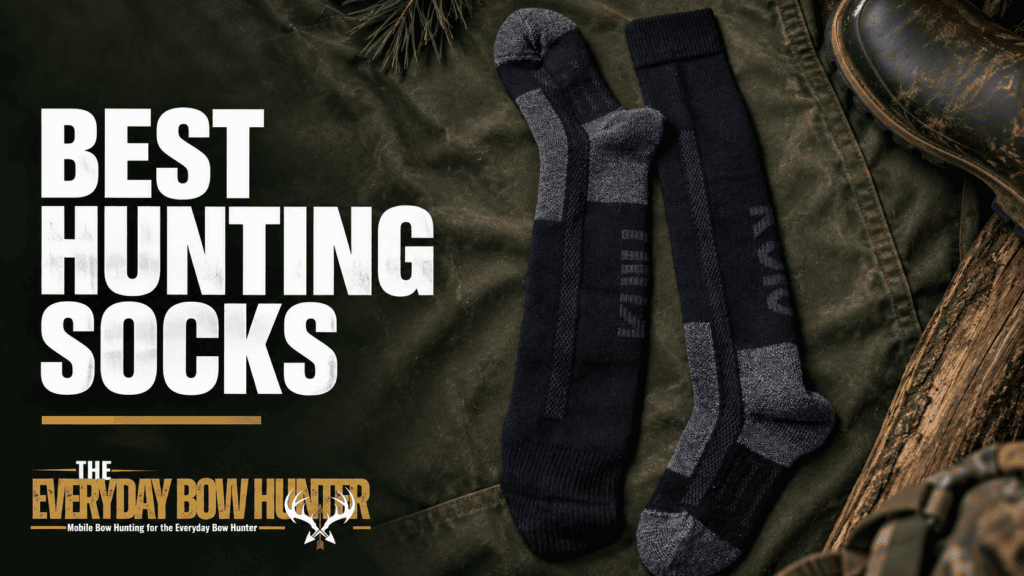
I wore Smartwool socks for years. They were comfortable, warm, and worked in everything from hiking boots to tall rubber boots. Then some of my older pairs started getting hard, losing their shape, and sliding around inside the boot. That is when I began testing what else was out there.
I found several good hunting socks, but I did not find one pair that wins every hunt. The KUIU StrongWool Heavyweight is now my favorite sock for a tall rubber boot. Darn Tough gives me the best long-term value. Farm to Feet has become my hot-weather scouting choice, and Wrightsock still has a place when blister control matters most.
The biggest lesson was simpler than comparing wool percentages. A hunting sock has to match the boot, the walk, and the time you will spend sitting still. A thick sock that crowds your toes can leave you colder. A warm sock that gets soaked on the walk can do the same thing.
That is how I organized these picks. Start with the job the sock needs to do, then compare the products that actually fit that job.
My Best Hunting Sock Picks
These are mission-based picks from my field use. The boot and the amount of walking can change the answer.
KUIU StrongWool Heavyweight
Best for: Tall rubber and neoprene hunting boots
Why I use it: Knee-high coverage, warmth, thickness, and a secure fit
Main drawback: Needs extra room in the boot
Darn Tough OTC Heavyweight
Best for: Cold-weather value
Why I use it: Warm, durable, and backed by Darn Tough’s lifetime guarantee
Main drawback: You pay to send a warranty pair back
Darn Tough Midweight Hunting Sock
Best for: Long walks in hiking boots
Why I use it: Better balance of cushion, warmth, and bulk for my Merrell boots
Main drawback: Not my late-season rubber-boot choice
Farm to Feet Tropical No Fly Zone
Best for: Hot-weather scouting and early season
Why I use it: Thin, secure, and no blisters through my offseason use
Main drawback: Not enough insulation for a cold sit
Wrightsock Coolmesh II
Best for: Blister-prone feet
Why I use it: Double-layer construction reduces friction
Main drawback: Light cushioning on rough ground
Minus33 Heavy Expedition Mountaineer
Best for: Cold-weather alternative
Why I use it: Very comparable to Darn Tough in my rubber boots
Main drawback: Not as thick or warm as the KUIU
Smartwool Maximum Cushion Tall Crew
Best for: A proven heavyweight merino option
Why I use it: Soft, warm, and familiar after years of use
Main drawback: Some of my older pairs lost their shape
Hollow Hunt
Best for: Cold sits and alpaca comfort
Why I use it: Warm and soft
Main drawback: My pairs can slide down on longer walks
Heat Holders
Best for: Short walks and very cold static sits
Why I use it: One of the warmest socks I have used
Main drawback: Not my choice when the sock may get wet
How I Tested These Socks
I have used these socks for scouting, long walks into distant spots, early-season hunts, and cold sits in the Pennsylvania mountains. I have worn them in regular hiking boots, insulated rubber boots, and non-insulated rubber boots. That mix matters because the same sock can feel right in one boot and become bulky or loose in another.
I built this as a field guide, not a laboratory warmth ranking. These conclusions come from the socks I have hunted in, how they fit after repeated use, and which pairs I keep reaching for. I have not tested every hunting sock on the market. I will add to the guide as I put more pairs through real hunts.
What These Socks Cost at Full Price
Price matters, but it does not turn the wrong sock into the right one. As one clear baseline, the KUIU StrongWool Heavyweight has a full MSRP of $49. The other full-price or MSRP references below were checked on September 9, 2026. I left temporary sale prices out because they change too quickly. Use the product links for the price that is available when you read this.
Full-price references checked September 9, 2026. Sales, bundles, shipping, and taxes can change the checkout price.
KUIU StrongWool Heavyweight
Full-price reference: $49
You are paying for: Knee-high rubber-boot coverage and heavyweight support
Darn Tough OTC Heavyweight
Full-price reference: $35
You are paying for: Cold-weather performance plus the lifetime guarantee
Darn Tough Midweight Hunting
Full-price reference: $29
You are paying for: A less bulky hiking-boot option for longer walks
Smartwool Maximum Cushion Tall Crew
Full-price reference: $29
You are paying for: Heavy merino cushioning from a proven sock maker
Farm to Feet Tropical No Fly Zone
Full-price reference: $26
You are paying for: Light merino construction and insect treatment
Minus33 Mountaineer
Full-price reference: $25.99
You are paying for: A heavyweight merino cold-weather alternative
Heat Holders Original Long
Full-price reference: $21.99
You are paying for: Maximum warmth for short approaches and static sits
Wrightsock Coolmesh II Crew
Full-price reference: $20
You are paying for: A double-layer design focused on friction and blisters
Hollow Hunt
Full-price reference: $54.99 for one pair
You are paying for: Alpaca construction and cold-weather comfort
Darn Tough is not the cheapest pair on the list. It is my best long-term value because the guarantee changes what happens after the sock wears out. KUIU costs more at full price, but it fills the tall rubber-boot job better for me. Hollow is the hardest one to justify at the single-pair price unless you already know you want alpaca and the fit works for you.
KUIU StrongWool Heavyweight: My Best Rubber-Boot Sock
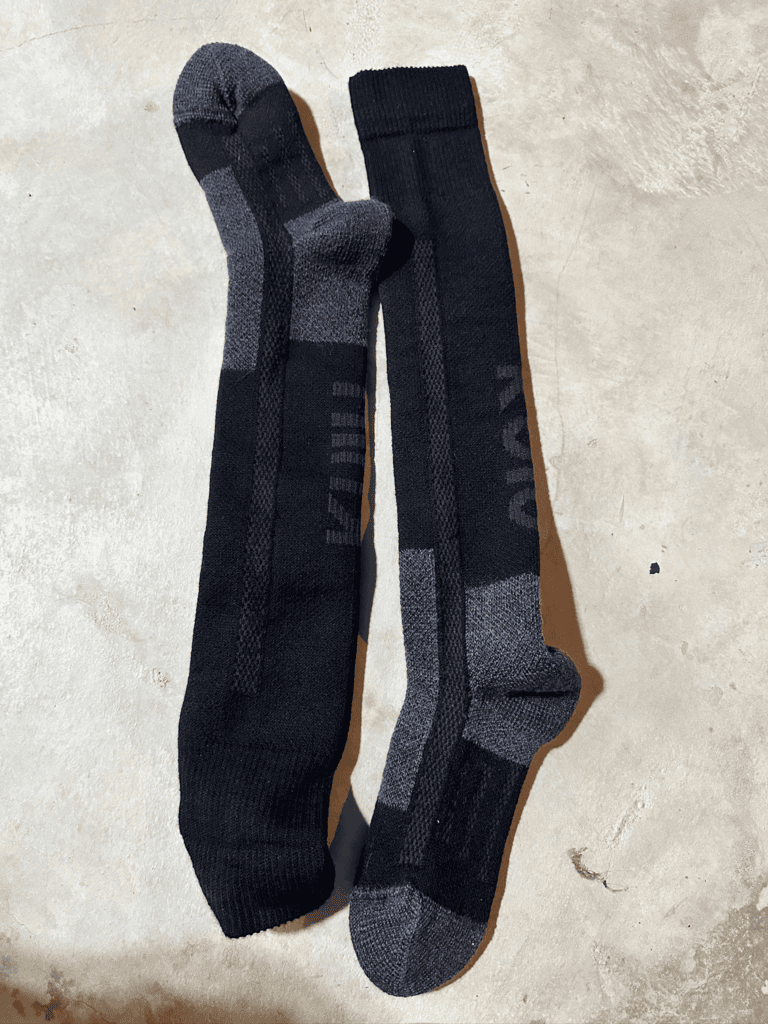
The KUIU StrongWool Heavyweight is the sock I would choose first for a tall rubber or neoprene hunting boot. My medium pair comes up to my knee. That gives me coverage through the full boot instead of leaving the cuff and the top of the boot fighting for the same spot on my calf.
It is thick, warm, and supportive where I want it. It also handled the moisture I built up on the walk without turning loose inside the boot. A loose sock can bunch under your foot or start sliding down. The KUIU stays where I put it.
KUIU lists the sock as a 17-inch calf-height model built for waders and mud boots. That construction lines up with what I found in my rubber boots: more coverage, more insulation, and a secure fit through the lower leg.
Skip it if your boots already fit tight. This is a thick sock. If it crowds your toes or compresses the insulation in the boot, the extra material is working against you. I want enough room to move my toes without my foot sliding around.
Darn Tough: My Best Long-Term Value
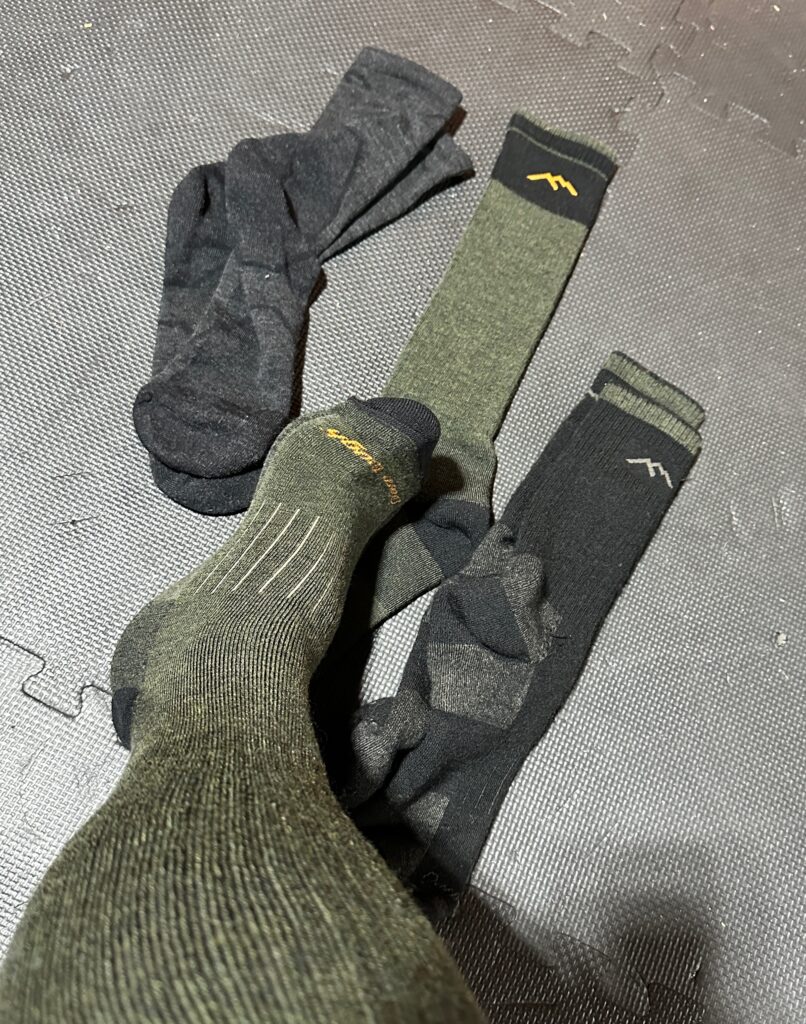
Darn Tough is very comparable to the other top merino hunting socks I have used. The OTC Heavyweight Hunting Sock works well in my insulated and non-insulated rubber boots. It is warm, comfortable, and built with enough structure that it feels like a hunting sock instead of a thick casual sock.
The guarantee is what separates Darn Tough for me. Darn Tough currently says its socks are unconditionally guaranteed for life. You fill out the claim, clean the socks, and pay to send them back. After Darn Tough processes the pair, it sends a credit for the replacement value, and the replacement order ships free.
I have paid around $7 to $8 to mail socks back. That is what my postage cost, not a warranty fee. Sending several pairs together can lower the return cost per pair. Socks wear out, and that replacement path is why Darn Tough remains my best long-term value.
Darn Tough Midweight for Longer Walks
I use the Darn Tough Midweight Hunting Sock with my regular Merrell hiking boots when I am walking farther into a spot. I do not need the bulk of the OTC Heavyweight in that setup. The midweight sock gives me enough cushion and warmth without filling the hiking boot or holding more heat than I need during the walk.
Choose the OTC Heavyweight for cold rubber-boot hunts. Choose the Midweight when the walk and the hiking boot matter more. That is a more useful distinction than calling either one the best Darn Tough sock for every hunter.
Minus33 Heavy Expedition Mountaineer: Very Close to Darn Tough

The Minus33 Heavy Expedition Mountaineer is closer to the Darn Tough than the old version of this article made it sound. I use it in both insulated and non-insulated rubber boots, and I would be comfortable hunting in either one.
The KUIU is thicker, warmer, and gives me more leg coverage. That is why the KUIU wins the rubber-boot job. The Minus33 still gives you a warm over-the-calf merino sock. In actual use, the difference between it and Darn Tough is much smaller than a numbered ranking would make it look.
Best for: A hunter who wants a heavyweight merino rubber-boot sock and finds the fit or current price better than Darn Tough. Skip it if: You want the maximum knee-high coverage and thickness I get from the KUIU.
Smartwool: The Sock I Used for Years

Smartwool was my main sock brand for a long time. I used shorter hiking styles with hiking boots and taller over-the-calf socks in my rubber boots. New Smartwool socks are soft, comfortable, warm, and right in the same quality range as Darn Tough and Minus33.
The weakness showed up with age. Some of my pairs became hard or crusty, lost their shape, and started getting loose inside the boot. Once a sock slides around and bunches, I am done trusting it for a long walk.
I still consider Smartwool a good hunting sock. I moved into other brands because my older socks were wearing out and I wanted to see what else worked. The Smartwool Hunt Classic Edition Maximum Cushion Tall Crew is a current hunting option, but my judgment comes from years of using several Smartwool models.
Farm to Feet Tropical No Fly Zone: Best for Hot Weather
I used the Farm to Feet Tropical No Fly Zone throughout the offseason for hot-weather scouting and hiking. I had no blisters and found no ticks on me during that use. The sock stayed thin enough for heat without feeling like a disposable liner inside a hiking boot.
Farm to Feet lists a 51% merino wool, 45% nylon, and 4% Lycra blend with targeted light cushioning. The No Fly Zone treatment adds insect protection to a sock that already worked for me on fit, moisture, and blister control. I still use a complete tick-prevention routine. A treated sock is not protecting the rest of my body.
Best for: Warm scouting trips, early-season hunts, and longer walks in hiking boots. Skip it if: You need insulation for a cold stand sit.
Wrightsock Coolmesh II: Best for Blister Control
Wrightsock takes a different approach. The Coolmesh II uses two built-in layers so the fabric can move against itself instead of putting all that friction against your skin. That is why it remains my blister-control specialist for warm weather and higher-mile scouting.
The fit starts snug, and the sock stays in place once it is on. I have used it during hot Pennsylvania mountain walks without the blister problems I was trying to avoid. The tradeoff is cushion. On rocky ground, I can feel more through the boot than I do with a heavier merino sock.
Choose Wrightsock when friction is the problem you need to solve. Choose Farm to Feet when you want a thin merino hunting sock with targeted cushion and insect treatment.
Hollow Alpaca Socks: Warm, but Watch the Fit
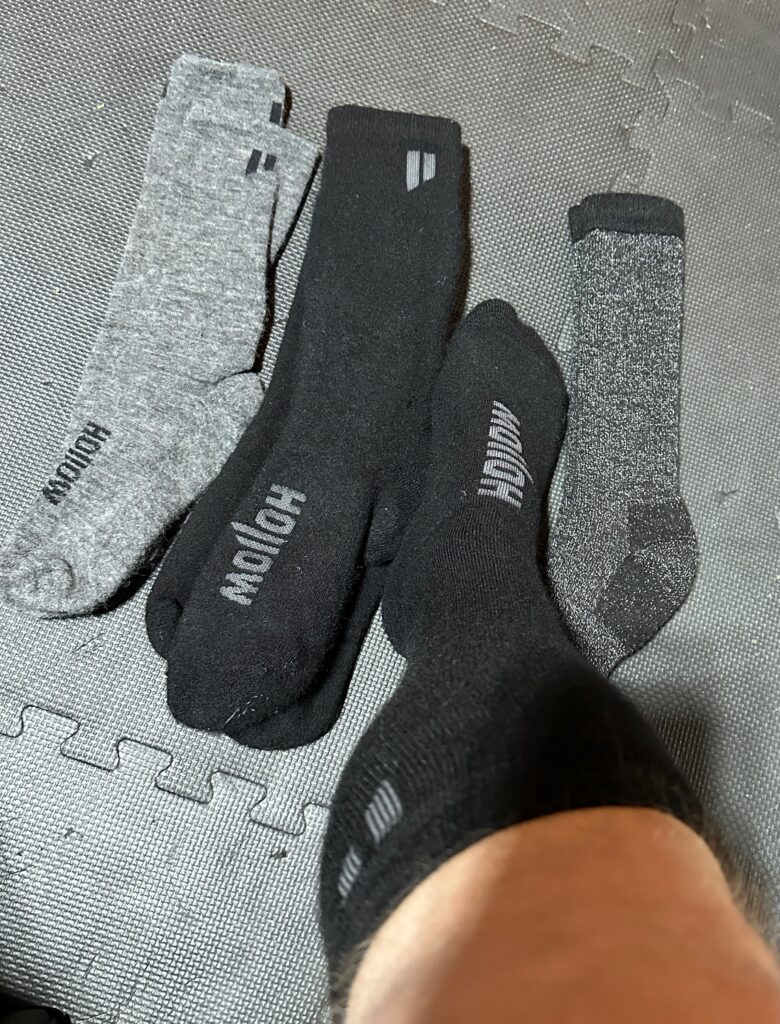
I have used both the Hollow Hunt sock and a Hollow alpaca compression sock. I find them very comparable. I would compare the current price, height, size, and return terms instead of assuming the Hunt name makes one a different level of sock.
Both are warm and soft. The problem with my pairs is that they can work down during a longer hike. That is manageable on a short walk followed by a cold sit. It is annoying when you are trying to cover ground and have to keep pulling a sock back into place.
Best for: A colder, less mobile hunt where alpaca warmth matters more than long-distance fit. Skip it if: A sock sliding down inside the boot drives you crazy.
Heat Holders: Maximum Warmth for a Short Walk
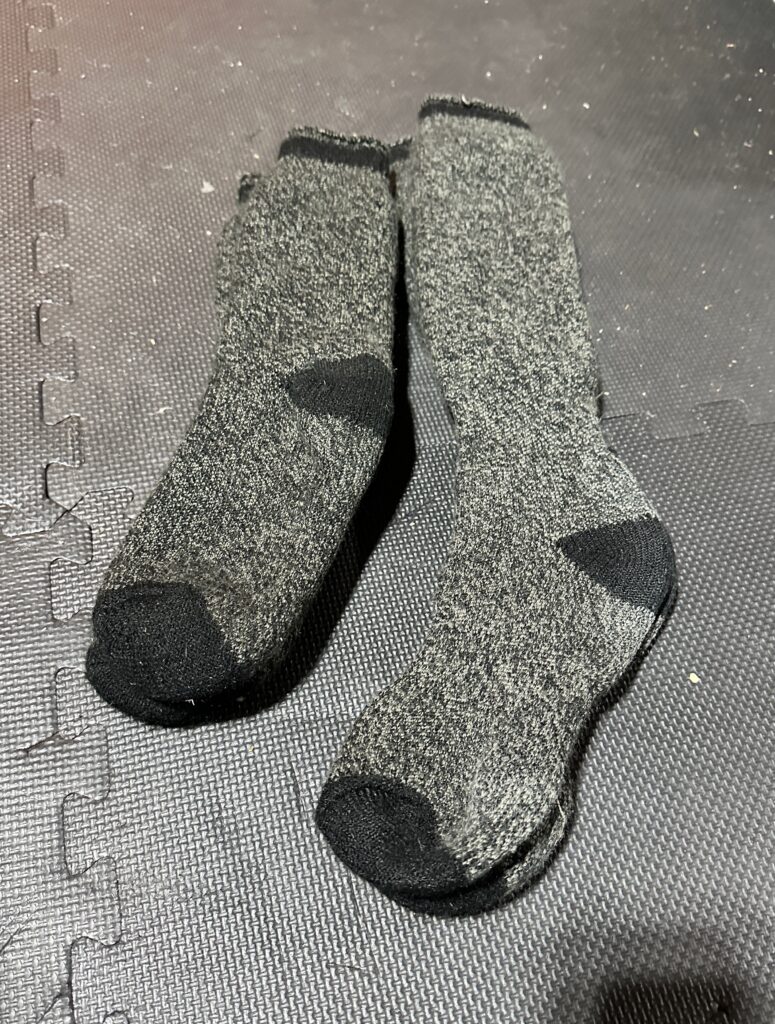
Heat Holders are among the warmest socks I have used. I like them for a short walk followed by a long cold sit. I do not like them when I expect the sock to get wet.
I may wear a thin merino or alpaca sock under them to help manage moisture. If I am not walking far, I can wear them alone. The same boot-fit rule still applies. Two warm socks do not help if the combination squeezes your toes and kills the air space you need.
Best for: The hunter who has a short approach and needs warmth through a cold static sit. Skip it if: You have a long climb, wet conditions, or a tight boot.
My Sock and Boot System for Cold Hunts
I often wear a lightweight wicking sock under a heavyweight Darn Tough or Minus33 sock. The thin layer helps move sweat away from my skin, and I do not have to stop and change socks when I reach the tree. I use the same idea under Heat Holders when the walk is short and the boot has enough room.
The toe-box check controls the whole system. Put on the socks you plan to hunt in and lace or pull on the actual boots. You should be able to move your toes. Your foot should feel secure without feeling squeezed. If the boot became tight after adding the second sock, take a layer off.
This is the same MOVE-to-BOOST problem I use throughout my bowhunting clothing system. Manage heat and sweat during the walk. Add enough insulation for the sit after your activity drops. Your feet follow the same rules as the rest of your body.
How to Choose Hunting Socks Without Overthinking It
- Start with the boot. A tall rubber boot benefits from over-the-calf or knee-high coverage. A hiking boot usually needs less height and bulk.
- Account for the walk. Long climbs favor moisture control, secure fit, and enough cushion without excess heat.
- Plan for the sit. A cold stand sit needs insulation, but the sock cannot undo sweat you trapped on the way in.
- Check toe room. Put the complete system on before the hunt. More sock is not better when it restricts circulation.
- Retire loose socks. Once a pair loses shape and starts bunching or sliding, I stop trusting it for a serious walk.
Hunting Sock FAQ
What are the best socks for rubber hunting boots?
The KUIU StrongWool Heavyweight is my best rubber-boot-specific sock. It reaches my knee, stays in place, and gives me the thickness and support I want in a tall rubber or neoprene boot. Darn Tough OTC Heavyweight and Minus33 Mountaineer are close alternatives.
Should I wear two pairs of socks while hunting?
I often use a thin wicking sock under a heavyweight hunting sock. That works only when the boot still has enough room for toe movement and circulation. If two pairs make the boot tight, use one sock that fits the temperature and carry a dry replacement if needed.
Are alpaca socks better than merino socks for hunting?
Alpaca socks can be warm and comfortable, but the complete sock construction and fit matter more than the fiber name. My Hollow pairs are warm, but they can slide down during longer walks. I prefer them for colder hunts with less movement.
What hunting socks help prevent blisters?
Wrightsock Coolmesh II is my blister-control specialist because its two layers reduce friction against the foot. Farm to Feet Tropical No Fly Zone also gave me a blister-free offseason while scouting and hiking in warm weather.
Are thick socks always warmer?
No. A thick sock needs room inside the boot. If it squeezes your toes, reduces circulation, or compresses the boot’s insulation, the complete system can feel colder. Fit the boot while wearing the socks you plan to use.
Which Hunting Sock I Would Buy
If you hunt in tall rubber boots, I would start with the KUIU StrongWool Heavyweight. The coverage and secure fit separate it from the other heavyweight socks I have used. If long-term value controls the decision, Darn Tough is my pick because the performance is strong and the lifetime guarantee gives you a real replacement path.
For long hikes in regular hunting or hiking boots, I would move to the Darn Tough Midweight. For hot-weather scouting, I use Farm to Feet Tropical No Fly Zone. Wrightsock is the specialist when blisters are the main concern.
Do not buy the thickest sock and assume the job is done. Match the sock to the boot, leave room for your toes, and manage the sweat you create on the walk. That is what keeps the system working after you stop moving.
Continue the clothing system: See how socks, boots, base layers, insulation, and weather protection work together in my Bowhunting Clothing System.
Want to see exactly what I’m carrying this season? Check out my Personal Bowhunting Gear List for 2026