
The First Lite Thermic and First Lite Core are both made for whitetail hunters, but they do not do the same job. The Thermic is a true late-season outer layer for long sits, cold wind, and rough cover. The Core is a quieter, lower-bulk jacket for midseason hunting, cleaner access routes, and hunters who need to move before they settle in.
After 21 years in Special Forces and years of hunting from stands, saddles, and the ground, I have learned that the right jacket is the one that matches the hunt. Buying the warmest jacket is not always the right answer. Buying too little jacket for a long, cold sit is not the right answer either.
Quick Answer: Thermic or Core?
Choose the Thermic if you:
- sit for long periods in real late-season cold
- need more insulation and wind protection
- hunt rough cover and can carry a heavier jacket in
Choose the Core if you:
- hunt active, midseason conditions more often
- need quiet, low-bulk insulation
- want a flexible jacket that layers easily
What My Heat Test Shows
This comparison is part of my 12 Cold Weather Hunting Jackets Tested project. I tested jackets over three seasons using the same 90-minute heat-up and 120-minute cooldown process. It is a controlled comparison, not a promise that every hunter will feel warm at the same temperature. Your layers, wind, sweat, movement, and time on stand still matter.
I use a Warmth Over Time Score to show how much heat a jacket held above its own starting temperature through the complete 210-minute test. The Thermic scored 2,969.5. The Core scored 1,963.75. That puts the Thermic about 51 percent higher. The Thermic also had the highest actual final temperature in the 12-jacket study: 76.1°F.
That score needs the right context. The Core is a midseason jacket being compared against jackets designed mainly for late-season work. Its lower warmth score is not a failure. It confirms what its insulation and field use already show: the Core is built for comfort, quietness, lower bulk, and active layering rather than maximum stationary warmth.
Why the Thermic Is the Better Late-Season Choice
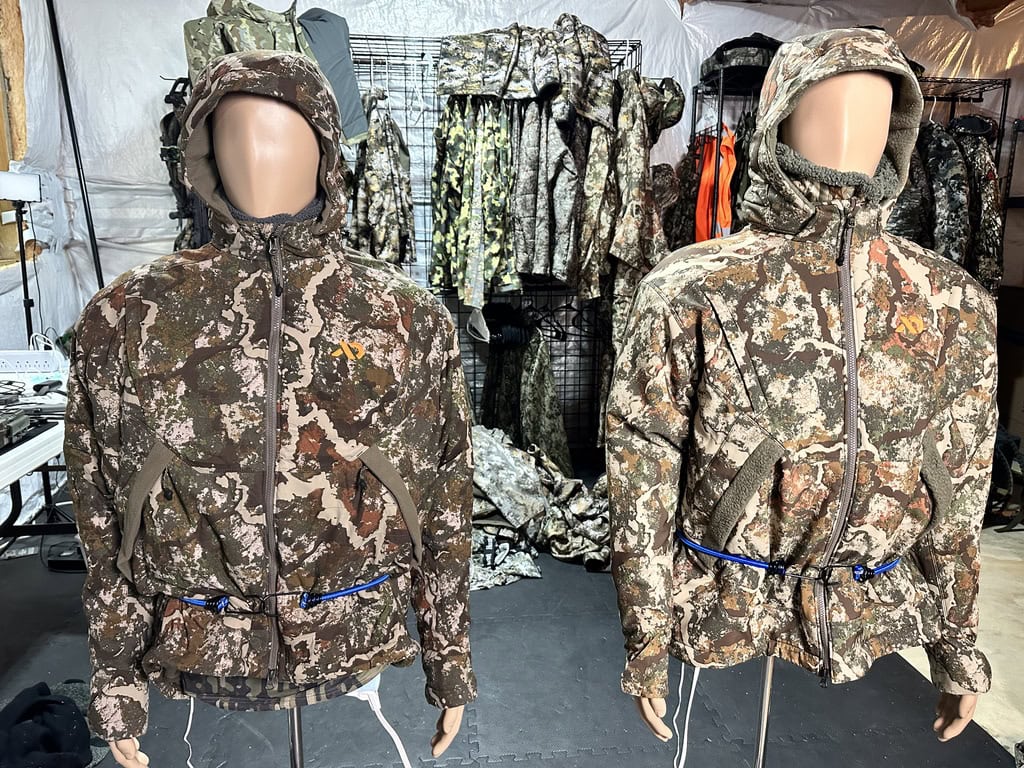
The Thermic has 170 gsm PrimaLoft Gold insulation through the body and 133 gsm through the sleeves and hood. It also has a sherpa-style interior, a quiet windproof softshell, and a durable water-repellent finish. That is a serious amount of insulation for a hunting jacket, and it shows in the test.
I use a jacket like this after the movement is over. I walk in comfortably cold, carry the Thermic, and put it on before I stop producing heat. That keeps me from sweating on the hike, which is one of the fastest ways to get cold later in the hunt. It is also the better choice when I expect to work through brush.
Why the Core Still Has a Real Job
The Core needs to be judged as the premium midseason jacket it is, not as a lighter Thermic. First Lite uses 80 grams of PrimaLoft Gold through the body and 60 grams through the sleeves. That is less and/or comparable insulation than the Sitka Fanatic at 120/80 and the Pnuma Vintis at 100/60, and well below the Thermic. It belongs in the midseason group.
It is also exceptionally comfortable and light for the insulation it carries. The soft outer shell and lower bulk make it easy to wear, easy to layer, and very quiet for close-range bowhunting. It works well on a clean access route, during active hunting, and when a full late-season jacket would make me overheat.
The tradeoff is durability. The Core does not have the tougher, more substantial outer fabric of the Thermic. But that lighter softshell is part of why it moves so well and stays quiet. I would not choose it for the coldest, longest stationary sit or hard brush work. I would choose it when comfort, quietness, and lower bulk matter most.

The Numbers Need Field Context
A heat test is useful because it lets me compare jackets under the same conditions. It does not tell you what to wear at one exact temperature. A 30-degree morning can feel completely different depending on wind, humidity, how far you walk, whether you are climbing, and how much insulation is under the jacket.
What the score does tell me is whether a jacket has enough insulation and construction to keep working after I stop moving. That matters to a bowhunter. You may feel fine while walking in, then get cold fast once you are standing on a platform or sitting in a saddle. The Thermic gives you more room for that change. The Core asks you to manage the rest of the system better.
Neither jacket replaces smart layering. A dry base layer, enough insulation underneath, wind protection, and warm hands and feet still matter. The jacket is the outer piece that helps protect the heat you have built and trapped. That is why I do not judge a jacket by one number, one feature, or a manufacturer temperature claim.
Field Differences That Matter to a Bowhunter
The Thermic feels like a serious late-season hunting jacket as soon as you put it on. The extra insulation, soft interior, and more substantial outer fabric make it better when the temperature drops and the wind starts finding weak spots in your clothing. It is not the jacket I want to hike hard in, but that is not its job. I want it packed or strapped to my system, then put on before I cool down.
The Core earns its place because it does not feel like you are wearing a heavy late-season coat. It is easier to layer under a shell or another outer piece, easier to wear while moving, and quieter for the kind of close-range bowhunting where fabric noise matters. If your typical hunt involves a short sit, a clean access route, or changing conditions, the Core can be the more practical piece.
That is the decision most hunters miss. Do not buy the Thermic because a chart says it is warmer if your hunts rarely call for it. Do not buy the Core hoping it will give you Thermic-level stationary warmth. Match the jacket to the part of the hunt where you lose heat, not simply to the coldest temperature you see on the forecast.
Value Depends on the Job You Need It to Do
Both jackets cost enough that I would rather see a hunter buy the right one than buy both by mistake. At full price, the Core costs as much as some late-season jackets, so the price versus performance question is there. Its value is in its exceptional comfort, light weight, quiet softshell, and the number of midseason hunts where it is the better piece to wear.
The Thermic delivers more late-season warmth, weather protection, and durability. If you are choosing one, start with the conditions you hunt most often.
Which One Should You Buy?
Buy the Thermic if your main problem is staying warm during long late-season sits. It is the better choice for the hunter who gets cold when movement stops, hunts in wind, or needs more protection in rough cover. The tradeoff is bulk, so plan to carry it when the walk in is hard.
Buy the Core if you need a quieter, lighter jacket for active hunts, midseason conditions, or a flexible layering system. It is a good choice when you manage heat on the walk in and do not need a dedicated deep-cold outer layer every day.
Thermic vs. Core FAQ
Is the Thermic warmer than the Core?
Yes. The controlled test and my field use both show that the Thermic holds substantially more heat over time. Its heavier insulation and more substantial build are designed for that job.
Can I use the Core in late season?
You can with the right layers, but if you regularly sit still in hard late-season conditions, the Thermic gives you a much better margin for error.
Should I wear the Thermic on the walk in?
Usually, no. Start the walk comfortably cold, carry heavy insulation, and put it on before you settle in. Staying dry is one of the most important parts of staying warm.
Continue the Clothing System
- Build the layers underneath your jacket with the Thermal Layering System.
- Learn why a good jacket may still leave you cold.
- Use mesh base layers to help manage moisture.
- Return to the Everyday Bow Hunter Clothing System.
Want to see exactly what I’m carrying this season? Check out my Personal Bowhunting Gear List for 2026