
Most hunters obsess over the perfect stand location. Some even scout rubs, scrapes, and bedding areas like they’re solving a murder case. But they never think about the single biggest reason they don’t see deer: they blew the whole hunt walking in.
Access and exit routes don’t just matter; they determine whether you get a shot or get busted before you ever clip on your release. And if you don’t learn how to manage your scent and avoid deer trails on the way in and out, you’re wasting time in the woods.
In this post, I’m going to break down why access and exit are the silent killers of otherwise great hunts. I’ll show you how mature bucks respond to pressure, how scent pools and drags through terrain, and how to build smarter routes that keep you invisible until it’s time to draw.
When I was in Special Forces, the infil and exfil were two of the most critical parts of every mission plan. We could have the best intelligence, the right gear, and the perfect target, but if we couldn’t get in clean and get out without being compromised, it didn’t matter. That mindset stuck with me. And now, when I plan a hunt, I treat access and exit routes with the same level of seriousness. Because the truth is, if you mess up your approach, your hunt is over before it starts.
Why Your Access Matters More Than Your Setup
I’ve watched mature bucks hit the brakes 80 yards from a food source, not because they saw something, but because they smelled where someone walked in five hours earlier. Then they vanished.
That told me everything I needed to know: Your scent doesn’t disappear just because you’re not there anymore.
Here’s what you’re leaving behind if you walk sloppy:
- Ground scent that lingers on trails, leaves, branches, and grass
- Scent cones that hang in depressions and shadowy spots
- Disturbed terrain that visually alerts cautious deer
- Residual pressure that teaches bucks to avoid that area, even when you’re not hunting it
So while other hunters are focused on moon phases and scrape activity, you can outsmart bucks just by being undetectable. That starts with access.
How Mature Bucks Respond to Bad Access
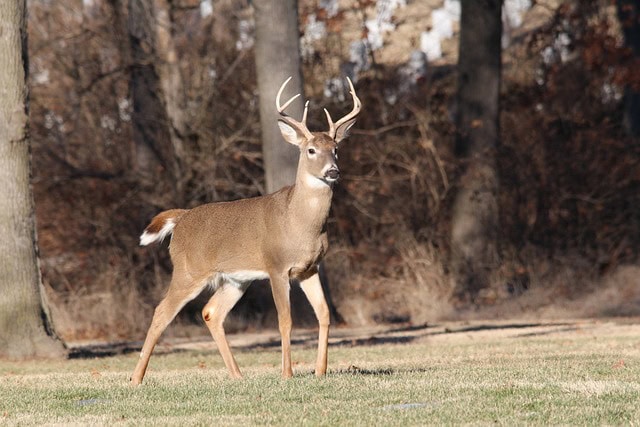
After 10 years of tracking deer movement and behavior, one thing is clear: mature bucks don’t give second chances.
If you cross their entry or exit trails, blow scent into their bedding, or make noise on approach, here’s what happens:
- They don’t blow out. They vanish silently.
- They shift beds to stay out of reach.
- They go nocturnal — or change the entire pattern.
- They start watching access points, especially if it happens more than once.
The scary part? You may never know you spooked him. You just sit in the tree, wondering where he went.
Best Cold Weather Jacket: I’ve tested more cold weather bow hunting jackets than I can count, but there is one that beat all the others during my 3-hour heat retention test. See my 7-Jacket test here.
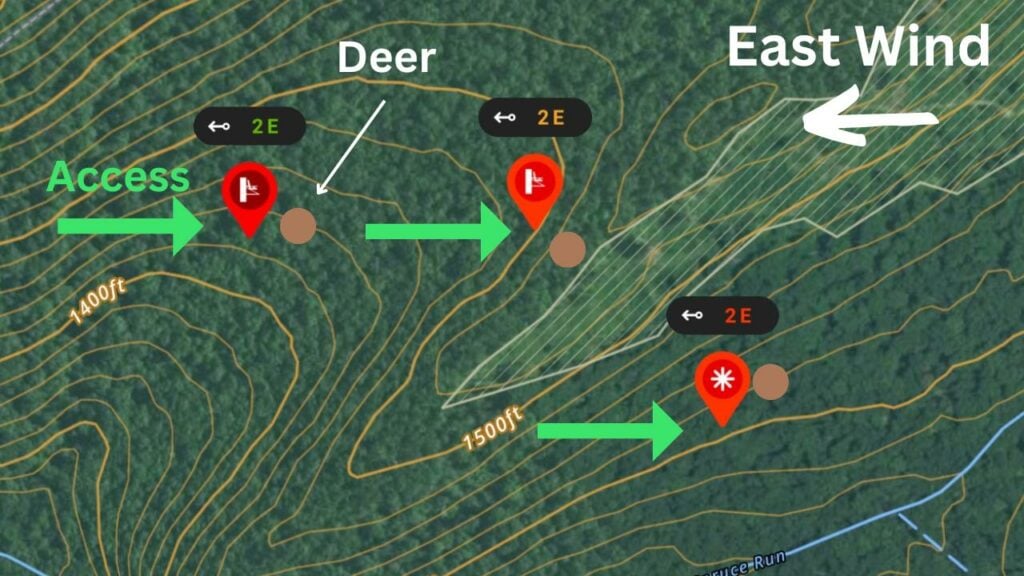
What Makes a Good Access Route
What If You Can’t Avoid Deer Trails?
This is real-world bowhunting, not a lab test. Sometimes the only way to reach your spot involves crossing a trail. When that happens, it’s not game over. You just have to minimize your impact.
Here’s how to cross smart:
- Cross Early, Not Often
Do it hours before movement begins. Bucks are more forgiving of old scent than fresh boot tracks. - Use Rain and Wind to Erase You
A rainy or windy day is your best friend. It muffles sound, breaks up scent, and helps wash away your tracks. - Don’t Cross Where They Linger
Avoid crossing:
- Trails within 80–100 yards of a known bed
- Trail intersections and terrain funnels
- Areas where deer stage or hang up before feeding
Instead, cross where they move with purpose, not where they stop and scan.
- Let Terrain Do the Work
Whenever possible:
- Drop into ditches or low spots to avoid skyline exposure
- Walk on hard surfaces, rocks, or through water if available
- Use steep sidehills or banked terrain to redirect scent flow away from trails
You won’t always have perfect access. But you can keep a hunt alive by thinking like a predator and staying invisible where it counts.
It’s not always about distance. It’s about invisibility.
Here’s what to look for when planning an access route:
1. Stay Below the Deer’s Line of Sight
Use creek bottoms, ditches, or sidehills instead of walking skyline ridges. If they can’t see you or hear you, they won’t react.
2. Avoid Crossing Deer Trails
If you walk across trails used for bedding-to-feed travel, you risk ground scent busting your hunt. Go around, or find a way to circle and enter from a less active zone.
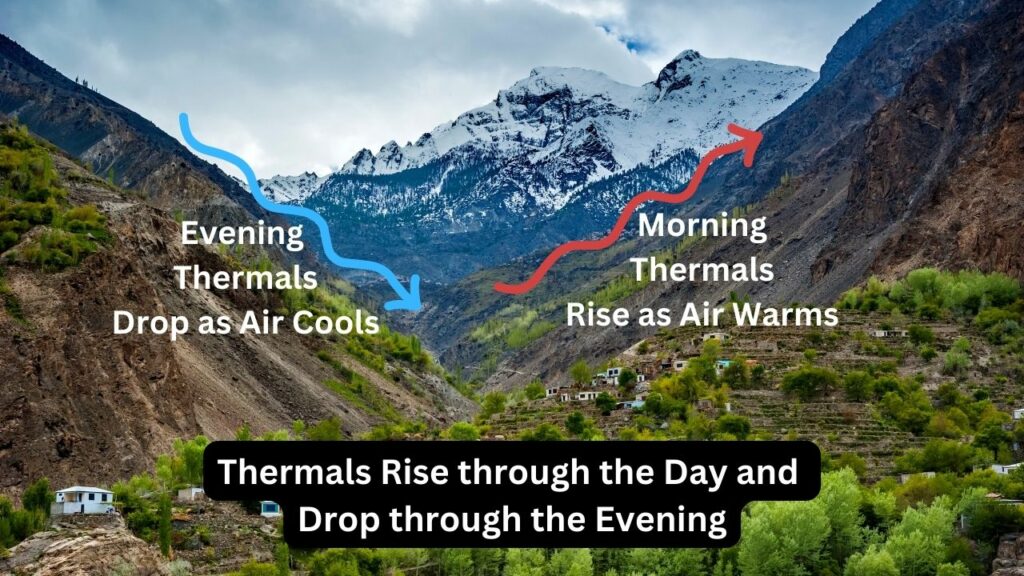
3. Check the Thermal Flow
- In the morning, thermals rise. Enter from below.
- In the evening, thermals drop. Enter from above.
Avoid routes where thermals will pull your scent into bedding or trail systems during approach or exit.
4. Access Wind Is Not Hunt Wind
Don’t just check the wind for your stand, check it for the entire walk-in. You can have a perfect wind for the sit, but blow the whole plan walking through the wrong funnel on the way there.
Exit Strategy: Don’t Blow It On the Way Out
Too many hunters ruin future hunts with bad exits. Here’s how to avoid that:
- Leave early if conditions shift (bad wind, thermals reversing)
- Use rain or wind to cover your exit
- Don’t cross the same trails deer will use at night
- Avoid headlamp use near bedding areas, use red or no light when possible
The goal is simple: leave the woods like you were never there.
Real Example: How I Blew a Perfect Setup
Last year, after a morning hunt, I scouted my way into some very hot sign. I found some very fresh rubs and a scrape that looked like it had just been hit. I backed out and came back prepared to hunt a few hours later.
The forest floor was covered in super dry, crunchy leaves due to the lack of rain, so I had to come up with a solid plan to access the area. Unfortunately, I walked in on a bedded buck. Had a standoff at 15 yards and then had him standing at 10 yards just before dark, 3 hours later.
With my bow already on the ground.
The setup was perfect. Not sticking to my process killed it.
Here’s how I used stealth access, wind, and thermals to slip within 30 yards of this bedded buck in The Last 200 Yards.
Scent Management on the Ground
You can’t beat a whitetail’s nose, but you can avoid triggering it.
Here’s what I do:
- Always wear rubber boots and spray soles with scent killer
- Tuck pants into boots to avoid brushing brush
- Don’t touch branches with bare hands (always wear gloves)
- Spray pack straps and grab handles (they hold scent like Velcro)
Also, stop assuming scent only travels in the air. Your ground scent is a bigger problem than your wind direction half the time.
How to Build Your Access Plan
Before every hunt, I run a 3-part check:
- Can I enter without skyline exposure?
- Can I avoid known trails and movement corridors?
- Can I exit without leaving scent in a spot I want to hunt again?
If I can’t answer yes to all three, I either reroute or I don’t hunt that spot until I can.
Want help designing this system? My 3-Hunt Plan and Kill Zone Mapping System both walk you through building routes that work with the wind, not against it. Use the Everyday Bow Hunter Roadmap to find these guides and put them in the right order.
Final Thoughts
You don’t get many chances at a mature buck. The last thing you want is to lose one before the hunt even starts.
Access and exit are the silent hunt killers. The difference between seeing a shooter or staring at squirrels isn’t luck; it’s your entrance and exit plan.
Build routes that leave no trace. Avoid trails. Think thermals. Think long-term.
Your stand is just a weapon. Your access is the strategy.
Join the Everyday Bow Hunter Everyday Bow Hunter
Want the full system? Join the Everyday Bow Hunter Roadmap and learn how to build a 3-Hunt Plan, design Kill Zones, and time your access perfectly. All for Free!

Where This Fits in The Everyday Bow Hunter System
This article is part of the Strategic Hunting side of The Everyday Bow Hunter system. The next step is to connect the idea to a real location, a real plan, and a clean hunt decision.
CONTINUE THE HUNTING SYSTEM
Your Next Steps
Access and exit are not details to solve after choosing a stand. They help decide whether the location is huntable at all.
1. Map Terrain and Access
Score the terrain, entry route, exit route, and security cover.
2. Use the Hunt Plan Builder
Build access and exit into the plan before the hunt begins.
3. Return to Strategic Hunting
See how clean execution supports the full system.
Part of the Everyday Bow Hunter System
Map Access Before You Commit
The complete onX Hunt Kill Zone Mapping example shows how entry, exit, pressure, terrain, wind, and timing work together before you choose a Primary, Pivot, or Wait/Observe plan.
Want to see exactly what I’m carrying this season? Check out my Personal Bowhunting Gear List for 2026