
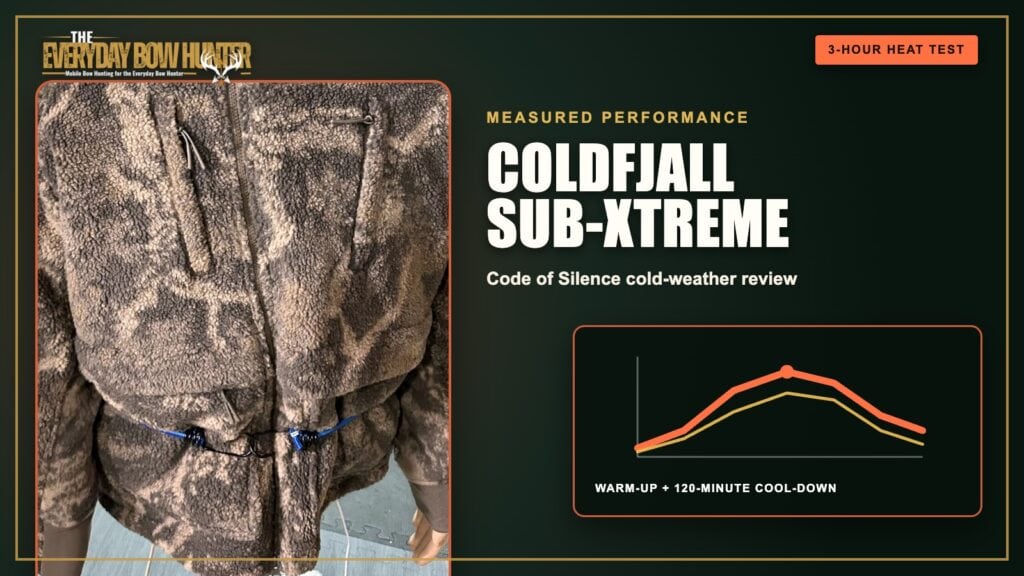
I had mixed feelings the first time I put on the Code of Silence ColdFjall Sub-Xtreme. The jacket felt heavy and bulky enough that I questioned whether I could comfortably draw my bow while wearing it.
After hunting in the complete jacket-and-bib system at approximately 27°F, 20°F in wind and snow, and 14°F, my opinion changed. I stayed warm during every hunt. I never felt wind come through the system, and moisture never reached the inside. Once I learned how to adjust the unusual dual-zipper collar, I could also draw and shoot my bow without a problem.
The trade-off is weight and bulk. This is not a mobile hunting system, and it is not something I would wear while walking to my stand. It is specialized extreme-cold bowhunting gear for hunters who are willing to carry it in, put it on at the stand, and stay there for hours.
My Verdict After Three Hunts
The ColdFjall is one of the warmest, quietest, and most wind-resistant cold-weather systems I have tested. The bibs are what turn it from a heavy jacket into a true extreme-cold system. I would buy it for long, stationary hunts in severe cold and wind, but I would not recommend it for mobile or saddle hunters who need a lighter, less bulky setup.
- Best for: Extreme-cold treestand, ground, and blind hunting
- Warmth: Excellent, especially with the matching bibs
- Noise: Extremely quiet and in the same class as the Sitka Fanatic and Pnuma Highpoint
- Wind protection: Excellent; I noticed no wind penetration
- Measured jacket weight: 4.96 pounds in size Large
- Main limitation: Heavy, bulky, and poorly suited to saddle hunting
Check the current ColdFjall price and availability
Use code BOWHUNTER10 for 10% off at Code of Silence.
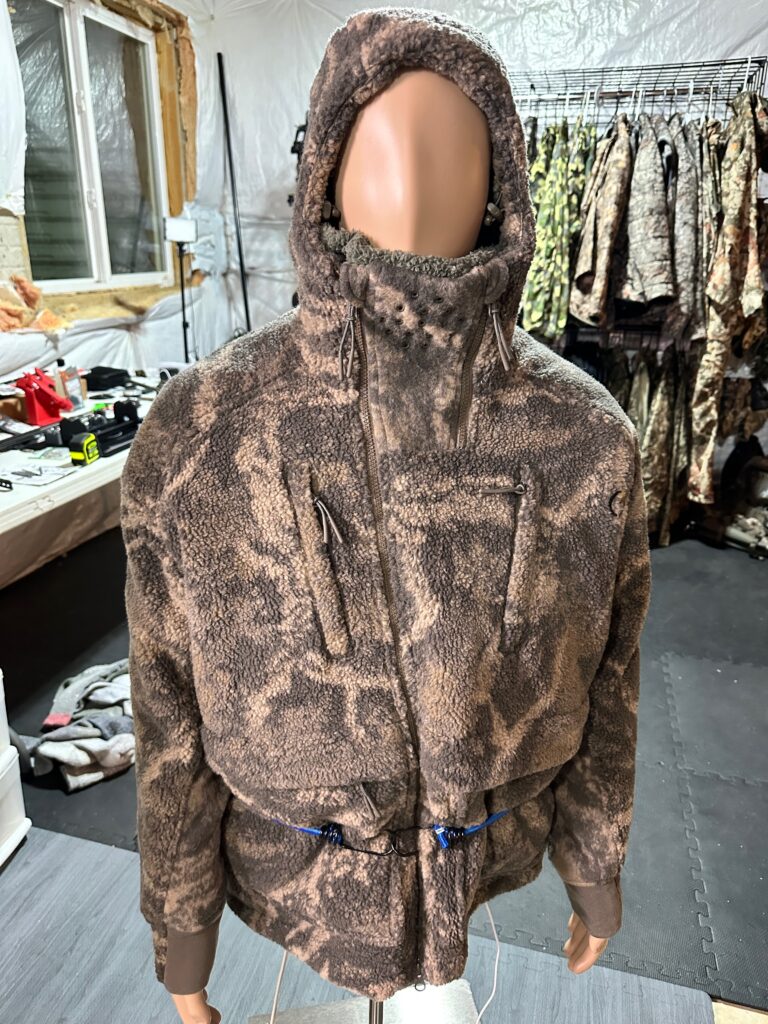
How I Field-Tested the ColdFjall
I wore the complete ColdFjall jacket-and-bib system on three late-season hunts. Each hunt lasted roughly five hours, and some ran a little longer, from around 5:30 in the morning until approximately 11.
| Conditions | What I experienced |
|---|---|
| Approximately 27°F | I stayed warm throughout the hunt and never felt cold. |
| Approximately 14°F | The complete system kept me warm during a long stationary sit. |
| Approximately 20°F with wind and snow | The fleece face became damp by the end, but moisture never reached the inside and I felt no wind penetration. |
Those hunts matter more to me than a laboratory number by itself. The controlled test shows how the jacket gains and releases heat. The field testing shows whether that performance carries over when I am sitting still for hours in wind, snow, and real late-season conditions.
The Bibs Are the Game Changer
The jacket is warm on its own, but the ColdFjall Sub-Xtreme bibs are what make this an extreme-cold system. They protect the lower body, hips, and core with the same quiet, wind-blocking construction. Once the jacket and bibs are working together, the system holds warmth exceptionally well.
The bib zippers also make the system easier to use than its bulk suggests. I carried everything to my hunting location and put it on at the stand. I could get the bibs on and off without removing my boots, which matters when it is cold and you do not want to stand around longer than necessary.
I pre-warmed the system in my vehicle, stored it in a scent-control bag, and then strapped or carried it on my pack for the walk in. That kept me from sweating into my hunting layers and gave the insulation a warm starting point when I dressed at the stand.
Weight and Bulk: The Price of Extreme Warmth
My size Large ColdFjall jacket weighs 4.96 pounds, or 79.36 ounces. That is only the jacket. Once you add the bibs, the complete system becomes a serious load.
You can feel that weight while wearing it, and you will need enough pack space or external straps to carry the system. This is not packable insulation, and it is not intended to be. I would rather accept the weight than become cold during a long sit in severe weather, but hunters need to understand that compromise before buying it.
Do not wear this system on the walk in unless the walk is extremely short. You will overheat and sweat. Wear a lighter walking layer, carry the ColdFjall, and put it on after you reach your hunting position.
Better for a Treestand Than a Saddle
I tried using the complete ColdFjall system in a saddle, and there was simply too much material between the jacket, bibs, saddle, and bridge. It felt crowded and limited the clean, simple movement I want while saddle hunting. The bulk would also make climbing with sticks and working around a lineman’s belt more difficult than it needs to be.
I hunted from the ground during my next two tests instead. The system made much more sense there. I would also use it in a fixed treestand, climbing treestand, or ground blind where I could get dressed, settle in, and remain stationary. A climbing stand gives you a more open platform than a saddle, but I would still carry the ColdFjall and put it on after the climb whenever possible so I did not overheat.
Can You Shoot a Bow in the ColdFjall?
When I first put the jacket on, I did not think I would be able to draw my bow comfortably. It felt too bulky through the chest and neck. The dual-zipper collar changed that.
The collar has two sides and works almost like a built-in neck gaiter. Once I pulled it into position and closed the jacket the way it was designed to be worn, the jacket fit much better. The material stayed where it belonged, and I could draw and shoot my bow.
It is still not the easiest or lightest jacket to shoot in, but it is functional for bowhunting. I would practice in the complete system before hunting so the collar, hood, sleeves, and anchor position feel familiar.
Silence, Wind, and Snow Performance
The Berber-Wool exterior is extremely quiet. I put it in the same general noise class as the Sitka Fanatic and Pnuma Highpoint. The surface does not create the sharp synthetic noise that makes some waterproof jackets difficult to trust at close bowhunting distances.
The ColdFjall also did an excellent job blocking wind. During my snowy hunt around 20°F, the outer fleece eventually became damp. That is normal for a thick fleece face exposed to snow. However, no moisture reached the inside, and I never noticed wind moving through the system.
I would not describe the fleece exterior as a rain shell. Its strength is combining silence with serious wind protection and enough weather resistance for cold snow. If I expected steady rain, I would choose different outerwear, although most waterproof jackets will be noticeably louder.
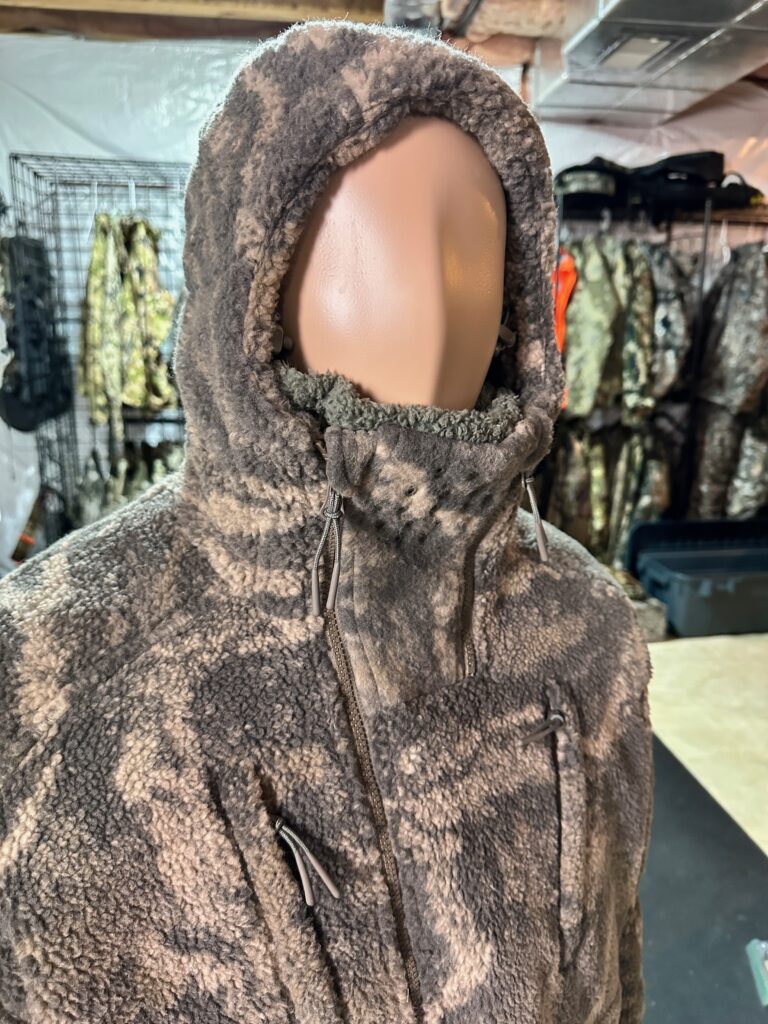
ColdFjall Construction and Design
The ColdFjall uses several layers to produce its warmth, silence, and weather protection:
- Exterior: Quiet Berber-Wool main shell
- Insulation: 150 grams of QuietLoft-Xtreme plus a layer of Windsulation
- Wind protection: WindSeal-TC3 layer throughout the garment
- Interior: Smooth 3X-Tricot lining
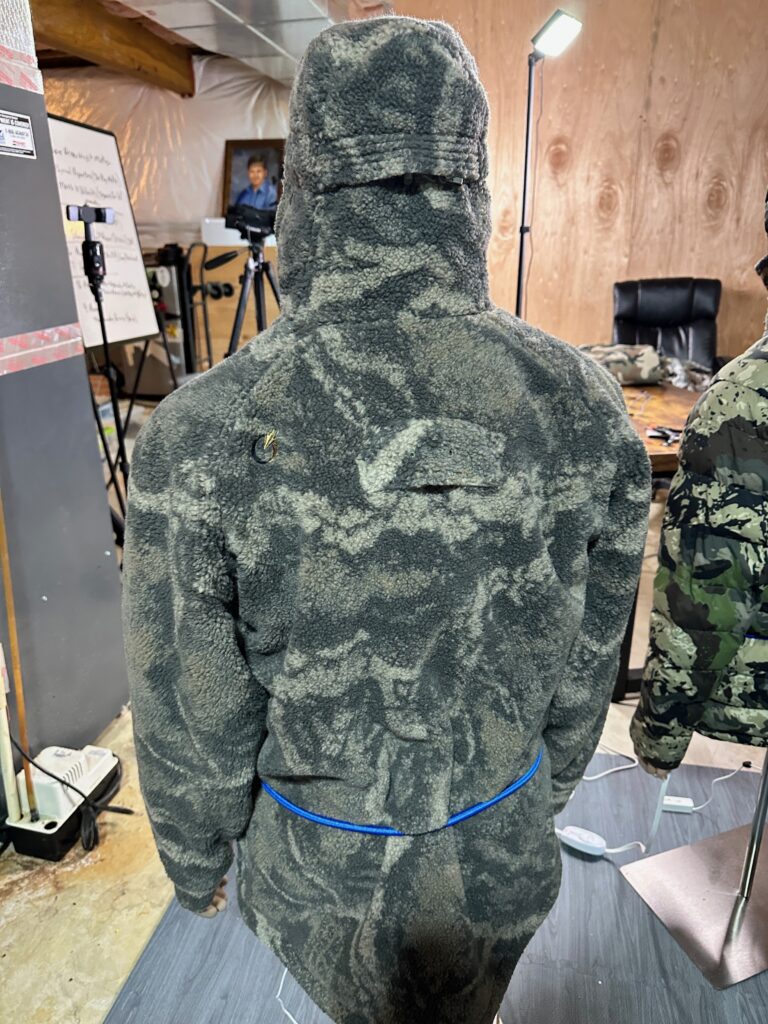
- Lower back: Sherpa panel for added insulation
- Bowhunting features: Articulated sleeves, reduced-bulk arm panels, safety-harness opening, side ventilation zippers, adjustable hood, and dual front zippers
I like the construction and layout. It is comfortable, easy to layer under, and designed around stationary cold-weather hunting rather than trying to be an all-season jacket.
S-18 Camo and Concealment
The ColdFjall is available in Code of Silence’s S-18 camouflage. Its subdued natural colors work well in hardwoods, and the thick fleece surface stays matte instead of reflecting light. More importantly, the fleece breaks up the smooth shape and shine common to technical outerwear.
The pattern is useful, but the lack of fabric noise is the larger bowhunting advantage. You can learn more about how pattern, contrast, movement, and deer vision work together in my guide to the best camo for deer hunting.
My Controlled Heat-Retention Test
I use a controlled mannequin test to compare how hunting jackets warm up and how long they retain that heat. I eventually increased the warm-up period from 60 to 90 minutes because some jackets were still gaining heat at 60 minutes. Ninety minutes gives the insulation more time to reach its peak before I remove the heat source.
- The same mannequin and synthetic base layer are used.
- The heating pad runs from the chest to the waist.
- The temperature probe remains under the arm.
- The jacket is zipped and closed as it would be during a hunt.
- The heat source is removed after 90 minutes.
- Cooling is recorded for another 180 minutes.
| Test stage | Temperature |
|---|---|
| Start | 62.1°F |
| 15 minutes | 63.5°F |
| 30 minutes | 68.7°F |
| 45 minutes | 74.1°F |
| 60 minutes | 79.5°F |
| 75 minutes | 84.2°F |
| 90 minutes—heat removed | 86.5°F |
| 15 minutes after heat removal | 87.6°F |
| 30 minutes after | 86.2°F |
| 45 minutes after | 84.9°F |
| 60 minutes after | 81.0°F |
| 75 minutes after | 78.4°F |
| 90 minutes after | 76.6°F |
| 105 minutes after | 75.3°F |
| 120 minutes after | 73.2°F |
| 135 minutes after | 72.1°F |
| 150 minutes after | 71.2°F |
| 165 minutes after | 70.0°F |
| 180 minutes after | 68.9°F |
Important ColdFjall Test Results
- Starting temperature: 62.1°F
- Peak temperature: 87.6°F
- Total temperature increase: 25.5°F
- Temperature after 60 minutes of cooling: 81.0°F
- Temperature after 120 minutes of cooling: 73.2°F
- Temperature after 180 minutes of cooling: 68.9°F
The ColdFjall continued warming briefly after the heat source was removed and then cooled at a controlled rate. After three hours without added heat, it remained 6.8°F above its starting temperature. That supports what I experienced in the field: this system takes time to warm, but it is built to hold warmth during a long stationary hunt.
Compare my cold-weather hunting jacket test results
ColdFjall vs. Fanatic, Highpoint, Divergent, and Matterhorn
I do not think all heavy hunting jackets serve the same purpose. Based on my field use, this is how I currently separate them:
- Sitka Fanatic: My choice for more typical late-season bowhunting around the 20–30°F range. It is quiet, proven, and easier to manage than the ColdFjall.
- Pnuma Highpoint: A stronger fit when temperatures move toward approximately 10–20°F and warmth becomes a larger priority.
- Code of Silence ColdFjall: My extreme-cold choice when I expect severe cold, strong wind, or a long stationary hunt.
- ScentLok BE:1 Divergent: Extremely warm and heavy, but also the most comfortable jacket-and-bib combination I have worn.
- Huntworth Matterhorn: Waterproof and warm, but too noisy for me to recommend as a close-range bowhunting jacket.
Those temperature ranges are based on my experience, layering, and tolerance for cold. They are not guarantees for every hunter. Wind, moisture, hunt length, activity level, and the rest of your clothing system can move those ranges considerably.
Who Should Buy the ColdFjall?
I would recommend the complete ColdFjall system to a hunter who:
- Regularly hunts in severe late-season cold
- Sits for four to six hours or longer
- Needs serious wind protection without giving up silence
- Hunts from a fixed or climbing treestand, blind, or the ground
- Is willing to carry the system and dress at the stand
I would look elsewhere if you primarily hunt from a saddle, cover significant distance, need compact insulation, or rarely hunt below freezing. In those situations, the ColdFjall’s weight and bulk will probably create more problems than its extreme warmth solves.
Frequently Asked Questions
Is the Code of Silence ColdFjall warm?
Yes. I stayed warm during three hunts at approximately 27°F, 20°F in wind and snow, and 14°F. Each hunt lasted roughly five hours or longer. The complete jacket-and-bib system is designed for stationary extreme-cold hunting.
Is the ColdFjall quiet enough for bowhunting?
Yes. Its Berber-Wool exterior is exceptionally quiet and compares well with the Sitka Fanatic and Pnuma Highpoint. It does not have the sharp shell noise I hear from many waterproof jackets.
Can you shoot a compound bow while wearing it?
Yes, although the jacket initially feels bulky. Once I properly adjusted the dual-zipper collar and built-in gaiter area, I could draw and shoot normally. Practice in the complete system before hunting.
Is the ColdFjall waterproof?
I would not treat it like a dedicated rain shell. During a windy snow hunt, the outer fleece became damp, but no moisture reached the inside and I felt no wind penetration. It is better suited to cold snow and wind than prolonged rain.
Is it good for saddle hunting?
Not in my experience. The jacket and bibs created too much bulk around my saddle, bridge, and climbing system. I preferred using it from the ground and would also choose it for a fixed or climbing treestand or blind. Even then, I would carry it and put it on after climbing whenever possible.
Final Verdict
The Code of Silence ColdFjall Sub-Xtreme is not the most versatile cold-weather system I have tested. It is heavy, bulky, difficult to use in a saddle, and far too warm to wear during a serious walk.
But that is not what it is built to do. It is built for the hunter who carries everything to the stand, gets dressed, and sits through severe cold and wind. In that role, the ColdFjall performs exceptionally well. The complete jacket-and-bib system kept me warm through three long hunts, blocked the wind, handled snow, remained quiet, and still allowed me to shoot my bow.
If I expected extreme cold, strong wind, and a long stationary sit, I would buy the ColdFjall. I would simply plan around the weight and leave it at home when mobility matters more than maximum protection.
See the ColdFjall jacket and complete system
CONTINUE THE CLOTHING SYSTEM
Your Next Steps
 LOCK
LOCKThis content fits LOCK because it focuses on protecting the clothing system from cold, wind, weather, or prolonged exposure.
Use this review to decide what job the piece should perform, then build the rest of the system around it.
1. Learn the LOCK Role
See what a quiet protective outer layer must do for a bowhunter.
2. Compare the Cold-Weather Jackets I Tested
Use the field and heat-test results to compare realistic late-season options.
3. Build the Layers Under It
A protective outer layer works best when the BUILD layers underneath it are correct.
Part of the Everyday Bow Hunter System
Want to see exactly what I’m carrying this season? Check out my Personal Bowhunting Gear List for 2026