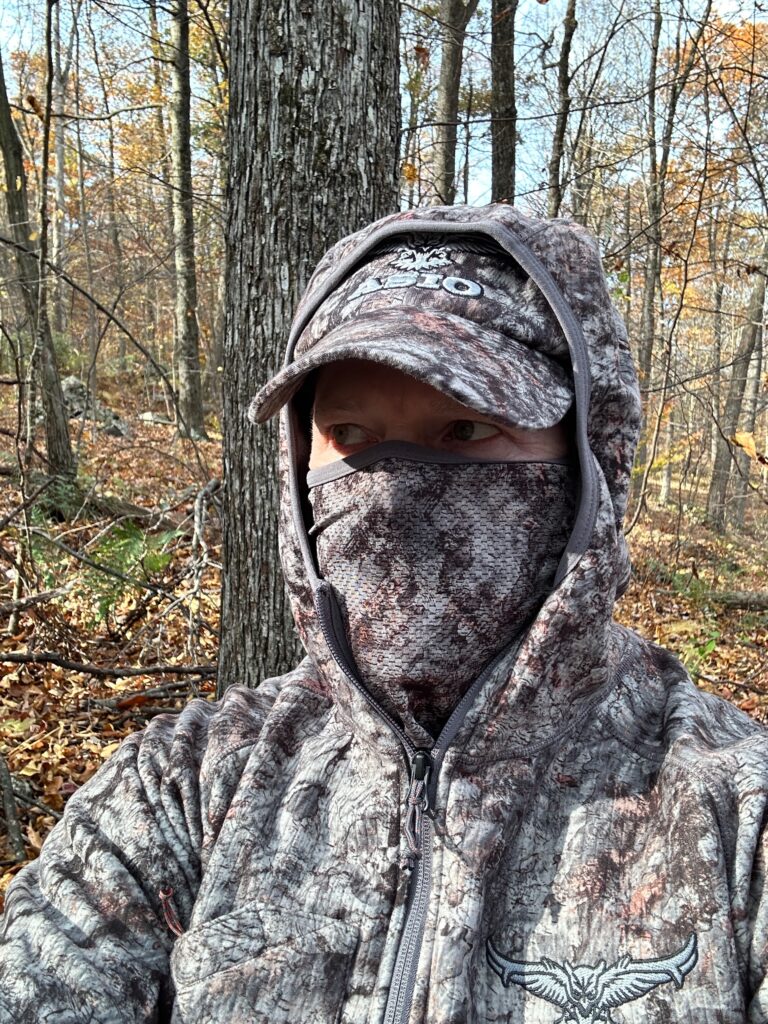
I had marked my pack on GPS, and I still had trouble finding it when I came back.
I had left my ASIO Raptor jacket over the pack and leaned it against a tree. The pattern blended into the bark so well that I had to slow down and search for something I already knew was there.
That experience reinforced something I have learned from years of hunting in different camouflage: a pattern only works when it fits the background where you put it. Raptor can be outstanding against dark bark and shaded timber. Put the same pattern against a green September canopy or pale open sky, and the answer can change fast.
The more camouflage variations I saw, the more I questioned what was actually helping me in the woods. Researching deer vision changed how I judged patterns, and my military experience taught me to match equipment to the mission and environment. Neither one replaces what I see in the field. Together, they help me understand why a pattern worked in one setup and looked wrong in another.
Treestand hunting adds one more problem: the background behind you at 15 or 20 feet can look completely different from the tree at ground level. Season, stand height, light, leaf cover, nearby limbs, and open sky all affect what the deer sees.
Camouflage is also only one part of your bow hunting clothes. Quiet fabric, movement control, scent, wind protection, fit, and the ability to draw your bow still matter. Camo will not fix a bad setup, but the right pattern can break up your outline and make small, controlled movement less obvious.
My Best Camo for Deer Hunting guide explains the deer-vision research and the full environment-by-environment method. This guide applies that system to the tree, the height, and the background behind a treestand or saddle setup. Start with the six common situations below, then use the pattern sections to see what can change the choice.
Bottom Line: Match the Background Behind Your Stand
These are the places I would start. They are not calendar rules. A warm fall, heavy evergreen cover, stand height, or a different tree can change the answer, so compare the pattern with the actual background a deer will see.
LEAF-ON EARLY SEASON
Green canopy and filtered light
My first choice: KUIU Verde
Second choice: SITKA Optifade Cover
Why: Verde has worked well for me when living vegetation and darker green cover fill the background.
What changes the answer: If the canopy is extremely dense and leafy, Cover may fit the filtered light and leaf shapes better.
TRANSITION AND MIXED COVER
Leaves, bark, and brush in the same setup
My first choice: First Lite Specter
Second choice: Pnuma Caza OV
Why: Specter is the most versatile one-pattern whitetail option in my broader camo guide, and that carries over well to mixed treestand backgrounds.
What changes the answer: A lighter, more open stand can favor Caza OV, while a bare skylined setup can move Elevated II ahead of both.
LEAF-OFF HARDWOODS
Gray limbs, pale trunks, and open canopy
My first choice: SITKA Elevated II
Second choice: ASIO Raptor
Why: Elevated II keeps the upper body from becoming one dark block when sky and lighter limbs fill the background.
What changes the answer: Darker bark, heavy shade, or a trunk that fills the view can move Raptor ahead.
DARK BARK OR DEEP SHADE
Shaded hardwoods and bark-heavy timber
My first choice: ASIO Raptor
Second choice: Code of Silence S-18
Why: Raptor has disappeared against dark bark well enough that I had trouble finding my own marked pack.
What changes the answer: If quiet cold-weather clothing is also part of the mission, the S-18 system may be the better complete setup.
LOW OR BRUSH-BACKED STAND
Broken cover behind the hunter
My first choice: First Lite Specter
Second choice: Pnuma Caza OV
Why: Both patterns fit mixed cover better than a very light open-sky treestand pattern.
What changes the answer: If the brush drops out and the background becomes pale limbs or sky, Elevated II becomes the stronger choice.
HIGH OR SKYLINED STAND
Open sky and pale limbs behind the hunter
My first choice: SITKA Elevated II
Second choice: ASIO Raptor only with dark timber behind you
Why: Elevated II has the lighter value and large breakup I want when the stand is exposed above the darker cover below.
What changes the answer: If the trunk, limbs, and shade fill most of the background, Raptor can still be the better match.
Important: These are starting points, not rules tied to a date. Look at the tree and cover from a deer’s level before choosing.
- Bottom Line: Match the Background Behind Your Stand
- What Treestand Camouflage Needs to Do
- Treestand Patterns: Where Each One Fits
- SITKA Elevated II: Leaf-Off and Open-Sky Specialist
- ASIO Raptor: Dark Bark and Late-Season Timber
- Code of Silence S-18: Quiet Cold-Weather System
- KUIU Verde: Early-Season Green Cover
- Sitka Optifade Cover: Leaf-On Canopy
- Kryptek Skyfall: Bark and Rock Specialist
- First Lite Specter: Versatile Mixed-Cover Option
- Pnuma Caza OV: Evaluate Against Your Background
- Other Treestand Camo Options Worth Considering
- Why Outline Breakup Matters in a Treestand
- Choose Treestand Camo by Season and Background
- How to Use This Guide
- Choose the Background First
- Your Next Steps
What Treestand Camouflage Needs to Do
Treestand hunting creates a different concealment problem. You are elevated, often backlit, and may be exposed against limbs or open sky. Deer do look up, especially around pressured stand sites, but no pattern makes you invisible.
A useful treestand pattern should do four jobs:
- Break up your shape at bowhunting distance. Large macro shapes should separate your head, shoulders, arms, and torso.
- Match the brightness of the background. A dark pattern can form a block against open sky. A pale pattern can stand out in deep shade.
- Fit the current color palette. Green can help during leaf-on season. Gray, tan, and muted brown usually fit better after leaf drop.
- Control shine and movement. Dull, quiet fabric matters because glare or one fast movement can defeat a good pattern.
The pattern must fit what is behind you, not just what is around the base of the tree. Stand height, trunk size, nearby limbs, and the direction of the sun can change the answer.
Trying to choose a cold-weather hunting jacket? I tested 12 jackets for warmth, quietness, mobility, weather protection, and value. See the full benchmark and find the jacket that fits the way you hunt.
Treestand Patterns: Where Each One Fits
The following patterns earned a place here because I have used or compared them in real treestand conditions. Each pattern is judged by the background, season, light, and stand setup where it fits best.
- Background fit: Does it match the bark, limbs, leaves, and sky behind the hunter?
- Macro breakup: Does it divide the human outline at practical bowhunting distances?
- Seasonal fit: Does the color and brightness match leaf-on, transition, or leaf-off conditions?
- Garment performance: Is the fabric quiet, functional, and suited to the weather?
Use these as examples, then compare the pattern to your own stand before you buy. Brand claims are a starting point. The woods make the final decision.
SITKA Elevated II: Leaf-Off and Open-Sky Specialist
Best-fit environment: Mid-to-late season hardwood canopy in overcast or leafless conditions.
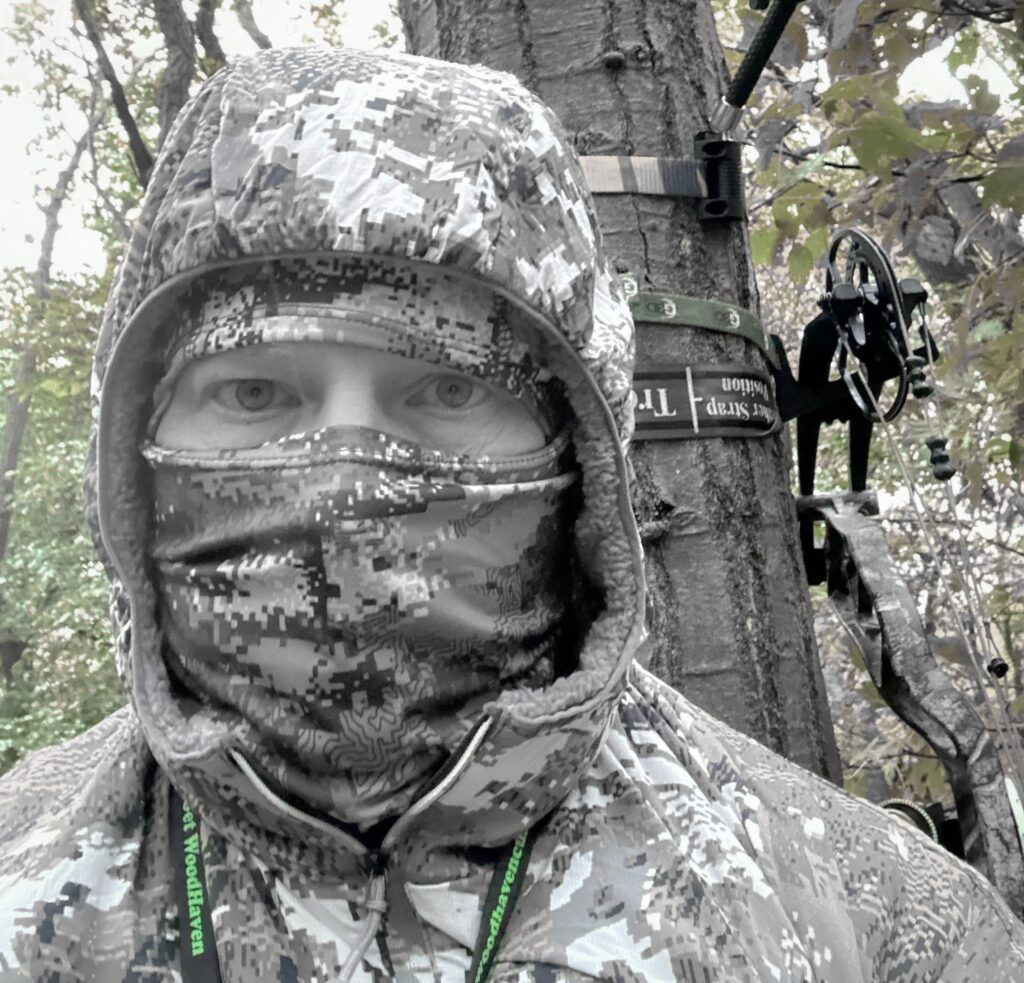
SITKA designed Elevated II specifically for treestand hunting. It uses light gray tones, controlled contrast, and large vertical shapes that look more like trunks and limbs once you are in the tree.
After the leaves drop, this is where Elevated II works best. The lighter color keeps me from turning into one dark block against the sky, while the larger shapes break up my head, shoulders, and arms. It fits especially well around lighter gray trees such as poplar and sycamore.
Less suited to: A poor fit for dense green cover or dark ground-level shade. Its lighter value works best when pale limbs, gray trunks, or open sky fill the background.
I’ve worn SITKA Elevated II during mid- to late-season hunts. When I am in gray, leafless hardwoods or have open sky behind me, it is one of the first patterns I would choose. It breaks up my outline without leaving me looking like one dark block in the tree.
System I Used to Test It: The SITKA Ambient 100 Hooded Jacket is a midseason piece I regularly carry with this kind of setup. My Ambient review explains where it fits in the clothing system.
ASIO Raptor: Dark Bark and Late-Season Timber
Best-fit environment: Late-season hardwoods, canopy setups, and areas with bark-heavy vertical structure.
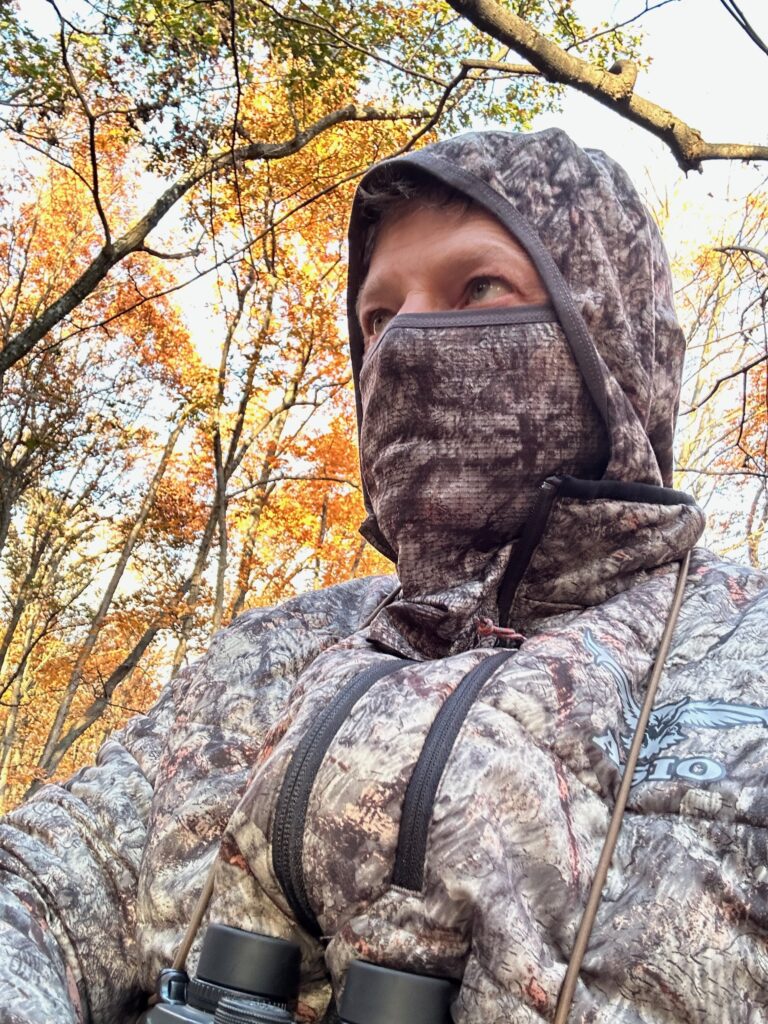
ASIO’s Raptor pattern was inspired by the natural camouflage of the Great Horned Owl, which can disappear against tree bark and branches. That influence makes sense when you see Raptor in a tree. Its vertical breakup, directional contrast, and bark-like mix of gray, brown, and black help break up my outline against darker timber.
Raptor has worked very well for me in bare timber after leaf drop. Its darker palette fits many shaded eastern hardwood setups, but I still compare it to the exact tree and sky behind me before choosing it.
Less suited to: Not ideal for early-season green cover or open-sky setups where its darker value can stand out.
Related option: ASIO RAPX camouflage carries more green and may fit earlier leaf-on cover better than Raptor.
I’ve used ASIO Raptor through four hunting seasons, and it is still one of my favorite patterns for darker hardwood setups. The time I marked my pack on GPS and still had trouble finding it against the tree showed me just how well Raptor can work in the right background.
System I Used to Test It: I used the windproof ASIO Hybrid Hooded Softshell Jacket in Raptor, but ASIO has since discontinued it. The upgraded Midweight Hoodie is the current ASIO option I would compare today. The link automatically applies ARCH20 for 20% off when the code is active.
Code of Silence S-18: Quiet Cold-Weather System
Best-fit environment: Leaf-off mountain hardwoods and cold-weather treestand setups with muted bark, dead limbs, and open cover.
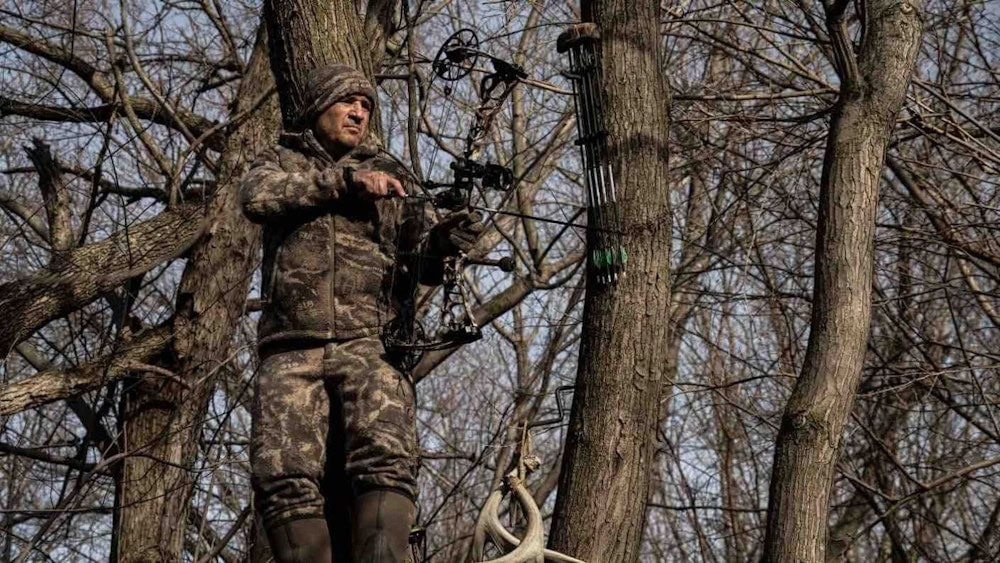
Code of Silence S-18 uses large breakup and muted colors that fit bark, dead limbs, and the washed-out look of late-season woods. In person, I do not see the harsh contrast that makes some patterns look synthetic or stand out when the woods are bare.
Less suited to: Not effective in early-season green foliage. Heavier clothing system.
S-18 works best for me after the leaves come down. The muted colors fit that gray and brown treescape without turning the jacket into one hard-edged shape.
System I Used to Test It: I have the Farewinds Merino-Flex Highloft Jacket and Coldfjall Sub-Xtreme for quiet, cold-weather treestand use in S-18.
Use code BOWHUNTER10 for 10% off at Code of Silence.
KUIU Verde: Early-Season Green Cover
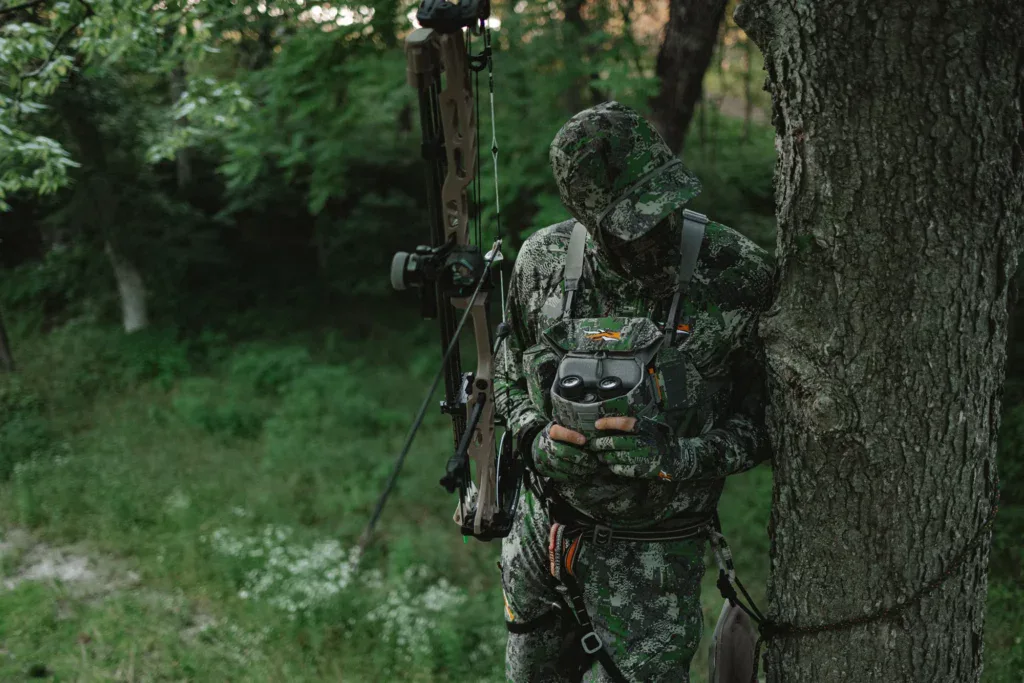
I wore KUIU Verde in early-season green cover and it worked well. The greens fit living vegetation, darker leaves, and evergreen cover better than a late-season gray pattern. It would not be my first choice once the hardwoods turn open and gray, but it deserves a real place in a leaf-on treestand system.
Sitka Optifade Cover: Leaf-On Canopy
Best-fit environment: Early-season treestand setups with full canopy and dense green foliage.
SITKA built Optifade Cover for green, leaf-on woods. Its colors and breakup fit early fall when the canopy is still full of green leaves, dark shadows, and filtered light. That is the background where this pattern makes the most sense.
In leafy cover, the pattern breaks up the human shape without using so much contrast that it becomes the thing you notice. It can help mask small, controlled movement, but it will not make a fast reach or bad draw sequence disappear.
Less suited to: A poor fit once the background turns mostly gray, bare, or open. It can remain useful after leaf drop in green Southern woods or evergreen cover, but open sky and pale limbs usually call for a lighter pattern.
The Sitka Optifade Cover has me excited for the early season. Its darker green hues are perfect for some of the thick and daunting vegetation I’m going to be hunting in.
System I Used to Test It: The SITKA Equinox Guard Hoodie in Cover is built for the leafy, warm-weather conditions described here. It also fits my approach to early-season bow hunting clothes.
Kryptek Skyfall: Bark and Rock Specialist
Best-fit environment: Late-season setups where bark, rock, dark limbs, and broken background fill the view.
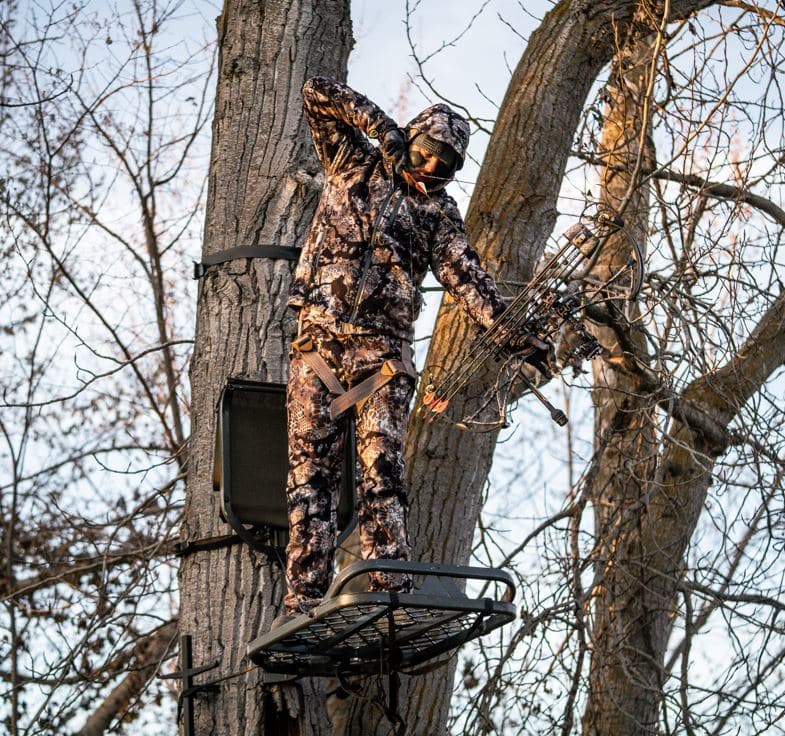
Skyfall uses bold macro breakup with dark and light overlays that fit rough bark, rock, and bleak late-season cover. In my use, it did a solid job of breaking up my outline when those darker shapes were behind me.
Less suited to: Pale limbs or a high stand exposed mainly against open sky. Elevated II is the better fit when the background is lighter and more open.
One of my favorites for late season bow hunting, Skyfall is perfect for the bleaker treescape of that time of year.
System I Used to Test It: The Kryptek Vellus Jacket is a late-season piece I included in my field and heat-retention testing.
First Lite Specter: Versatile Mixed-Cover Option
Best-fit environment: Mid-season treestand hunting with some remaining canopy or broken backgrounds.
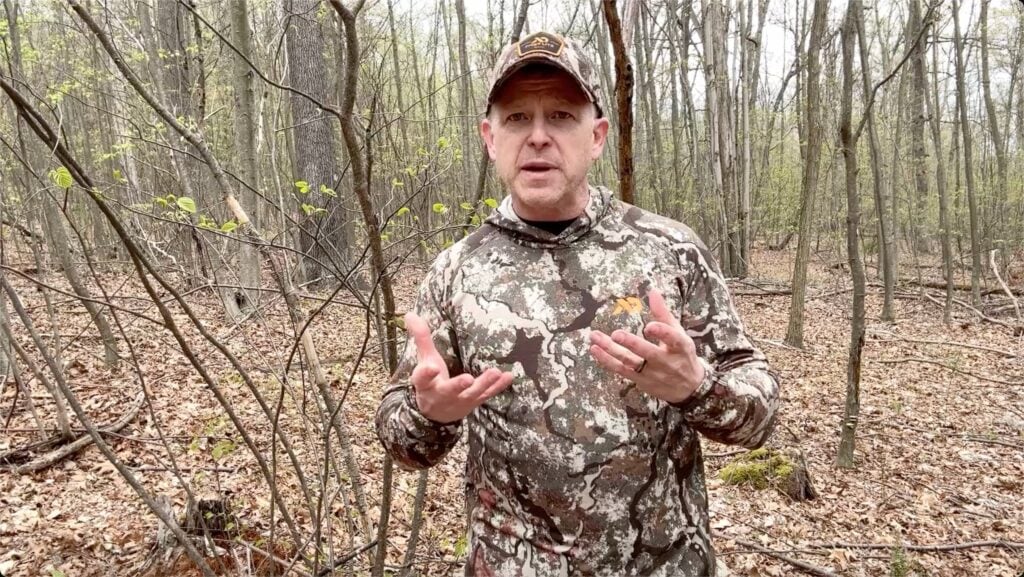
System I Used to Test It: I have worn the First Lite Wick Hoody in Specter while hunting green and mixed hardwood cover.
If I wanted one pattern to cover the widest range of whitetail backgrounds, Specter would be near the top of my list. Specialists can still beat it in a very light, open stand or a very dark bark-heavy setup. Specter works best for me when there are still leaves, brush, and broken cover behind the stand. It keeps my body from turning into one solid shape against that busy background, and it does a very good job of masking the small, controlled movements I make in the tree. It does not break up as hard as Elevated II against open sky, but it blends me into complex cover extremely well.
Less suited to: Open-sky or bare-trunk setups where the darker color and contrast can stand out. I like it better in brush-backed stands than exposed ones.

Pnuma Caza OV: Evaluate Against Your Background
Best-fit environment: Transition season treestand hunts when foliage is dropping and the background is mixed.
Pnuma Caza OV fits that in-between part of the season when the leaves are thinning but the woods are not completely bare. It has enough breakup to help mask my shape and movement in broken timber, creek bottoms, and edge cover, but it does not break up as hard as Elevated II against an open late-season sky.
For me, it makes the most sense during October transition cover.
Less suited to: Not ideal for peak late-season when the woods go fully gray and bare. Slightly high contrast in some backgrounds.
System I Used to Test It: I have used Caza OV in the Pnuma Vintis Jacket in mixed mid- to late-season cover.
Other Treestand Camo Options Worth Considering
The patterns above are not the only options that can work. They are examples I have tested closely. The right answer still depends on the tree, cover, season, and light.
KUIU Valo for Transition and Later Season
I wore KUIU Valo from midseason into later season last year. It was good, not great, in my eastern hardwood setups. The lighter, dry palette can fit faded vegetation and more open cover, but it did not disappear against every treestand background. That is exactly why I do not call any pattern a universal winner.
King’s XK7: A Pattern I Want to Test More
King’s XK7 uses larger abstract shapes and a broad natural palette. On paper, it has the kind of macro and micro breakup I look for, and it may fit mixed hardwoods, brush-backed stands, and some western terrain. I have a good relationship with King’s, but that does not replace field evidence. I consider XK7 a promising option that still needs more of my own treestand testing.
Brands such as TrueTimber, Realtree, Mossy Oak, Huntworth, FORLOH, and Kryptek also make patterns that can fit specific backgrounds. Some use more mimicry than I prefer. I usually favor abstract disruption because I want the pattern to break the human outline at distance, not just look like bark and leaves up close. Still, I will not reject a pattern by name alone. If its color, brightness, macro breakup, and fabric fit the setup, it can work.
My rule: Compare the pattern against the actual background from a deer’s viewing height. A good photograph from 20 to 40 yards will tell you more than a close-up catalog image.
Why Outline Breakup Matters in a Treestand
Solid colors can be enough when the tree, blind, or heavy cover is doing most of the work. But a solid outer layer can still leave you looking like one large shape, especially when you are elevated, backlit, or exposed against open sky.
A good treestand pattern uses large shapes, false edges, and colors that fit the canopy behind you. That breaks apart your head, shoulders, arms, and torso. It can also make the small, controlled movements you make when reaching for your bow or coming to full draw less obvious to a deer.
You can read the research and the complete comparison in my Solid Colors vs. Camo guide.
Choose Treestand Camo by Season and Background
Do not choose treestand camo by month alone. Walk to the stand, turn around, and study what will be behind your body when deer enter the area.
- Leaf-on early season: Use a pattern that carries green but still has large breakup. KUIU Verde worked well for me in this kind of cover. SITKA Optifade Cover, First Lite Specter, and ASIO RAPX are other examples to compare.
- Transition: Mixed green, brown, and gray backgrounds favor a balanced pattern. This is where versatile options such as Specter, Caza OV, Huntworth Disruption, or KUIU Valo may fit.
- Leaf-off hardwoods: Match the brightness of open woods and sky. SITKA Elevated II can fit lighter, skylined setups. ASIO Raptor and Code of Silence S-18 may fit darker bark, shade, and cold-weather systems better.
- Low or brush-backed stands: Evaluate the brush and leaf litter behind you. A ground-oriented mixed-cover pattern may work better than a very light treestand pattern.
- High or open-sky stands: Avoid becoming one dark block. Favor stronger macro breakup and a brightness that fits the sky, pale limbs, and open canopy.
Your top and bottom do not always need to match. A lighter jacket can reduce the shoulder and torso outline against the canopy while darker pants fit the trunk and shade below. What matters is the full picture from the deer’s angle.
How to Use This Guide
- Start with the background. Photograph the stand from likely deer travel routes, not from the base of the tree.
- Match the season. Account for leaf-on, transition, leaf-off, evergreen cover, and snow.
- Check brightness and breakup. Squint at the photo or shrink it. If your body becomes one obvious shape, the pattern is not doing enough.
- Check the clothing itself. Make sure it is quiet, weather-ready, and cut so you can draw without binding.
- Control movement. Even excellent camo cannot hide a fast reach, a shiny face, or a poor draw sequence.
For ground hunting, open country, brush, evergreen cover, and snow, use my complete Best Camo for Deer Hunting by Environment guide.
Choose the Background First
I do not choose treestand camo by looking at the tree from the ground. I look at what will be behind me when I am sitting 15 or 20 feet up. Early in the season, that may be green leaves and broken cover. Later, it may be gray limbs, open sky, and bare trees. Match that background first, then choose the pattern.
Camo will not fix bad movement, poor stand placement, or the wrong wind. But when a deer gets close and I have to reach for my bow or come to full draw, I want every advantage I can get. Breaking up my outline and making that movement less obvious is one of them. The devil is in the details, and every little thing adds up.
Choose the background first. Then choose the pattern and clothing system that give you the best chance to stay hidden long enough to make a clean shot.
CONTINUE THE CLOTHING SYSTEM
Your Next Steps
1. Choose Camo for Your Full Hunting Environment
Compare treestands with ground setups, brush, open country, evergreen cover, and snow.
2. Evaluate the Rest of Your Bow Hunting Clothes
Work through quiet fabric, fit, movement, scent, weather protection, and concealment.
3. Build Your Complete Clothing System
Use MOVE, BUILD, LOCK, and BOOST to give every piece a clear job.
4. Understand How Deer See
Learn what research says about color, brightness, contrast, ultraviolet light, and movement.
Part of the Everyday Bow Hunter System
Want to see exactly what I’m carrying this season? Check out my Personal Bowhunting Gear List for 2026