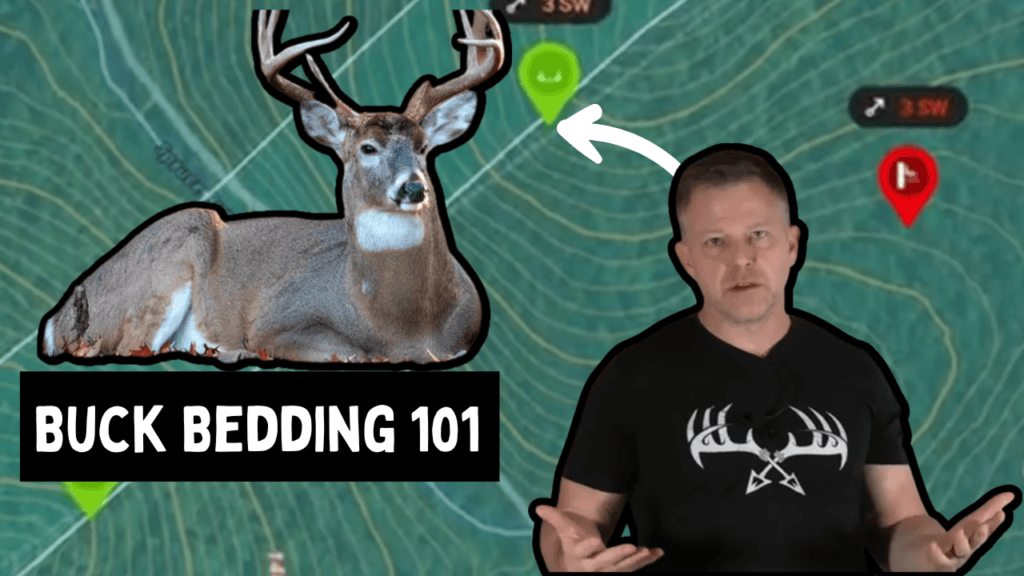

Most hunters find thick cover and call it a buck bedding area. That is how good spots get hunted too hard and ruined too soon. Mature bucks bed where they can stay alive. Cover matters, but so do wind, thermals, sight, escape cover, pressure, and the way a deer can use all of those things together.
Where this fits in my system: This is part of the Deer Intelligence layer of The Everyday Bow Hunter system. Bedding does not stand alone. It has to connect to Kill Zone Mapping, your 3 Hunt Plan, and the way you protect access on the day of the hunt.
This guide explains how I look at buck bedding before I ever hang a stand. It is built from long-term field observation, the 10-Year Deer Study, and published deer research. The goal is not to put you on top of a bed. The goal is to help you understand the bedding area well enough to get close without teaching that buck you are there.
The real question is not, “Where is the bed?” It is, “What makes this buck feel safe here, and where can I set up without taking that safety away?”
What Buck Bedding Really Means
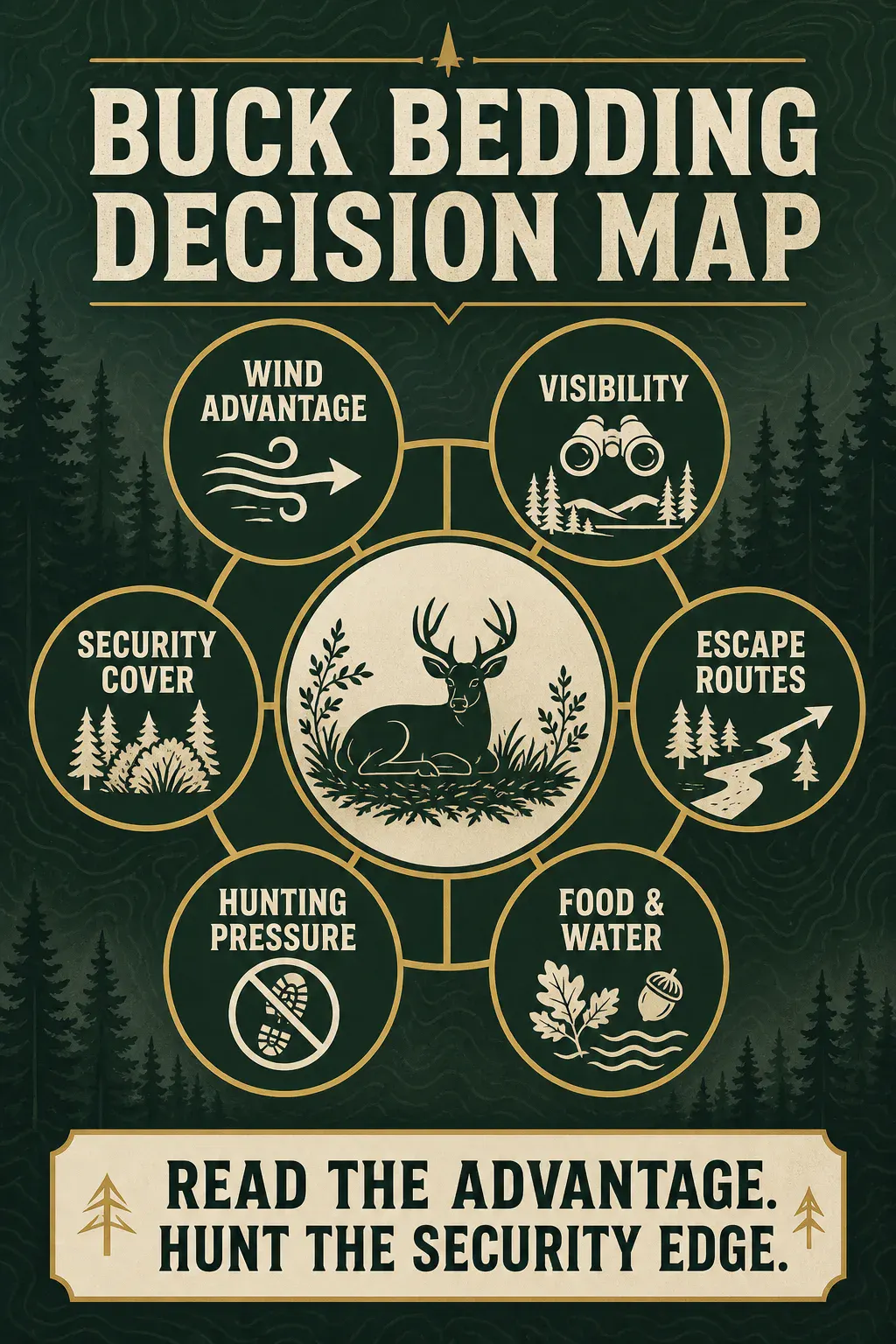
A buck bed is more than a depression in leaves or grass. It is part of a security system. A mature buck uses a bed because it gives him an advantage over danger. He may be able to smell from one direction, see from another, hear movement below him, and leave through cover before you ever get close.
That is why a random patch of thick cover is not enough. The best bedding areas combine several advantages. The exact mix changes with terrain, wind, season, hunting pressure, and the individual deer.
The Four Things Mature Bucks Want From a Bed
Best Cold Weather Jacket: I’ve tested more cold weather bow hunting jackets than I can count, but there is one that beat all the others during my 3-hour heat retention test. See my 7-Jacket test here.
1. Security Cover
A buck needs cover that makes him hard to see and hard to approach. That could be a young clear-cut, a brushy point, a swamp island, a ditch, CRP, a head of a hollow, a blowdown, or a small overlooked pocket near human activity. The cover itself is not the whole answer. It has to work with the wind and an escape route.
2. Wind and Thermals
Wind is one of the biggest reasons a buck chooses one side of a ridge, point, bench, ditch, or island instead of another. He often beds where he can use the prevailing wind to cover one side of his body while keeping another direction open to watch or smell.
Thermals can change that picture. On many hill-country setups, a buck can use rising air in the morning and falling air later in the day to monitor what is below him. A map can show a likely bedding feature. It cannot tell you exactly how scent moves there at daylight. That is why a bedding plan must be checked in the field.
3. Sight and Sound
Many mature bucks prefer a bed that gives them a view of the approach they expect danger to use. In hill country, that may be below the bed. In flat ground, it may be a field edge, a narrow opening, a ditch crossing, or a lane through thick cover. They also use sound. Dry leaves, water, brush, roads, and terrain can all warn a deer before you see him.
4. An Escape Route
A good bed lets a buck leave without crossing exposed ground. That exit may be a sidehill trail, a thick ditch, a downwind escape, a creek edge, or a short slide into deeper cover. When you find a bed, do not stop at the bed. Look for the exit cover and the first route he can use without showing himself.
Bedding Is a Network, Not One Bed
One of the biggest mistakes hunters make is treating one bed like the buck’s permanent address. Mature bucks commonly use more than one bed within a core area. They rotate based on wind, thermal pull, food, doe activity, weather, pressure, and how safe a place feels that day.
That means the better question is not, “Can I hunt this one bed?” Ask, “What bedding cluster does this buck use, and which bed matches the conditions I can hunt?” A bed that looks perfect on a north wind may be empty the next day because the buck has shifted 100 yards to a safer option.
Use the bed, nearby rubs, entry and exit trails, terrain, and wind direction to build a picture of the whole bedding network. That picture is more useful than any single bed.
Where Bucks Bed in Different Terrain
Hill Country and Mountains
In hill country, mature bucks often use terrain that gives them a wind and sight advantage. Benches, ridge points, leeward slopes, heads of draws, military crests, and sidehills near a steep drop are all worth studying. A bed just off the top third of a ridge can let a buck use wind from behind while watching or scent-checking the terrain below.
Do not turn that into a rule that every buck beds in the same place. The right ridge feature depends on the prevailing wind, thermal pull, cover, access, and where the buck can leave safely. Read Where Bucks Bed and How to Hunt Them Without Blowing It for a deeper look at how terrain and wind work together.
Swamps, Flatland, and Farm Country
Flat ground does not mean simple bedding. Bucks often bed in small pieces of overlooked cover: brushy islands, cattail points, ditch heads, creek bends, field corners, fence rows, CRP pockets, and narrow strips that connect larger cover. In pressured country, the bed may be closer to people, roads, or farm activity than most hunters expect.
The common thread is still security. A buck may choose the smallest ugly pocket on the property if it lets him smell danger, see an approach, and escape without crossing open ground.
How Far Do Bucks Bed From Food?
There is no fixed distance between food and bedding. In young forest, swamps, and dense security cover, a buck may bed only 100 to 300 yards from a food source. In hill country or big timber, he may bed much farther away and use terrain, wind, and cover to reach food after dark.
The distance matters less than the route. Learn where a buck can leave his bed, move through cover, check the wind, and reach food without exposing himself in daylight. The route is what gives you a huntable setup.
How Pressure Changes Buck Bedding
Hunting pressure does not always make a mature buck leave the area. Often it makes him choose a different bed inside the same area. He may move into thicker cover, bed closer to a road, slip into a ditch, use a smaller point, or shift to the opposite side of a ridge.
The October “lull” is a good example. Many hunters see fewer deer and assume deer have stopped moving. What often changes is visible movement. In the 10-Year Deer Study material, mature bucks often stayed within roughly 300 to 400 yards of bedding during daylight in this period. They were still there. They were simply harder to see and harder to reach.
That is why a change in pressure should make you ask what became safer, not where the deer disappeared to. Read Why Bucks Disappear in October before you assume the woods have gone dead.
How Close Should You Hunt a Buck Bed?
Close is not automatically better. A close setup only works when your access, wind, thermals, cover, and exit route are all right. If one of those pieces is wrong, moving closer usually helps the buck more than it helps you.
The 10-Year Deer Study articles show why bedding proximity matters: most mature-buck opportunities happened near bedding, and many were inside a few hundred yards of the bed during daylight. In the right situation, the practical strike zone is often about 75 to 150 yards from known bedding cover. That is not a universal rule or a license to walk into a bed. It is a starting point for evaluating whether you can get close enough to catch first daylight movement without alerting the deer.
- Green light: You can enter without crossing the main trail, your wind and thermal route stay out of the bedding cover, and you have a clean way to leave.
- Yellow light: The setup is close, but you have one uncertain piece such as a shifting thermal or a noisy entry.
- Red light: You must walk through the bedding cover, cross the buck’s likely exit, or let your scent drift into the bed.
The right move on a red-light setup is usually to back out and hunt the first safe transition. That can still be a high-value hunt. A mature buck does not care how close your pin is on the map. He cares whether you gave him a reason to feel unsafe.
How to Confirm a Buck Bed Without Blowing It
You do not need to stand in every bed to know a buck is using an area. In fact, that is often the wrong move. Start with the terrain, cover, wind, nearby sign, and likely exits. Then confirm only what you need to make a better decision.
- Look for beds that are large enough for a mature deer, with a clear view, wind advantage, and nearby escape cover.
- Study rubs, tracks, droppings, hair, trails, and the way cover is pressed down around the bed.
- Notice whether the bed faces a travel route, field edge, ditch, drop, or opening the deer can monitor.
- Back out once the picture is clear. Do not keep visiting a bed just to prove it is there.
- Use cameras carefully on trails or staging areas when they can be checked without entering the core.
Fresh sign helps, but sign is not the same as certainty. A rubbed tree can tell you a buck was there. It cannot tell you he will bed in that exact spot tomorrow. Always combine sign with wind, terrain, pressure, and season.
Common Buck Bedding Mistakes
Mistake 1: Hunting the bed itself
The bed is usually the buck’s safest place. Pressuring it can ruin several future hunts. Hunt the edge of his security when conditions allow, not the center of it.
Mistake 2: Trusting a map more than the wind
Maps find likely features. They do not show every thermal, swirling pocket, or access problem. Walk the route, check the wind, and make sure your scent does not enter the bedding cover.
Mistake 3: Using one wind for every setup
A bed that works on one wind may be wrong on another. Build more than one option. This is exactly why the 3 Hunt Plan matters: you need a way to pivot when conditions do not fit your first choice.
Mistake 4: Assuming pressure sends bucks far away
Pressure may move a buck only a short distance into safer cover. Look for the overlooked pocket nearby before you abandon the whole area.
A Simple Bedding-Area Hunt Plan
When you find a likely bedding area, slow down and make a plan before you hunt it. The best bedding setups are usually won before you leave the truck.
- Mark the likely bed, bedding cluster, exit cover, and first daylight route.
- Identify the wind and thermal conditions that keep your scent out of the bed.
- Choose an entry route that avoids the main trail and does not cut the buck off.
- Pick a setup on the first safe transition, not automatically the closest tree.
- Plan your exit before the hunt. Leaving clean is part of protecting the next opportunity.
For the access side of this process, work through The Last 200 Yards. For a full decision process that connects sign, terrain, wind, access, and adaptation, use the Strategic Hunting System.
Where Buck Bedding Fits in Deer Intelligence
Buck bedding is one part of Deer Intelligence. It helps you understand where a mature buck feels safe. From there, you still need to read his travel, respond to the season, manage pressure, and decide whether conditions give you a real chance.
Use this guide with Deer Intelligence, the 10-Year Deer Study, and Hunt the Season. The goal is not to memorize a bedding rule. It is to make a better decision for the deer, terrain, and conditions in front of you.
Buck Bedding Questions
Do mature bucks always bed with the wind at their back?
No. Bucks often use wind to protect one direction, but terrain, thermals, cover, sight, and escape routes all matter. Treat wind as part of the bed choice, not the only reason for it.
How close should I set up to a buck bed?
Start by asking whether you can get in and out clean. A 75- to 150-yard setup can be productive in the right conditions, but it becomes a bad idea when your wind, thermal, entry, or exit puts pressure directly into the bedding cover.
Do bucks use the same bed every day?
Usually not. Mature bucks often rotate among several beds inside a core area. A change in wind, pressure, food, doe activity, or weather can move them to a nearby option.
Can I find buck beds with maps?
Maps can help you find likely terrain features and cover. They are a starting point. Field scouting, wind checks, access planning, and fresh sign tell you whether the feature is actually useful.
What should I do when a buck disappears in October?
Do not assume he left. Look for a shift toward tighter security cover and shorter daylight movement around bedding. The answer is often a better approach and a more careful setup, not simply hunting farther from the bed.
Want to see exactly what I’m carrying this season? Check out my Personal Bowhunting Gear List for 2026