
Midseason is where a bowhunting jacket has to solve several problems at once. The walk can leave you damp, and then the wind starts pulling heat away as soon as you stop. The jacket has to block that wind, shed light moisture, add enough warmth for the sit, and stay quiet when a deer closes the last few yards. It also has to let you draw without fighting bulk through the shoulders and sleeves.
I have all ten jackets in hand. Every test jacket was a size Large. I weighed each one, ran the same three movements with a sound meter in the same quiet room, and compared the construction, fit, pockets, warmth, and place in a complete clothing system. This is a side-by-side comparison of the jackets I handled, not a list built from product pages.
The Sitka Stratus 2.0 is the benchmark, with a full manufacturer MSRP of $400. The TideWe TimberGhost is the $159.99 starting point. The question is what the extra money buys, where a lower-priced jacket gives something up, and which design fits the hunt you are preparing for. A light windproof shell and a Sherpa-lined rut jacket can both be good without solving the same job.
Prefer to watch? Watch the full 10-jacket video comparison, then use the charts and jacket breakdowns below to compare your options.
The Short Answer
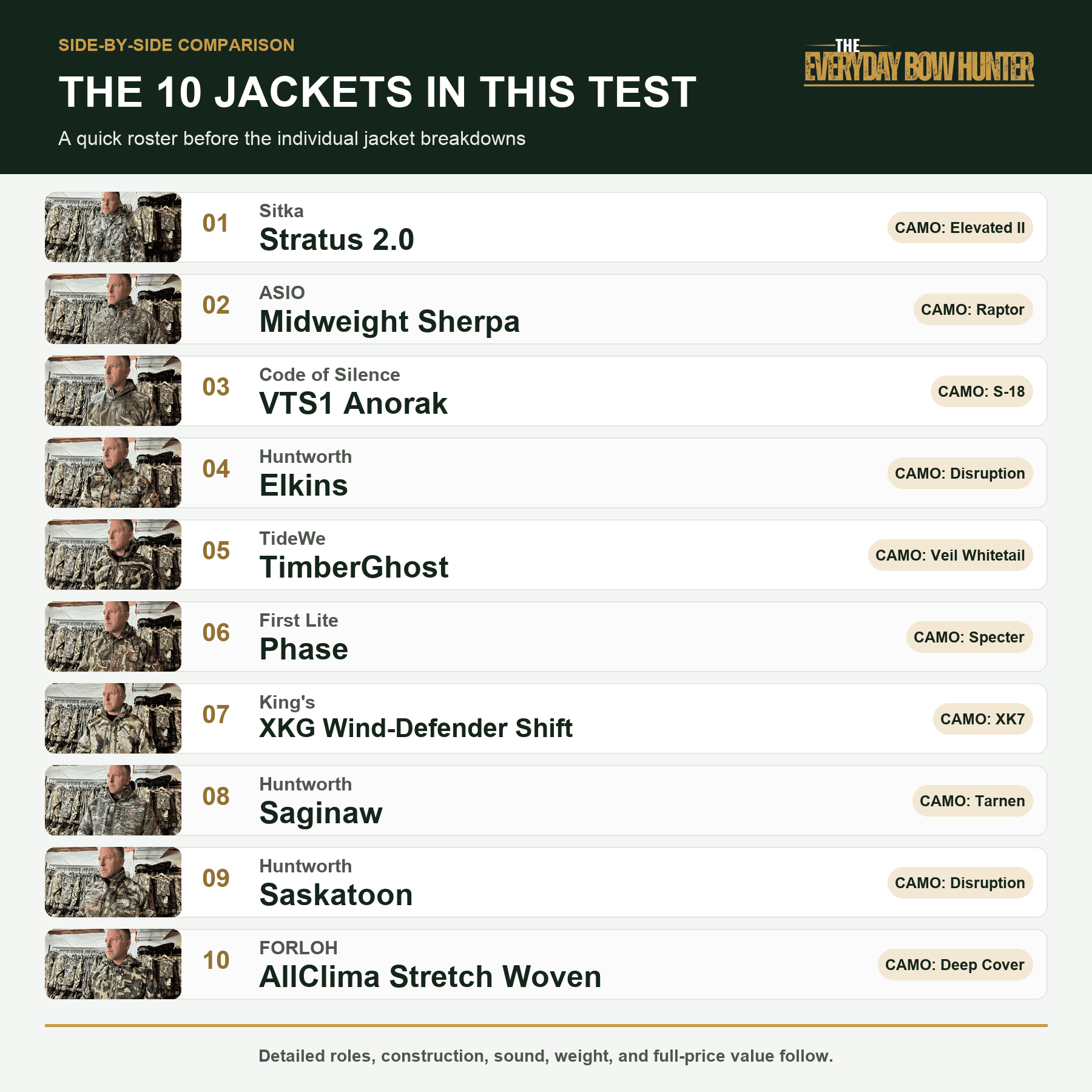
The Stratus remains the benchmark if you want a refined treestand system. The Phase is the closest premium alternative. King’s offers the lighter-value path, TideWe the lowest entry price, and the Elkins a simpler original-Stratus-style shell with pit zips.
The ASIO gives me the widest midseason range. The VTS1 is the quiet saddle specialist. The Saginaw and Saskatoon move toward colder rut conditions. The FORLOH is the active-weather specialist with the clearest noise tradeoff. Here is where each jacket fits before we get to the complete sound, weight, and price charts.
Sitka Stratus 2.0: The $400 Benchmark
The Stratus 2.0 is built around a Gore WINDSTOPPER layer with a brushed face. It has a removable hood, harness access, a rangefinder pocket, and the kind of small tree-hunting details that make the complete system feel refined.
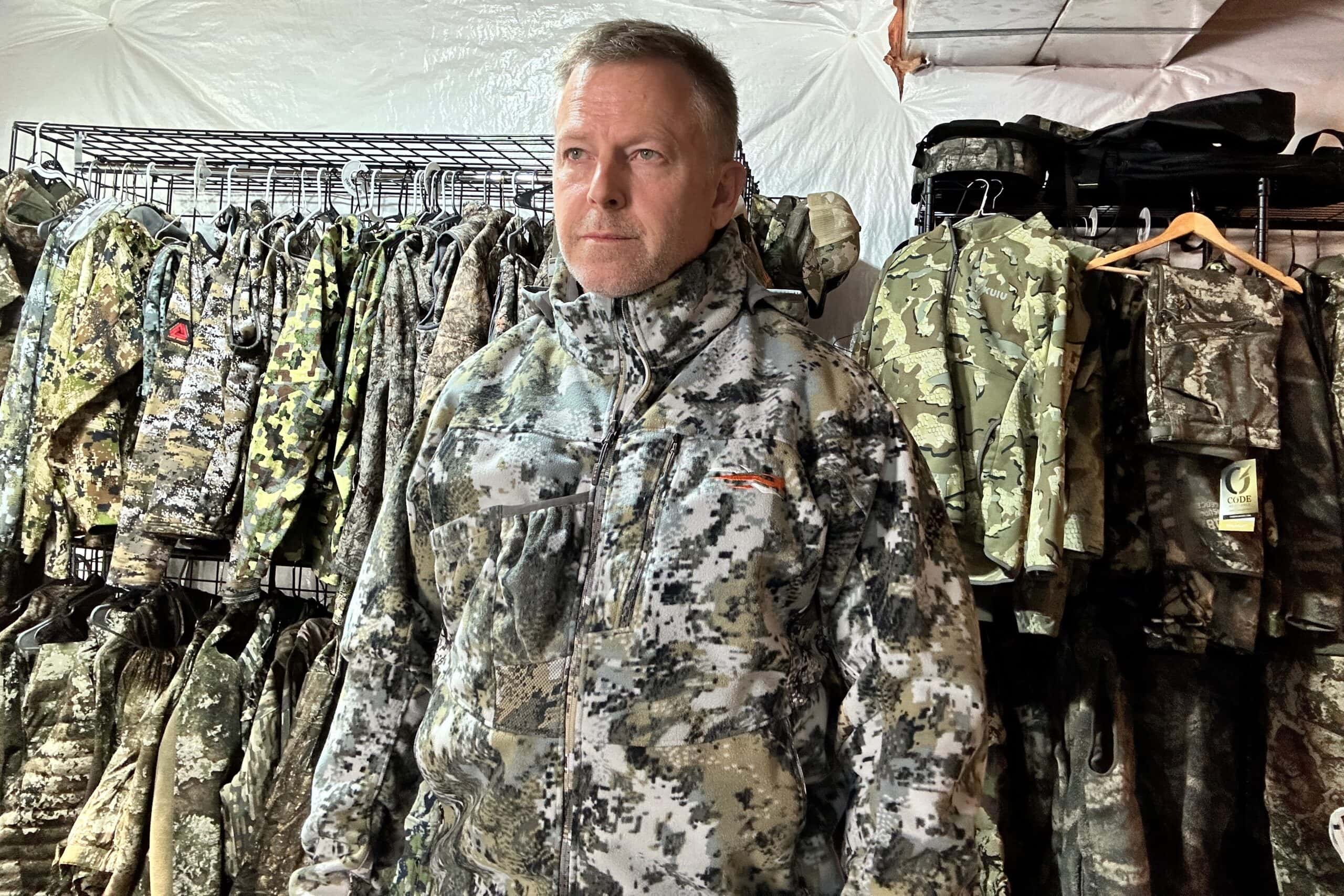
My size-L jacket weighed 1.98 pounds. It recorded 37.3 dBA in the slow movement, 41.2 in the faster movement, and 45.3 during elbow contact. That put it in the close middle group, not at the top or bottom.
In the field, the jacket blocks wind very well. It is comfortable and useful through a broad part of the Pennsylvania bow season when I manage the layers underneath it. It is also thin. I do not treat it as a cold-weather jacket by itself.
The arm area is not as quiet as I want from a $400 bowhunting jacket, and it does not have pit zips. The shorter cut also changes how it seals around the waist compared with some longer jackets. I think the Stratus pants are easier to justify at full price than the jacket, although the complete set still gives a hunter a polished midseason system.
The Phase, King’s Shift, and TideWe come closest to this current formula. The Elkins is still in the conversation, especially for anyone who liked the straightforward windproof-fleece approach of the original Stratus.
Best for: A hunter who wants a refined windproof system and will use the matching lower-body piece.
Skip it if: You expect the jacket alone to provide late-season warmth or you want the strongest value based only on price and controlled noise.
Read my full Sitka Stratus 2.0 jacket and pants review.
ASIO Midweight Sherpa: The Wide-Range Crossover
The ASIO is the jacket that does not fit neatly into one side of this comparison. My size-L sample weighed 1.88 pounds, tying King’s for the lightest jacket. The windproof membrane and Sherpa lining give it more warmth than the scale suggests.
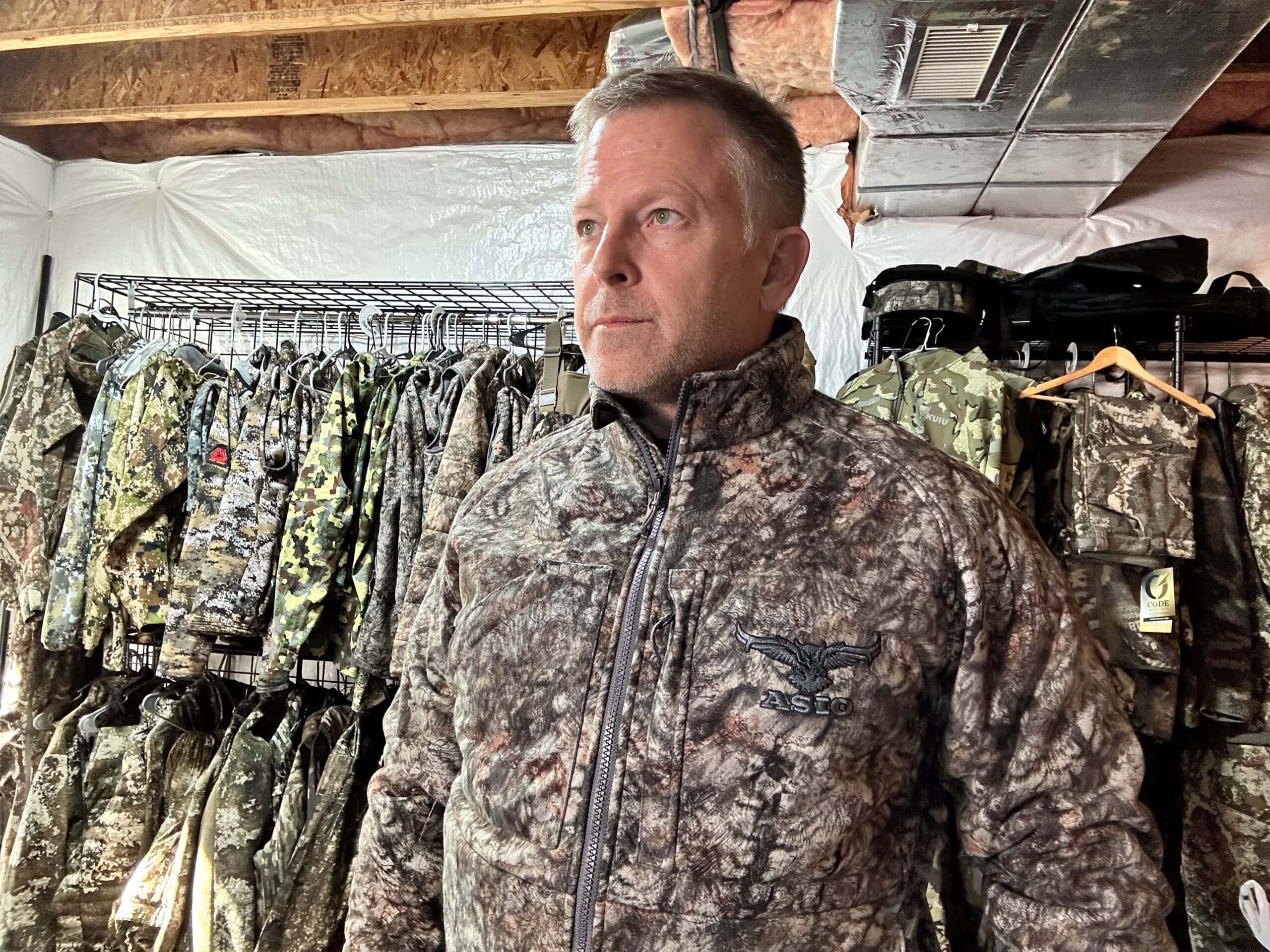
I have used the ASIO system for two seasons. The jacket is quiet, warm for its bulk, and works well in a saddle. The high hand pockets remain useful above the bridge, and the harness access and extended rear are built for tree hunting. It does not have pit zips.
The biggest mistake would be wearing it through a long, demanding walk and then blaming the jacket when the inside of the system is wet. I normally want to carry it in when the approach will create heat. Once I am settled, the Sherpa lining earns its place.
That is why I would not limit it to only the later part of midseason. It can enter the system earlier than the warmer Huntworth pieces, then stay useful later as I change the layers under it. For hunters in warmer parts of the country, it may cover most of the archery season.
Its controlled sound numbers were the lowest overall in this test, but the jacket was heavily worn and washed. I am treating that as support for my field experience, not proof that a new sample beats every new jacket here.
Best for: A bowhunter who wants one quiet, low-bulk jacket to cover a wide portion of midseason.
Skip it if: You need pit zips or plan to wear it through long, sweaty hikes instead of carrying it.
Read my two-season ASIO Mid-Season field review.
Use code ARCH20 for 20% off ASIO.
Code of Silence VTS1 Anorak: Built Around the Saddle
The VTS1 is the most specialized design in this group, and it does not feel like another version of the Stratus. It is a pullover anorak made from Code of Silence’s 370 gsm Merino FlatFleece, a 30% merino and 70% polyester blend with its AirShield windproof construction.
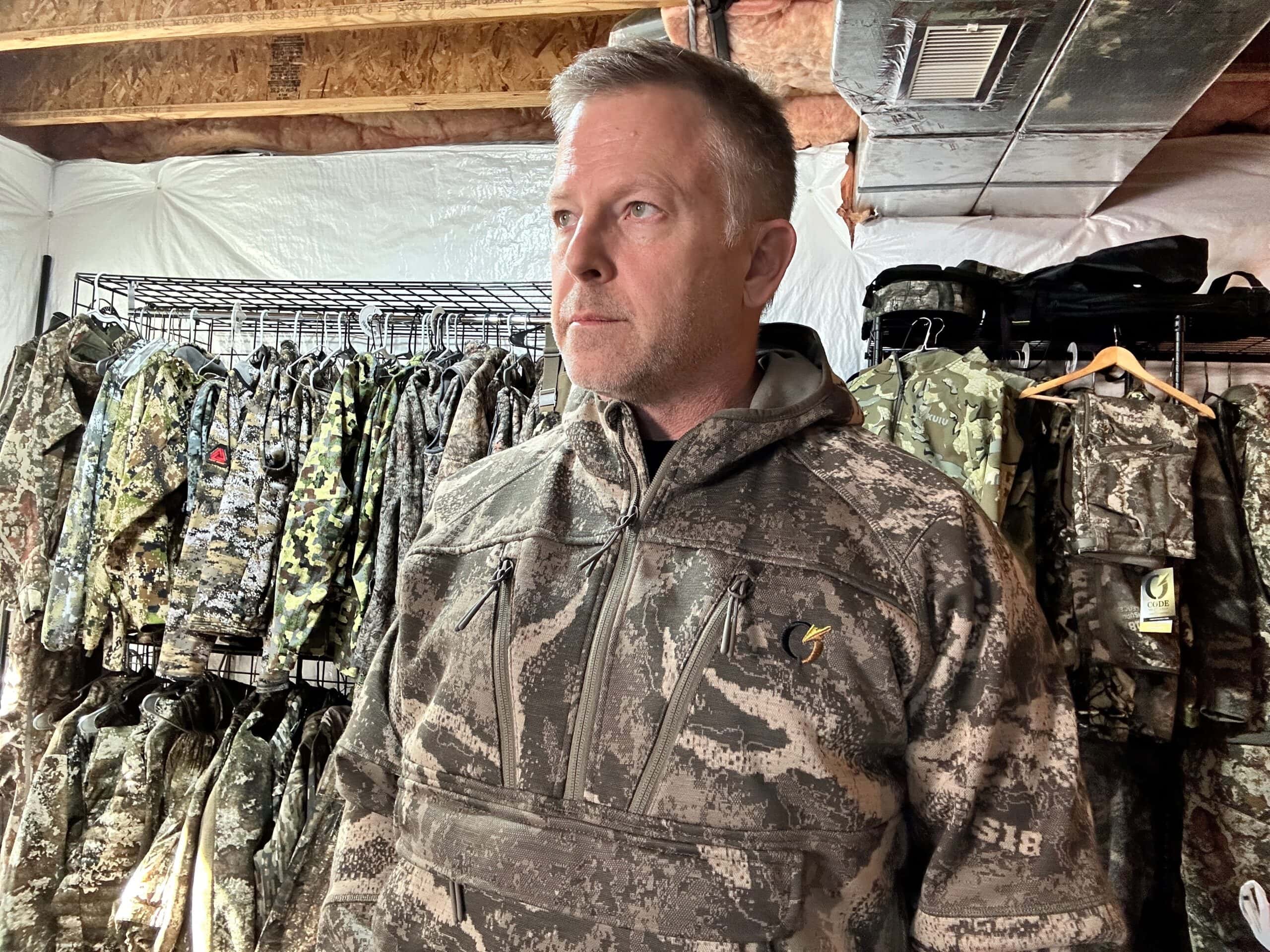
The feature that separates it is the BridgeZip system. The angled side zippers are designed to let a saddle hunter position the front of the jacket around the bridge while remaining connected. The kangaroo pocket and chest pockets sit above the bridge, and the jacket has a harness port, close-fitting hood, and extended rear.
My size-L sample weighed 2.32 pounds. It performed very well during the controlled sound test at 37.0, 37.5, and 43.0 dBA. That makes it one of the strongest controlled performers in the group.
The first thing I notice when I wear it is the comfort. It feels more like wearing sweats than a typical membrane-backed hunting shell. It is exceptionally quiet and very nicely put together. I like this jacket a lot.
The anorak format and saddle layout are the reasons to choose it. A treestand hunter may not get the same value from BridgeZip. A saddle hunter who fights jacket hems, pockets, and bridge contact may see the point immediately.
Best for: A saddle hunter who wants exceptional quietness, sweat-like comfort, and an outer layer designed around the bridge instead of adapted around it.
Skip it if: You do not need the saddle-specific layout or prefer a traditional full-zip jacket.
Use code BOWHUNTER10 for 10% off at Code of Silence.
Huntworth Elkins: A Lower-Cost Windproof Shell
The Elkins is the lighter Huntworth choice in this comparison. My size-L jacket weighed 1.98 pounds, the same measured weight as the Stratus and FORLOH. It uses a windproof soft-shell construction with a grid-fleece interior, pit zips, and a simple, streamlined layout.
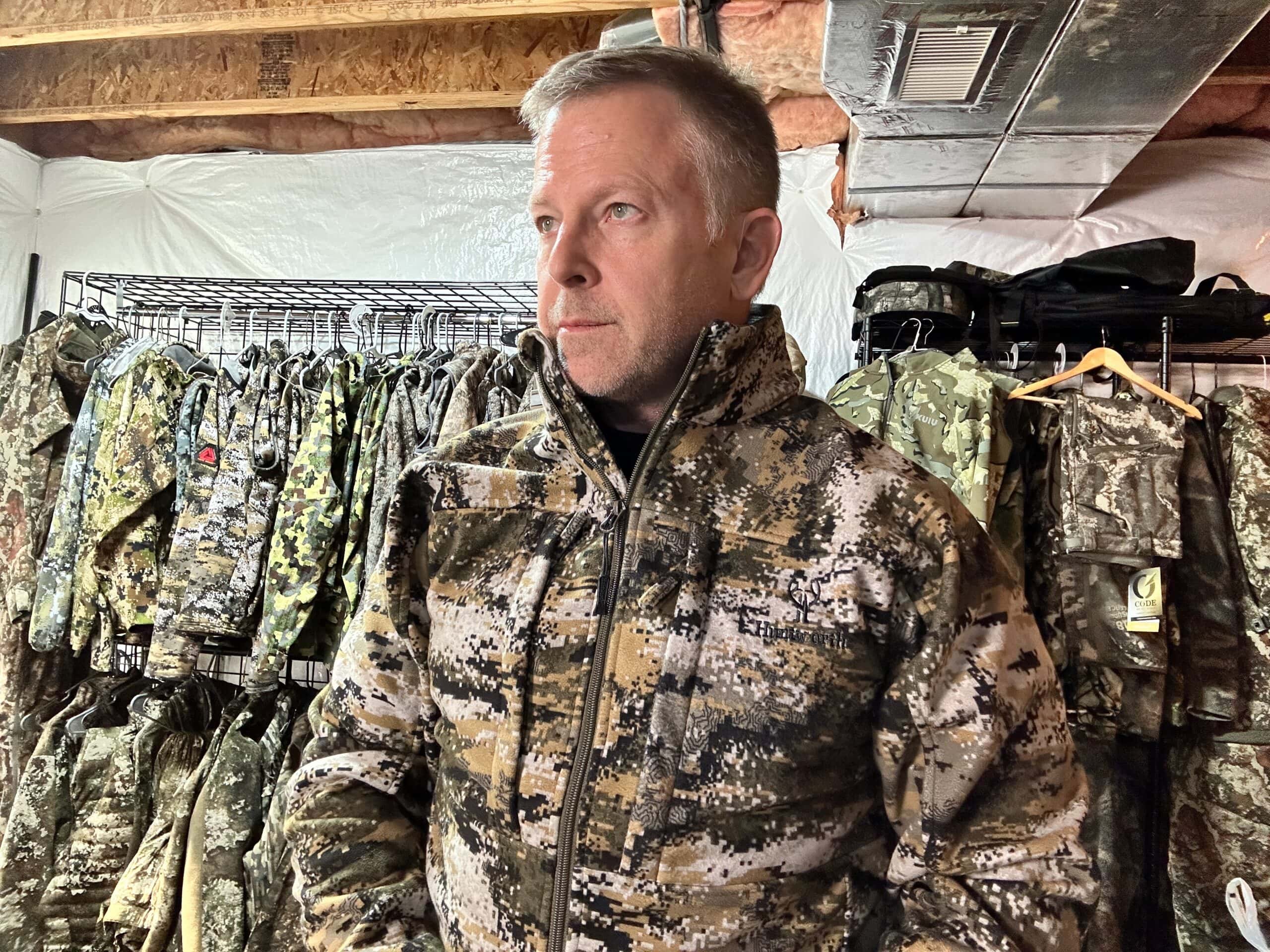
The Elkins recorded 39.3 dBA during the slow movement, 41.9 during the faster movement, and 45.6 during elbow contact. That kept it in the middle cluster.
The Elkins reminds me more of the original Sitka Stratus than the current Stratus 2.0. It follows that straightforward windproof-fleece idea and is not far removed from the current jacket either. The pit zips give me a direct way to release heat when the walk or temperature demands it, which is something the Stratus 2.0 does not offer.
It is not trying to be the warmer Saginaw or Saskatoon. This is the lighter Huntworth path when I need wind protection without starting with one of the heavier jackets in the group.
The regular-price reference was $179.99, which puts it close to the budget end of this comparison. It does not have a hood, so the value depends on whether that matters in your system.
Best for: A hunter who wants a simple, lower-cost windproof midseason shell.
Skip it if: A hood or the warmer Sherpa/Berber construction is central to your system.
Compare the Elkins with the other Huntworth jacket roles.
TideWe TimberGhost: The Budget Starting Point
The TideWe had the lowest regular-price reference in the group at $159.99. It uses a triple-layer fleece construction with a windproof membrane, DWR, and an odor-control treatment. That puts it much closer to the basic Stratus formula than its price may suggest.
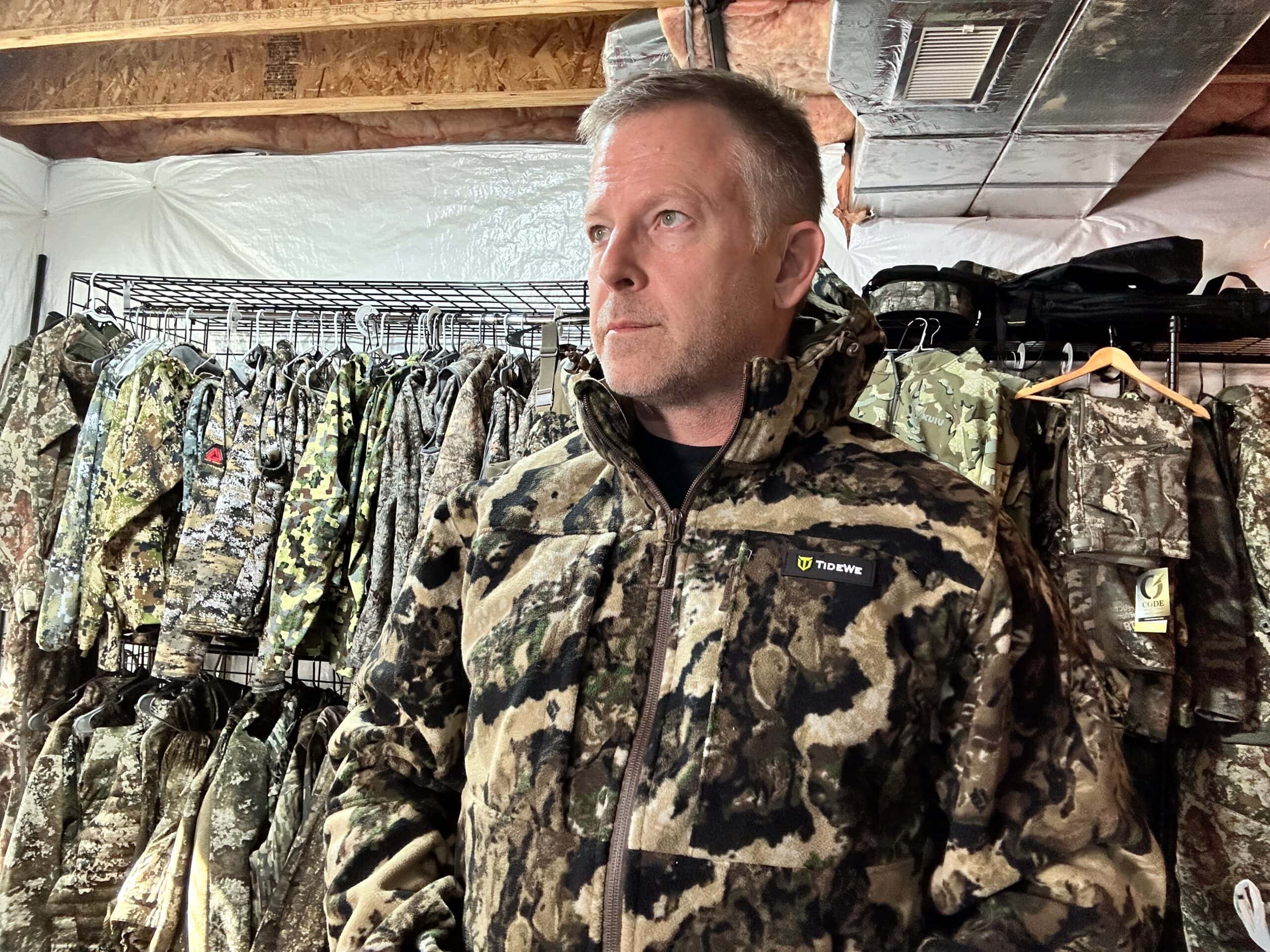
My size-L sample weighed 2.10 pounds. It recorded 37.7 dBA during the slow movement, 40.0 during the faster movement, and 45.2 during elbow contact. Those results kept it close to several jackets that cost much more.
That does not make the TideWe identical to the Stratus. The published information cannot tell me that its membrane, durability, fit, or finishing will match Sitka’s over years of hunting. My controlled data does show that a budget jacket does not automatically lose on weight or sound.
This is the comparison that matters for a hunter deciding whether to spend $160 or $400. The lower price buys entry into the windproof midseason category and sound performance that remained close to several premium jackets. The Stratus asks the buyer to place more value on fit, finishing, brand support, and complete-system details.
I have since hunted in the jacket and matching bibs. Read my TideWe TimberGhost jacket and bibs field review for how they handled wind, light rain, and a morning in the saddle.
Best for: A hunter who needs a lower-cost way into a windproof midseason outer layer.
Skip it if: You place the highest value on refined fit, long-term system integration, and premium finishing details.
First Lite Phase: A Premium Tree-Hunting System
The First Lite Phase is the closest premium alternative to the Stratus 2.0 in this group. Its regular-price reference was $335. First Lite builds it with a quiet fleece-faced windproof soft shell, a removable hood, harness pass-through, tree-oriented pockets, adjustable cuffs, and its KitLink connection points.
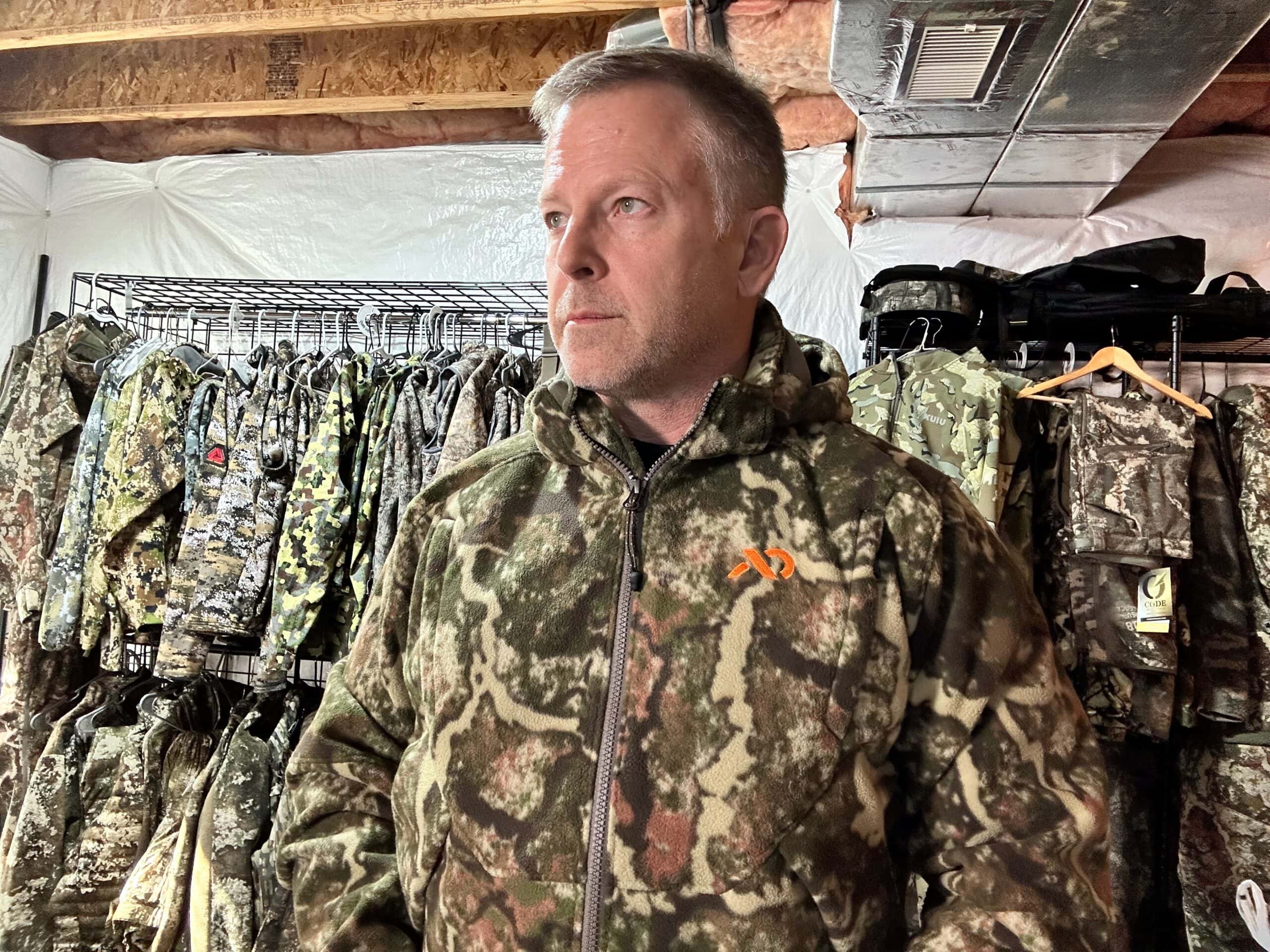
My size-L sample weighed 2.42 pounds. That is the measured garment in my comparison. It should not be blended with a published manufacturer weight from a different sample or measurement method.
The Phase recorded 38.7 dBA during the slow movement, 41.6 during the faster movement, and 45.4 during elbow contact. It landed in the close middle group beside several lower-priced jackets.
Sound alone does not decide this jacket. The hood, pockets, cuffs, harness access, and matching system are built for a tree hunter. That makes the Phase the direct premium comparison for someone who likes the Stratus idea but prefers the First Lite system. Its regular-price reference also comes in $65 below the Stratus jacket.
Best for: A hunter already building around First Lite’s whitetail system and tree-specific features.
Skip it if: You want the best controlled sound number or lowest price without valuing the complete system.
King’s XKG Wind-Defender Shift: The Lightest Shell Tie
The King’s XKG Wind-Defender Shift tied the ASIO as the lightest measured jacket in the group at 1.88 pounds. It uses a quiet bonded-fleece fabric over King’s Wind-Defender membrane, along with a removable hood, harness pass-through, adjustable cuffs, and an odor-control treatment. That makes it one of the closest construction and feature comparisons to the Stratus 2.0.
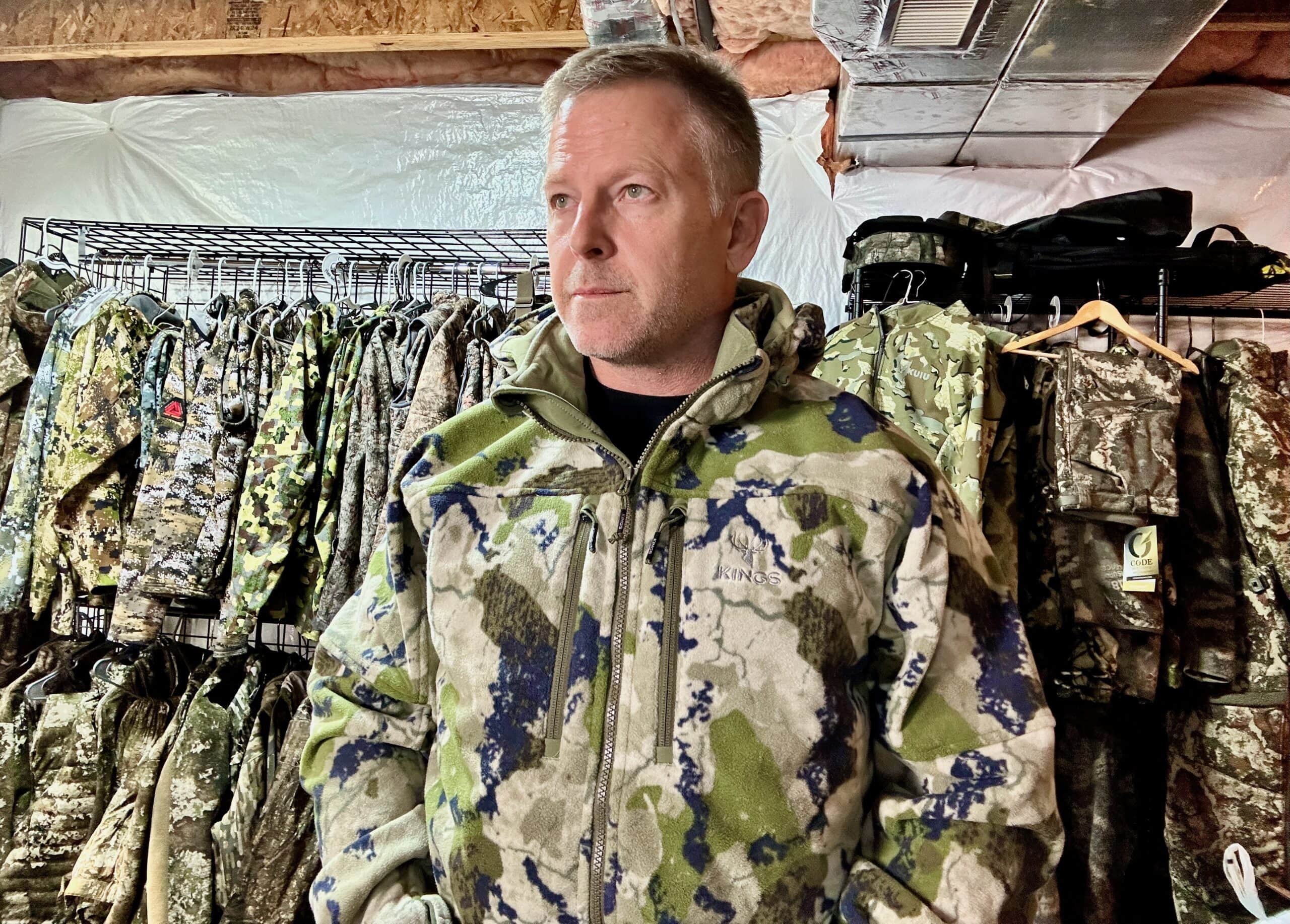
The sound readings were 38.3 dBA during the slow movement, 41.9 during the faster movement, and 46.0 during elbow contact. That placed it in the middle cluster rather than at either extreme.
The 1.88-pound weight makes the King’s worth considering for a hunter who wants wind protection without moving directly into one of the heavier Sherpa or Berber pieces. Its $209.99 regular-price reference also puts it well below the Stratus and Phase.
The King’s tied for the lowest measured weight, remained in the main sound cluster, and cost about $190 less than the Stratus at the regular-price references used here. It is a strong option for the hunter who wants the familiar quiet, windproof soft-shell job handled without paying for the highest-priced system.
Best for: A hunter looking for a lighter windproof shell near the middle of the price range.
Skip it if: You want built-in Sherpa or Berber warmth instead of a lighter shell that leaves the insulation decision to the layers underneath it.
Huntworth Saginaw: The Warmer Midseason System
The Saginaw is the heaviest jacket in this ten-jacket group at 2.54 pounds. That extra material is part of the reason it belongs in a warmer role. It uses a Berber-fleece exterior, windproof film, Heat Boost low-pile lining, a removable hood, harness access, and a matching bib system.
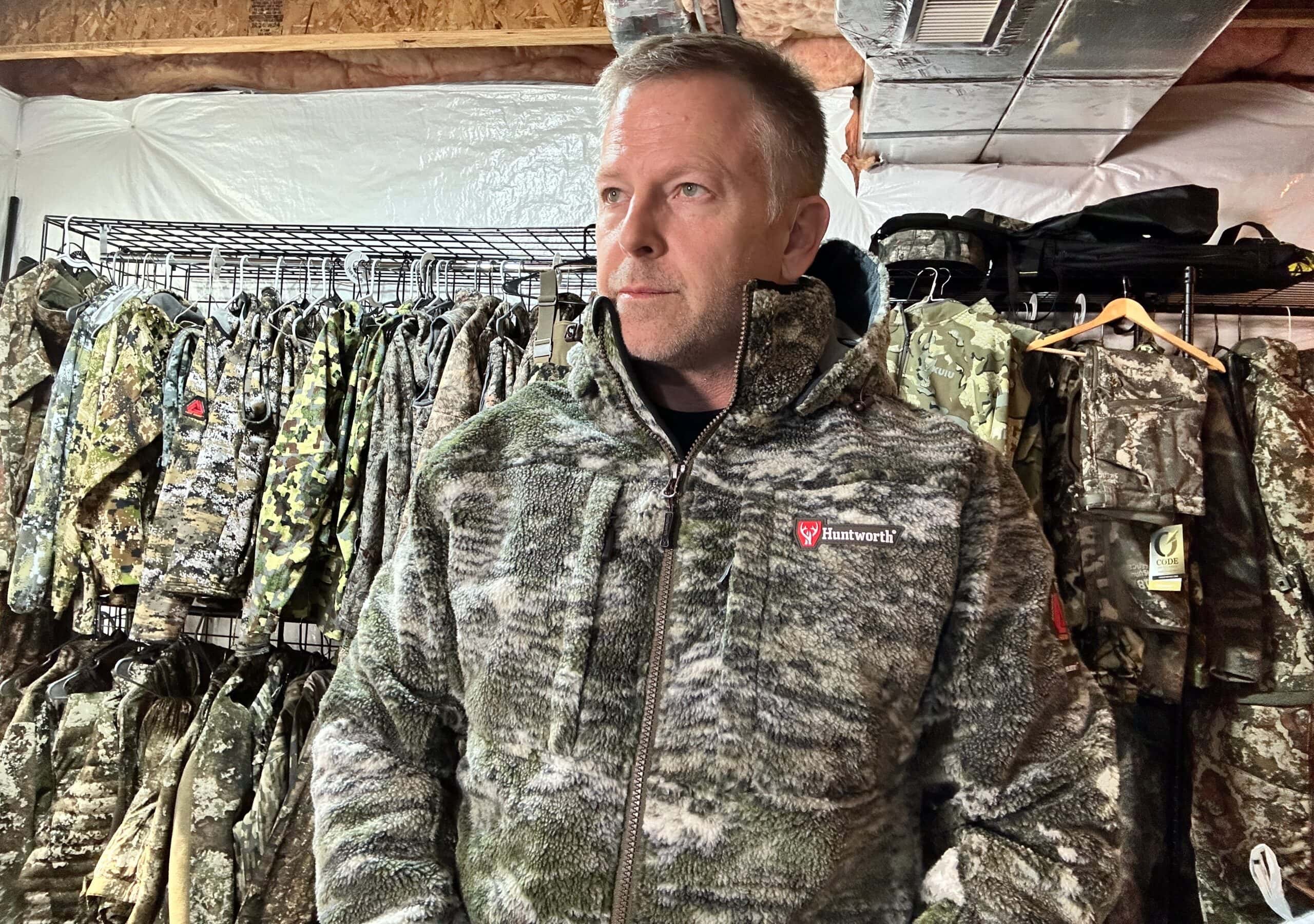
It also performed well during the controlled sound test at 37.8, 40.0, and 42.7 dBA. The Berber face helped it stay near the front without turning the jacket into a thin early-midseason shell.
I rate the Saginaw as the warmer stationary system over the Saskatoon. The hood matters. The matching bibs matter. Warmth in the field comes from the whole system, not one piece hanging on a scale.
This is not the jacket I want to wear through a hard approach. It makes more sense carried in, then added when movement slows and the sit begins.
Best for: A rut hunter who wants a quiet, windproof, warmer jacket-and-bib system.
Skip it if: You want the lightest shell or plan to wear the complete system during a long, demanding walk.
See how the Saginaw fits against the other Huntworth jackets.
Huntworth Saskatoon: Proven Mobile Rut and Early-Cold Option
I have used the Saskatoon for three seasons. It is a windproof soft shell with Heat Boost graphene Sherpa, DWR, pit zips, tapered arms, harness access, and a longer rear hem. It does not have a hood.
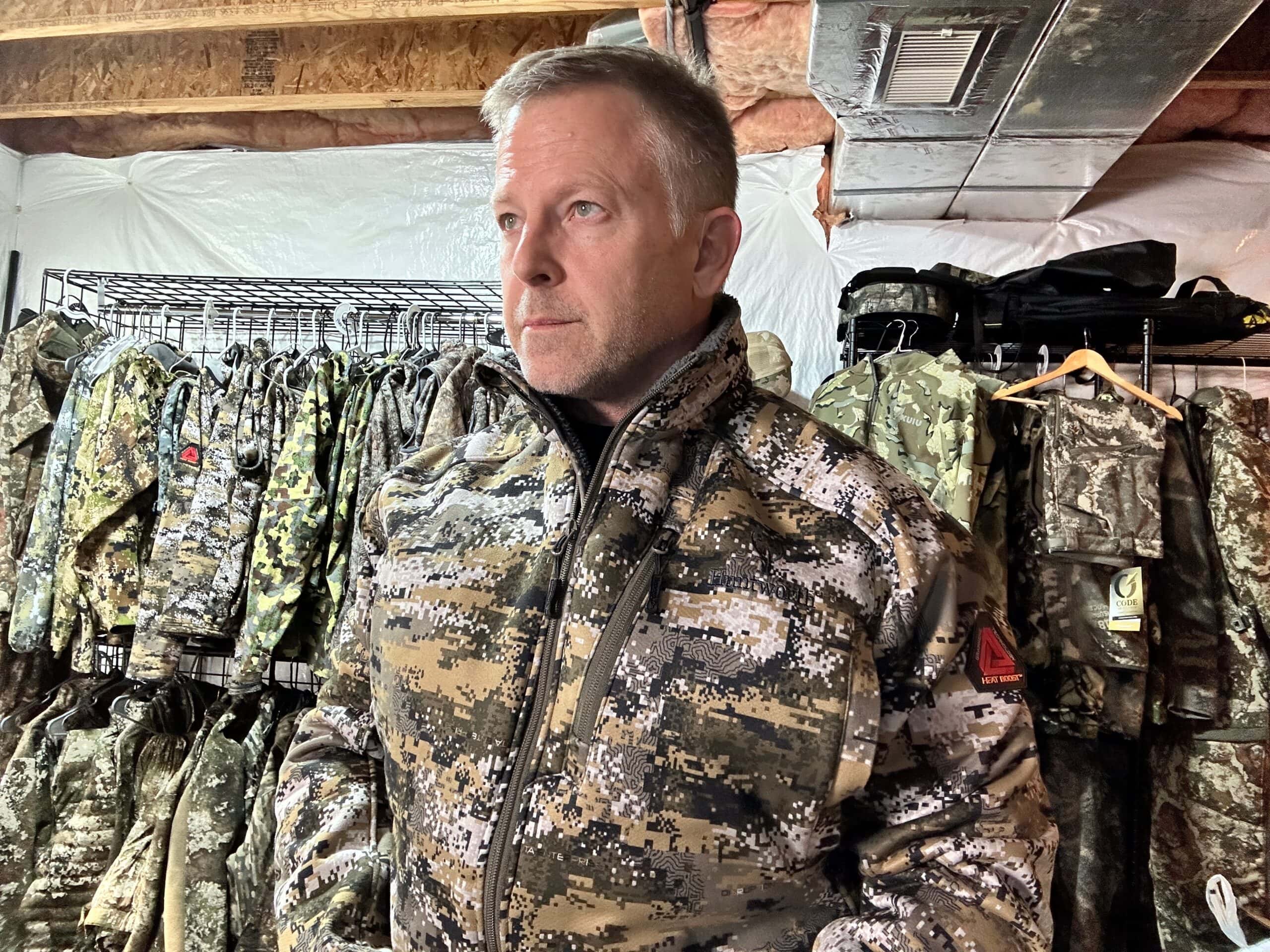
My size-L jacket weighed 2.42 pounds. The controlled readings were 39.8, 41.6, and 46.8 dBA. Those numbers were not as low as the Saginaw, but the Saskatoon has become quieter as it has broken in.
I use it through the rut and into early cold weather with the right layers underneath. The pit zips help manage heat, and the streamlined fit remains useful around a bow. Its biggest system limitation is that the matching lower piece is a pant rather than a bib. The lack of a hood also costs it some stationary warmth compared with the Saginaw system.
The Saskatoon remains a proven option when I want warmth and mobility without moving into a true late-season parka.
Best for: A mobile rut hunter who wants wind protection, useful warmth, and a streamlined bowhunting fit.
Skip it if: You want an integrated hood-and-bib system for longer stationary sits.
Read my three-year Huntworth Saskatoon review.
FORLOH AllClima: Strong Active-Weather Jacket, Real Noise Tradeoff
The FORLOH AllClima is the easiest jacket in this group to misunderstand. Its stretch-woven construction, DWR, mesh lining, reinforced forearms, adjustable hood, and good mobility make it a strong active hunting and mixed-weather jacket.
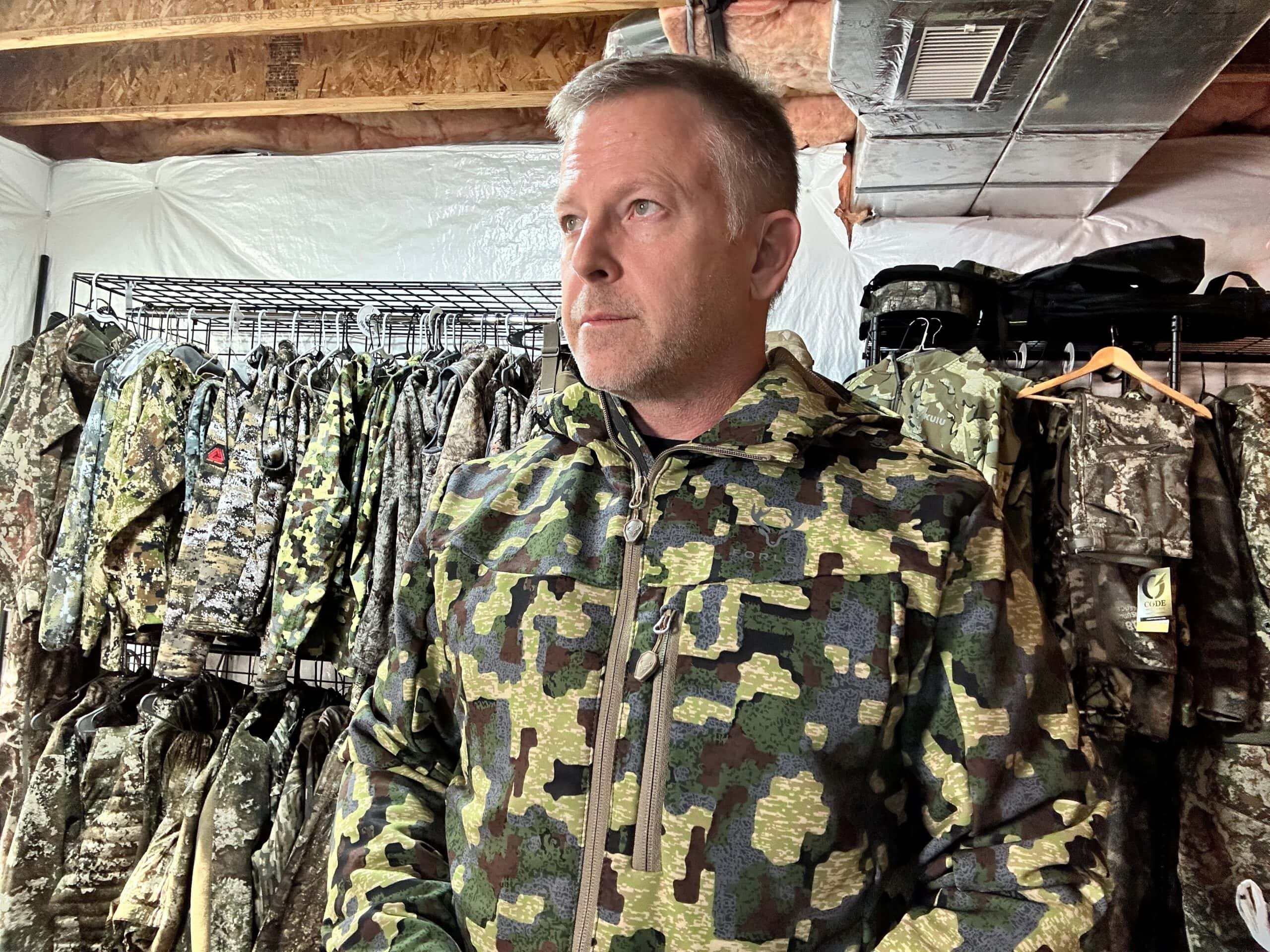
I have worn the AllClima through multiple seasons. It moves well, sheds light weather, dries quickly, and is built for more abrasion than a soft, high-pile whitetail fleece.
My size-L sample weighed 1.98 pounds. During the controlled test, it recorded 37.7 dBA in the slow movement, 44.1 during the faster movement, and 53.3 during elbow contact. That matches the weakness I have heard in the field. It has not become quiet enough for me to make it a first-choice jacket for close-range eastern whitetail bowhunting.
That does not make it a bad jacket. It makes it a specialist. Western hunting, mountain conditions, turkey hunting, rifle hunting, and active hunts can reward its durability, mobility, and weather protection. A calm twenty-yard bow shot puts more weight on its noise tradeoff.
Best for: An active hunter who values mobility, drying, DWR performance, and construction over maximum close-range quietness.
Skip it if: Your main use is quiet treestand or saddle bowhunting with deer at close range.
Read my long-term FORLOH AllClima review.
Watch the Full 10-Jacket Comparison
Watch me walk through all ten jackets and compare their features, sound-test results, weights, and prices. The charts and individual jacket breakdowns are here when you want a closer look.
How I Tested the Jackets
All ten jackets were size Large. These are measured samples, not weights copied from product pages.
For the sound test, I used a Tadeto SL720 sound meter about 24 inches from the garment in a room measuring about 30 dBA or lower. I did not use a bow. That kept bow, rest, arrow, and accessory noise from becoming part of the garment comparison.
Each jacket went through three different movements:
- a slow simulated draw
- a faster simulated draw; and
- elbow-to-body contact
Those are three different movements, not three repeated trials of the same movement. The numbers help show where a fabric or construction changed under more aggressive contact. They do not tell us how far away a deer can hear a jacket, and a few tenths of a decibel should not be treated like a meaningful field victory.
I physically evaluated, weighed, and sound-tested all ten jackets. Where I also have years of hunting use, that history helps explain durability, warmth, break-in, and how the system works after the first impression. The other jackets still have measurable value that can be judged from construction, fit, features, weight, sound, and price.
My ASIO jacket had already been worn and washed many times, so it was more broken in than several of the newer jackets. It produced the lowest overall readings in this test and has also been quiet in the field, but this chart does not establish which jacket would be quietest when every sample is brand new.
What the Sound Test Showed
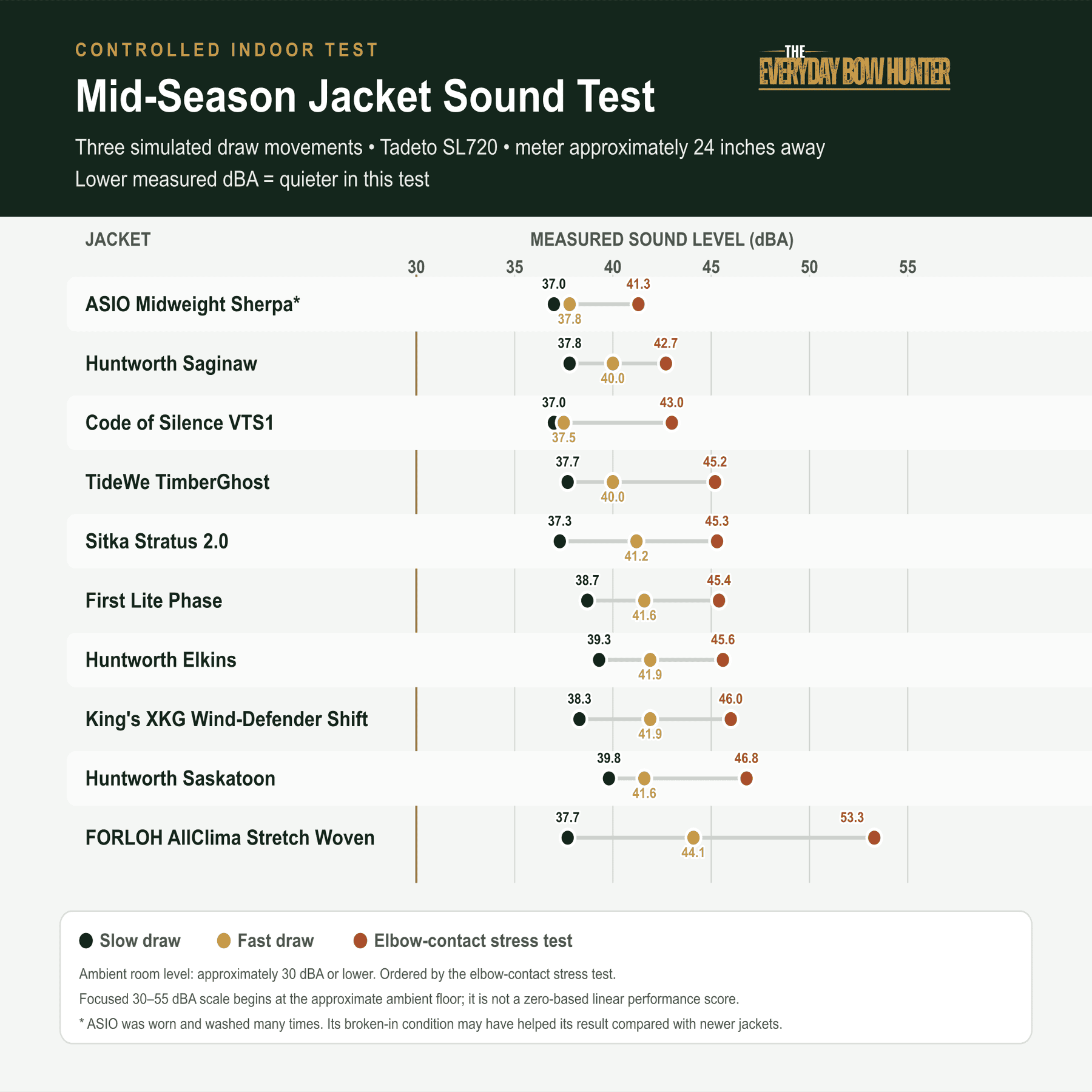
The ASIO Midweight Sherpa, Code of Silence VTS1, and Huntworth Saginaw produced the strongest overall readings in this controlled test. The VTS1 recorded 37.0 dBA during the slow movement, 37.5 during the faster movement, and 43.0 during elbow contact. The Saginaw stayed close at 37.8, 40.0, and 42.7.
The ASIO recorded 37.0, 37.8, and 41.3, but its worn condition matters. That result supports what I have experienced with it in the field. It does not prove a brand-new ASIO jacket will beat every brand-new jacket on this list.
TideWe, Stratus, Phase, Elkins, King’s, and Saskatoon formed a fairly close middle group. FORLOH started close during the slow movement at 37.7 dBA, then separated at 44.1 during the faster movement and 53.3 during elbow contact.
That last number fits my long-term experience with the AllClima. I like the construction, weather protection, and mobility. I do not consider it my best close-range whitetail bowhunting jacket because the fabric noise has not gone away after years of use and washing.
The bigger lesson is that price did not track directly with measured quietness. A $400 jacket did not automatically win, and a lower-priced jacket did not automatically fail.
Measured Weight: Lightest to Heaviest
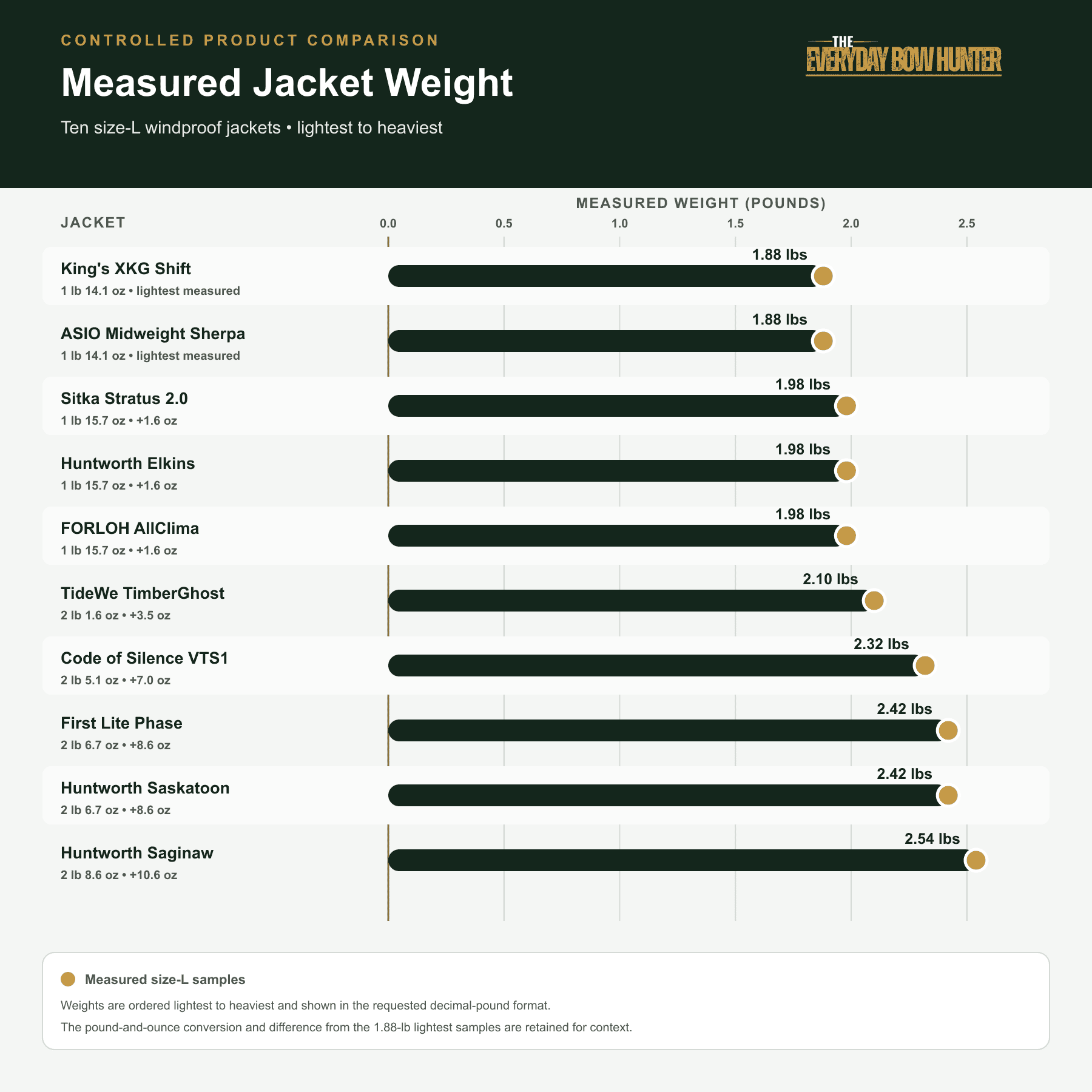
Weight is useful, but it is not warmth. It does not tell us how well a membrane stops the wind, how a jacket fits at full draw, or how much moisture the system manages. It does show that the ASIO gives us more Sherpa-backed warmth without automatically becoming one of the heaviest pieces in the group.
It also shows why the Saginaw and Saskatoon should not be compared to the lightest shells as if they solve the exact same job. They carry more material and more warmth into a different part of the midseason.
Price Comparison: What Does the Extra Money Buy?
For value, I use the full manufacturer MSRP where it is published. When a manufacturer MSRP is not available, I use the regular retail price. I do not use a temporary sale price as the baseline.
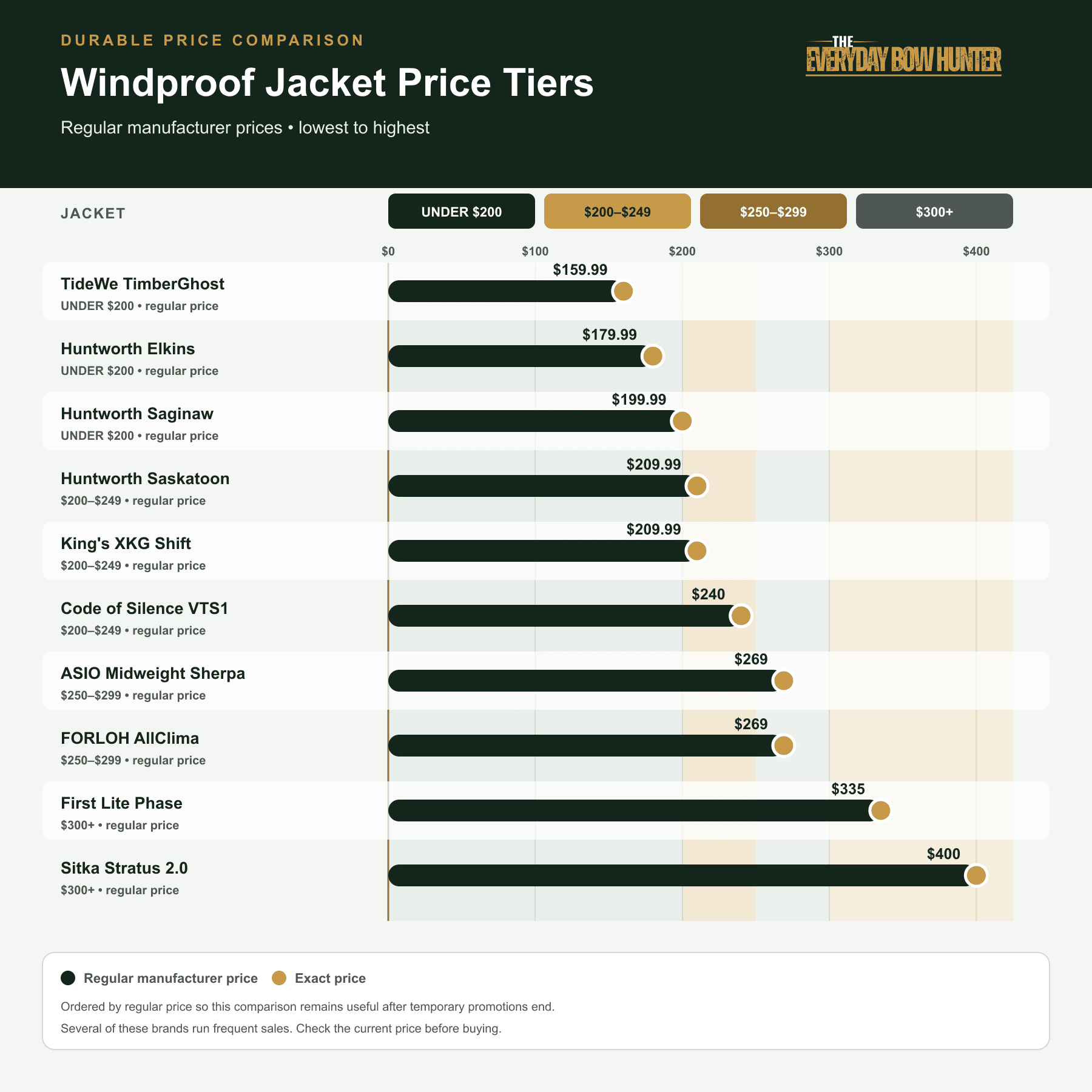
These are regular-price references used for the comparison. Hunting clothing goes on sale often, and the current selling price may be different when you read this. The graphic carries the full price list so it does not need to be repeated in another table.
A higher price can buy better articulation, cleaner cuffs, a better hood, more useful pockets, harness access, quiet zipper pulls, stronger finishing, a matching lower-body system, warranty support, and longer-term durability. It can also buy a brand name and a camo pattern you prefer.
That camouflage difference has real value when it gives you a pattern that fits your primary background and a complete matching system you will keep using. It should break a close decision, not cover up a jacket that fails the wind, noise, fit, or seasonal job.
The mistake is assuming the price automatically buys the quietest controlled result or the warmest system. It did not in this group.
The Value Options That Stand Out
The $400-versus-$160 comparison gets attention because the gap is large. TideWe is not the only value option. Sitka’s added cost pays for a more refined fit, tree-hunting details, and a complete matching system.
At $159.99, the TideWe is the lowest-cost path into the same basic fleece-faced, membrane-backed category. At $179.99, the Elkins adds pit zips, matches the Stratus 2.0’s measured 1.98-pound weight, and carries more of the original Stratus feel. At $209.99, the King’s Shift is the lightest current-Stratus-style alternative in my test. Those three give a hunter three different ways to spend roughly half the Stratus price without walking away from the main windproof-shell job.
The VTS1 and ASIO create value in another way. The $240 VTS1 gives a saddle hunter a merino/poly anorak, exceptional quietness, BridgeZip, and a level of comfort the conventional soft shells do not match. The $269 ASIO combines the lowest measured-weight tie with enough Sherpa-backed warmth to cover a wider piece of the season.
The Phase is not a budget jacket. At $335, it makes sense as a premium alternative for a hunter who wants First Lite’s hood, cuffs, tree pockets, harness access, KitLink, and matching system. That hunter can save $65 against the Stratus jacket without dropping into an entry-level design.
Those are all legitimate value arguments. The right one depends on whether you are paying for the lowest entry price, a light windproof shell, a wider seasonal range, a saddle-specific design, or a polished matching system.
I would make the decision in this order:
- Decide whether you need a lighter windproof shell, a wide-range crossover, or a warmer rut system
- Decide whether you hunt mostly from a treestand, saddle, or on the move
- Eliminate any jacket whose hood, pocket, cuff, or ventilation setup conflicts with that use
- Compare the camouflage patterns against the cover and part of the season you hunt most
- Look at the full jacket-and-pant or jacket-and-bib system
- Compare the current price only after the job is clear
That keeps a sale from convincing you to buy the wrong jacket.
Which Jacket Would I Start With?
For a refined windproof treestand system, the Stratus remains the benchmark because of the complete system and its useful tree-hunting details, not because it won the sound test or because the jacket alone is warm enough for late season.
If I wanted the closest version of that current Stratus formula at another price or inside another clothing system, I would compare the Phase, King’s Shift, and TideWe first. The Phase is the premium alternative. King’s brings the strongest combination of low measured weight, familiar construction, and mid-tier pricing. TideWe uses the same basic fleece-and-membrane idea at the lowest regular-price reference.
The Elkins stays close to that group, but I see it as the bridge back to the original Stratus concept. It gives me a straightforward windproof shell, the same measured weight as the Stratus 2.0, and pit zips that the current Stratus does not have.
For the broadest midseason range in a quiet, low-bulk jacket, the ASIO Midweight Sherpa stands out. It is the jacket in this group that most clearly combines light measured weight with enough built-in warmth to keep moving deeper into the season.
For a saddle-specific system, the VTS1 brings features and construction no other jacket in the group duplicates. I like the comfort, exceptionally quiet fabric, anorak layout, and the way it is put together. BridgeZip and the above-bridge pockets make the most sense when you actually hunt from a saddle.
If budget controls the decision, I would compare the Elkins and TideWe. The Elkins is the known lighter-shell path inside the Huntworth lineup. TideWe sets the lowest regular-price reference and stayed competitive in the controlled sound test.
For a warmer rut system, I put the Saginaw ahead of the Saskatoon for stationary warmth potential because it adds the hood and matching bibs. I still trust the Saskatoon as a proven, mobile option with pit zips, a streamlined fit, and three seasons of use behind it.
For active, mixed-weather hunting, the FORLOH is easy to understand once the noise tradeoff is accepted. I like it for movement and weather. I do not reach for it first when a whitetail may be inside twenty yards in calm woods.
Final Takeaway
The Stratus sets the benchmark, but it does not own this type of construction. The Phase, King’s Shift, and TideWe follow the current Stratus formula closely enough to make price and feature comparisons useful. The Elkins carries more of the original Stratus idea while staying competitive with the current jacket. That leaves several good value choices between the $160 and $400 ends of the comparison.
The VTS1 shows why this comparison cannot stop at finding the closest copy. Its merino/poly anorak construction, exceptional quietness, comfort, and saddle-specific layout give a hunter a different reason to choose it.
The controlled data gave me three useful answers. Price did not determine sound. Weight did not determine warmth. A jacket can perform well in a slow movement and separate when the draw becomes faster or the elbow makes contact.
The field side matters just as much. A windproof jacket has to work with the layers underneath it, the distance you walk, the tree system you use, and the amount of time you sit still. The right one is the jacket that protects that whole system without creating a new problem.
That is the comparison I would use before spending $160, $240, or $400.

FREE THERMAL LAYERING SYSTEM GUIDE
Sweating on the walk in. Freezing an hour later?
A warmer jacket won’t fix a sweaty walk in. Get my free guide to dressing for the hike and the sit, starting with the clothing you already own.
- Know what to wear in, what to pack, and when to add it.
- Fix the sweat, wind, and cold spots that cut a sit short.
- Use seasonal setups and a printable plan for your next hunt.
Want to see exactly what I’m carrying this season? Check out my Personal Bowhunting Gear List for 2026